

The kanna guide · field notes
What is kanna? A field guide to Sceletium tortuosum
A small succulent from South Africa's Karoo, chewed for centuries and now sold as chews and drops. What the plant is, what eight small human trials found, what the labels say, and where the evidence stops.
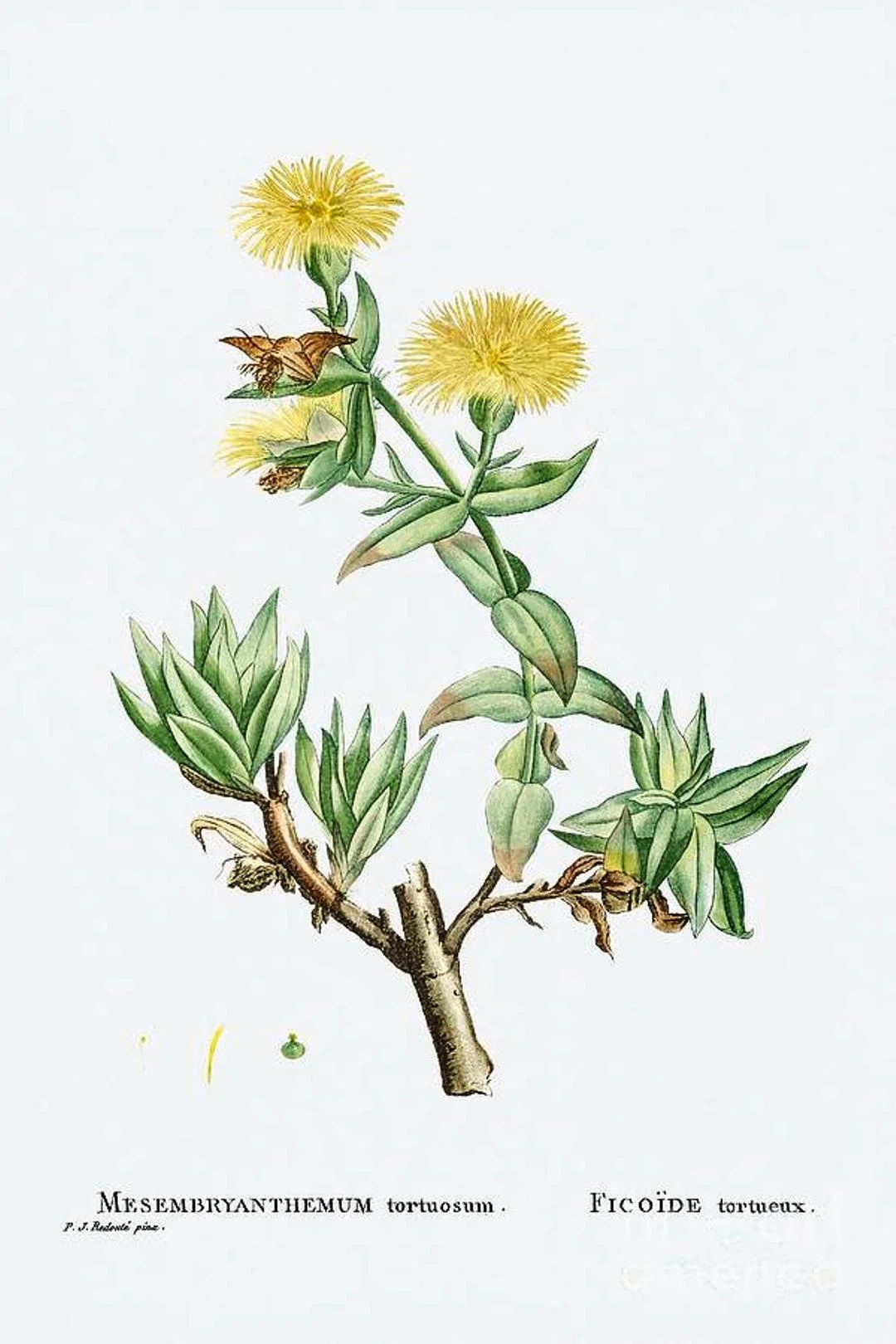
Sceletium tortuosum (L.) N.E.Br.Aizoaceae · ice plant family
Succulent Karoo, South Africa
Kanna · kougoed“something to chew”
Kanna today
The short answer
What is kanna?
Kanna is a low, succulent plant from South Africa's Karoo, Sceletium tortuosum, whose leaves San and Khoi people have chewed for centuries. Its best known alkaloid, mesembrine, binds the serotonin transporter in lab tests. Today kanna is sold as extracts in chews, drops and capsules.
Eight small human trials have tested kanna extracts in healthy volunteers; seven of them name one branded extract, Zembrin. They found modest effects on some thinking tasks and mixed results on mood. None tested kanna as a treatment, and none tested KA!'s extract.
This page is the map. The science sits in How Kanna Works, the safety questions in Kanna vs Antidepressants, and the product we have reviewed in our KA! Empathogenics review.
The field
Where kanna grows, and how it was used
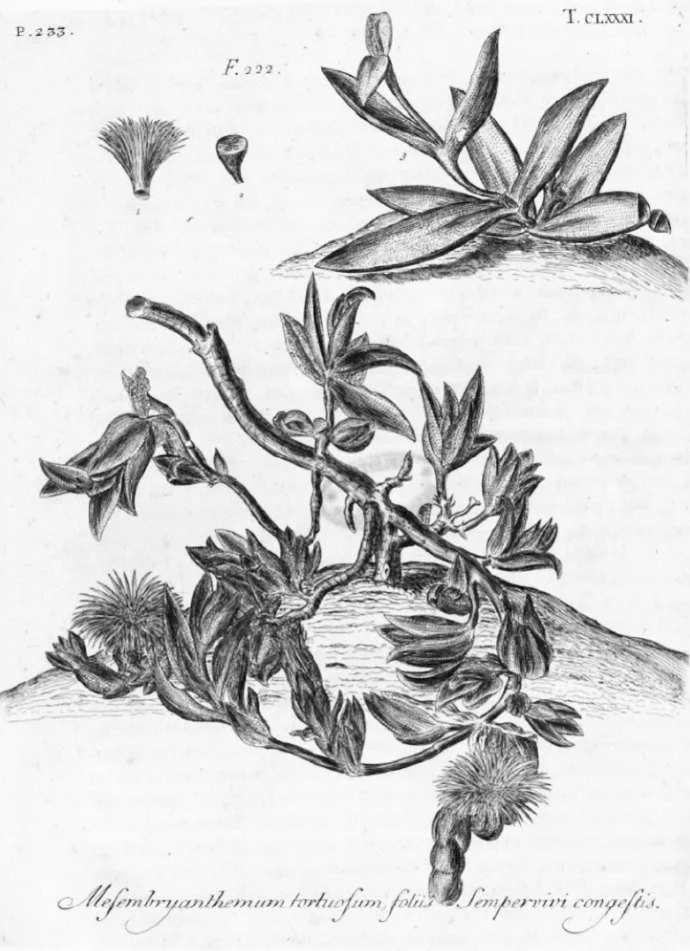
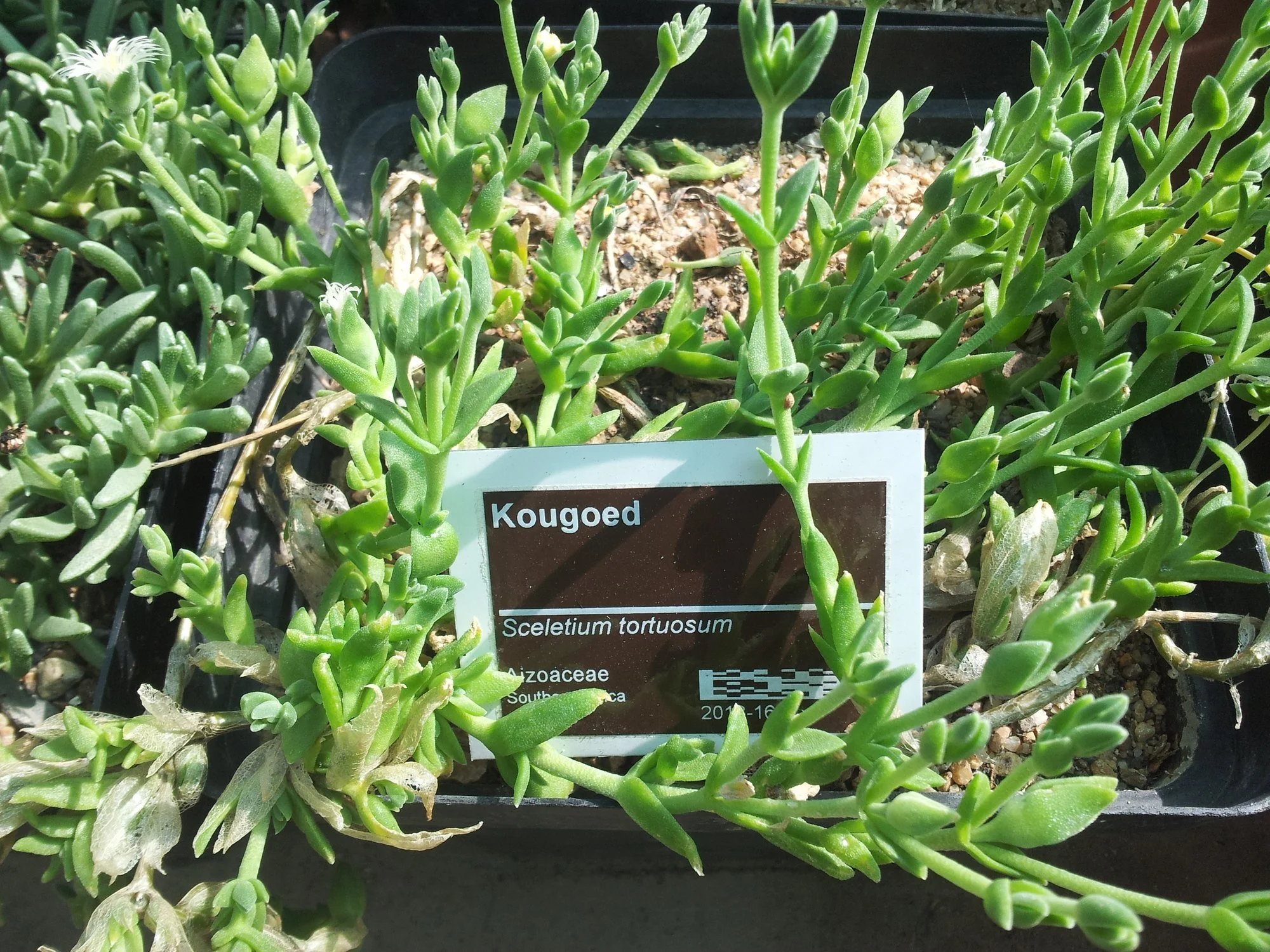
A creeping succulent of the Cape's dry karroid country. When a leaf dries, its veins stay behind like a little skeleton, which gave the genus its name.
The plant
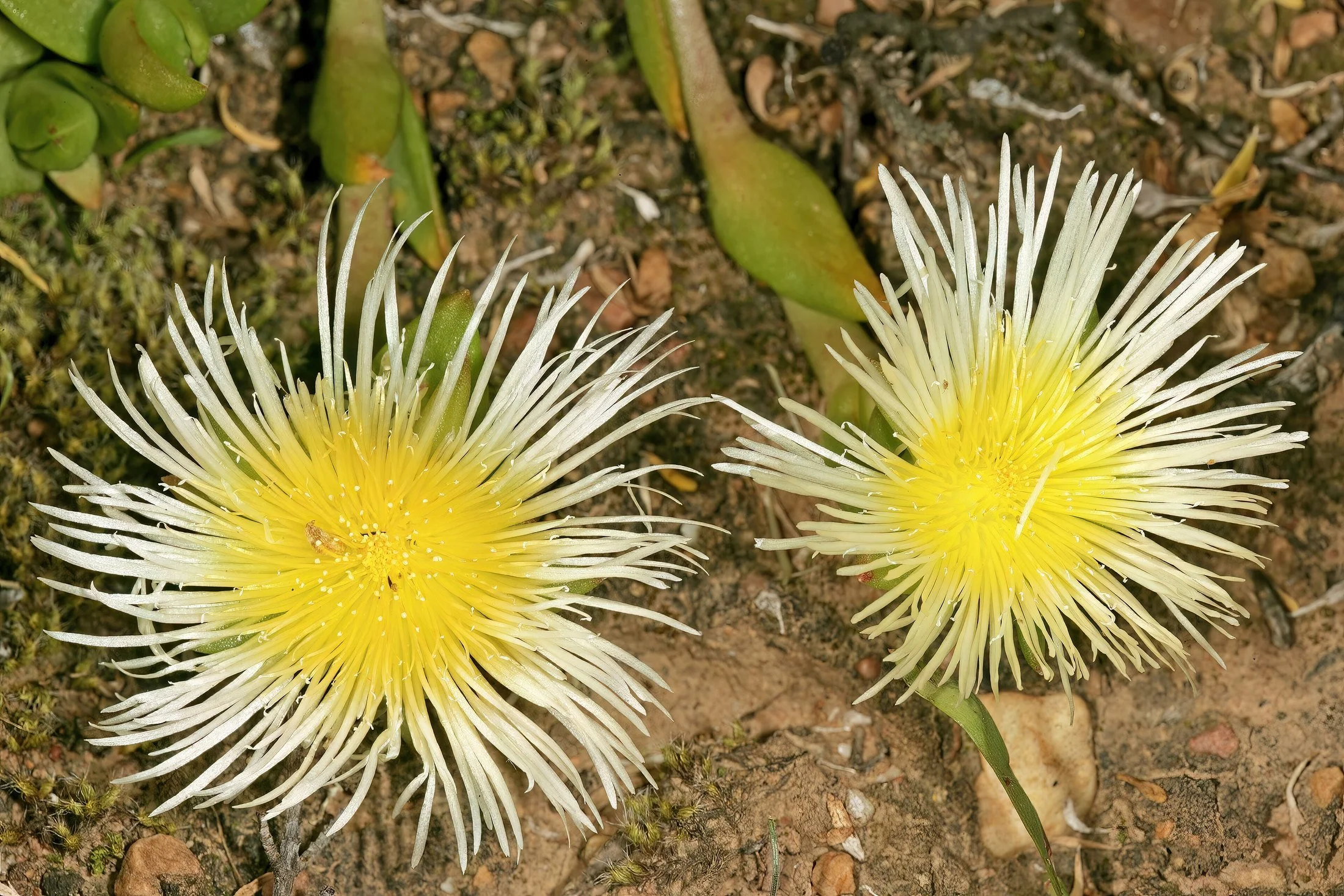
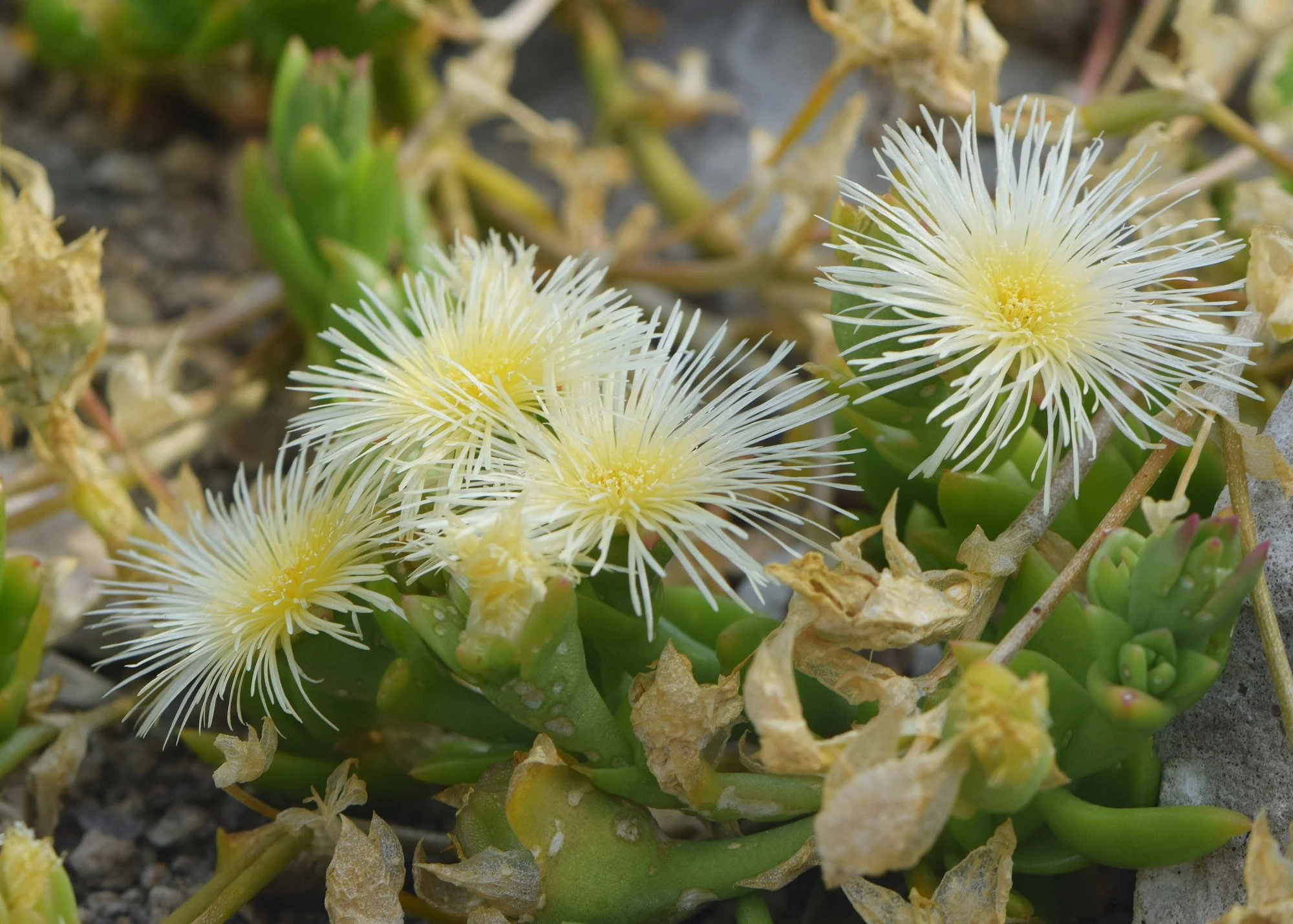
Kanna ranges from Namaqualand to Montagu and Aberdeen, often in quartz patches in the part shade of shrubs. Its fleshy leaves carry 3 to 5 strong veins, and its flowers, 20 to 30 mm across, are white to pale yellow. Field
“Sceletium” comes from the Latin sceletus, skeleton, for the veins that persist in the dry leaves; tortuosum means twisted. Source: SANBI.
The people who knew it first
San hunter gatherers and Khoi herders probably used kanna for thousands of years: chewed to ease thirst and hunger, against tiredness, as medicine, and for social and spiritual purposes. Field
Much of that knowledge was lost over three centuries of conflict with settlers, genocidal raids against the San, loss of land and introduced disease. Source: Gericke and Viljoen 2008.
Kougoed
The best known preparation is kougoed, “something to chew”: the plant was crushed and left to “ferment” before chewing. A 1996 review of 300 years of records found no evidence that kougoed or kanna's alkaloids are hallucinogenic. Field
Traditional use tells us how people valued a plant. It is history, not proof of an effect. Sources: Smith 1996; SANBI.
What it does
Where the evidence stands
Every claim about kanna grew somewhere: in the field, on the lab bench, in animals or in people. We tag each one, so you always know how strong it is and whose claim it is.
8small human trials, all in healthy volunteers; 7 of them name Zembrin
- Bench
In lab dishes, a kanna extract blocked the serotonin transporter and slowed PDE4, an enzyme involved in cell signalling (Harvey 2011). That shows what the chemistry can do in a dish, not what happens in a person.
- Animal
Rats given a standardized extract every day for 90 days showed no treatment related harm, even at the highest dose tested (Murbach 2014). Rat doses are not human doses.
- Human trial
Eight small trials, all in healthy volunteers, the longest 3 months; seven name one extract, Zembrin. A few found better scores on specific thinking tasks; mood results were mixed. None tested kanna as a treatment for depression or anxiety.
- KA! says
KA! says kanna has been “clinically proven to calm stress”. No published trial has tested a KA! product.
The kanna key
Which page answers your question?
Botanists identify a plant with a two way key: answer one pair of questions, then the next. This one sends you to the page you need.
- Kanna vs antidepressants: if you take any prescription medicine, start here.
- How kanna works: the alkaloids and every study, by evidence layer.
- Tincture vs chews vs capsules: the forms compared from their labels.
- KA! Empathogenics review: the label, the cost per serving, who should skip it.
Couplet 1 of 4 · pick the line that fits you
Do you take an antidepressant or any other prescription medicine?
Sceletium dosage
How much kanna do people take?
There is no established dose. The human trials gave 8 to 50 mg of extract, as single doses or daily for up to 3 months; seven of the eight name Zembrin. KA!'s label gives 30 mg of its own extract per chew; KA! says 20 drops hold the same and that you should not exceed 3 chews in 24 hours. The two extracts have different alkaloid mixes, so neither number carries over to the other, and we don't suggest a dose.
| Source | The amount | What the number measures |
|---|---|---|
| Studied in people Human trial | Zembrin 8 or 25 mg a day for 3 months (a safety trial); 25 mg a day for 3 weeks; 25 or 50 mg once, and daily for 6 weeks (two EEG trials); single 25 mg doses (brain scan and stress studies); 25 mg a day for 3 days; 25 mg a day for 8 days of an extract not named. | Milligrams of extract. Zembrin is standardized to 0.35 to 0.45% total alkaloids, mostly mesembrenone and mesembrenol, with mesembrine under 20% of them (Murbach 2014). |
| On KA!'s label and pages Label KA! says | 1 chew = 30 mg kanna extract (label); 20 drops of tincture = 30 mg and “Do not exceed 3 Chews per 24 hour period” (KA!'s pages), up to 60 drops a day. | Milligrams of KA!'s own extract. KA! states “Total Primary Alkaloids ≥ 5.1%”, mostly mesembrine, and publishes no lab report. |
| Why they don't line up | Different makers and different alkaloid mixes, and KA! publishes no test method. A milligram of one extract is not a milligram of another, and no trial has tested KA!'s. That is why we compare the labels but never convert one into the other. | |
The forms
Chews, drops or capsules?
The product we reviewed
KA! Empathogenics
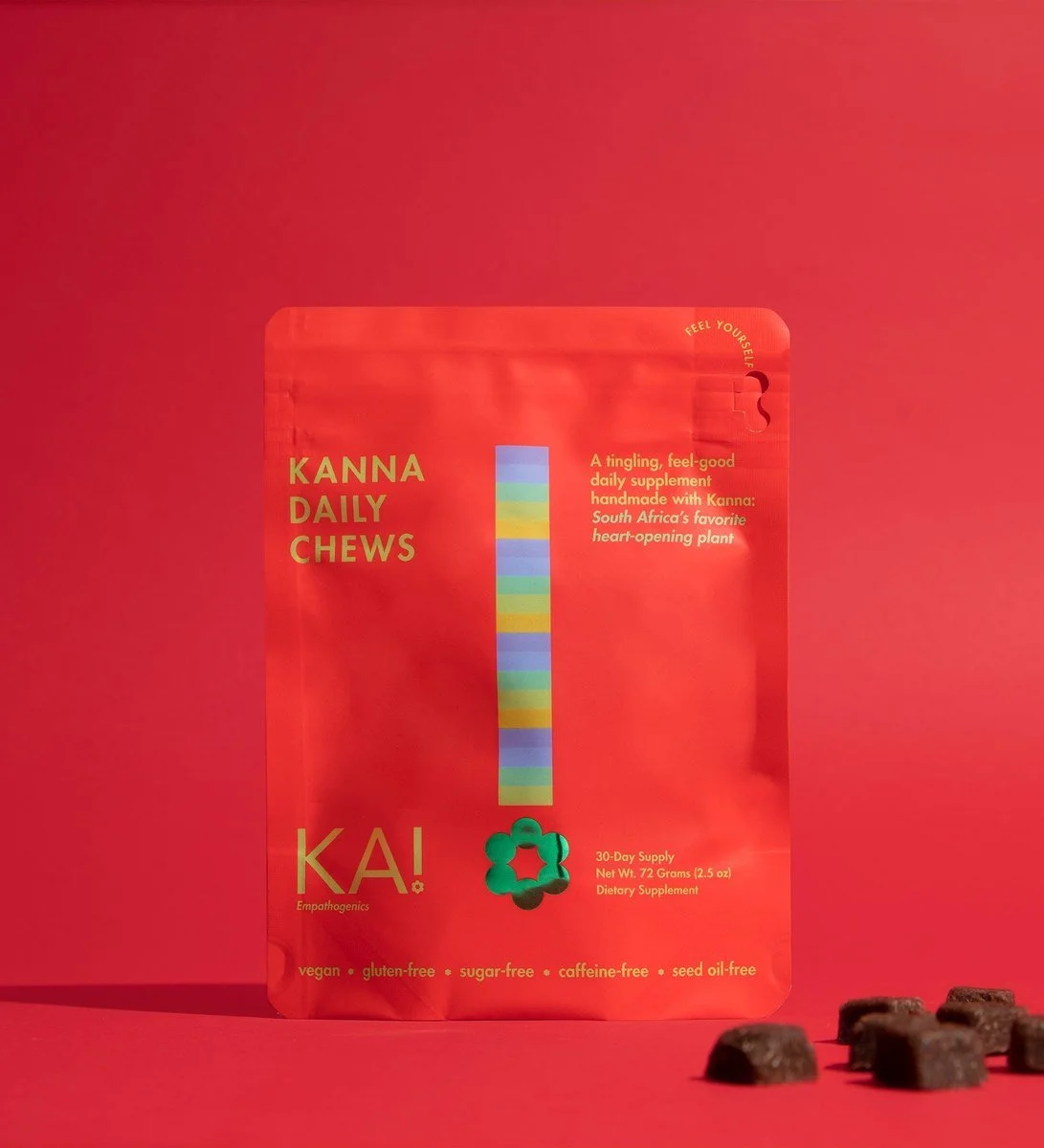
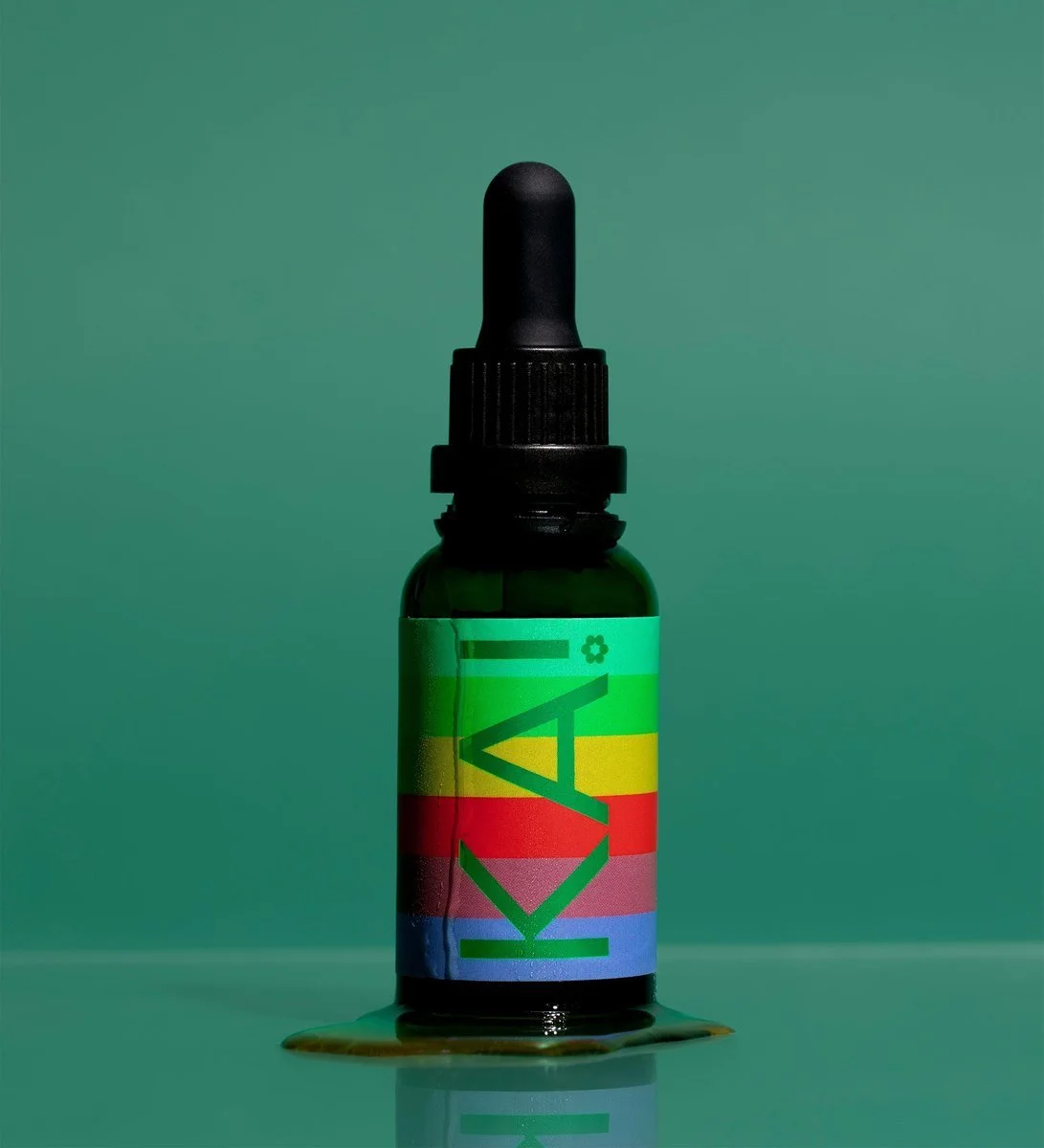
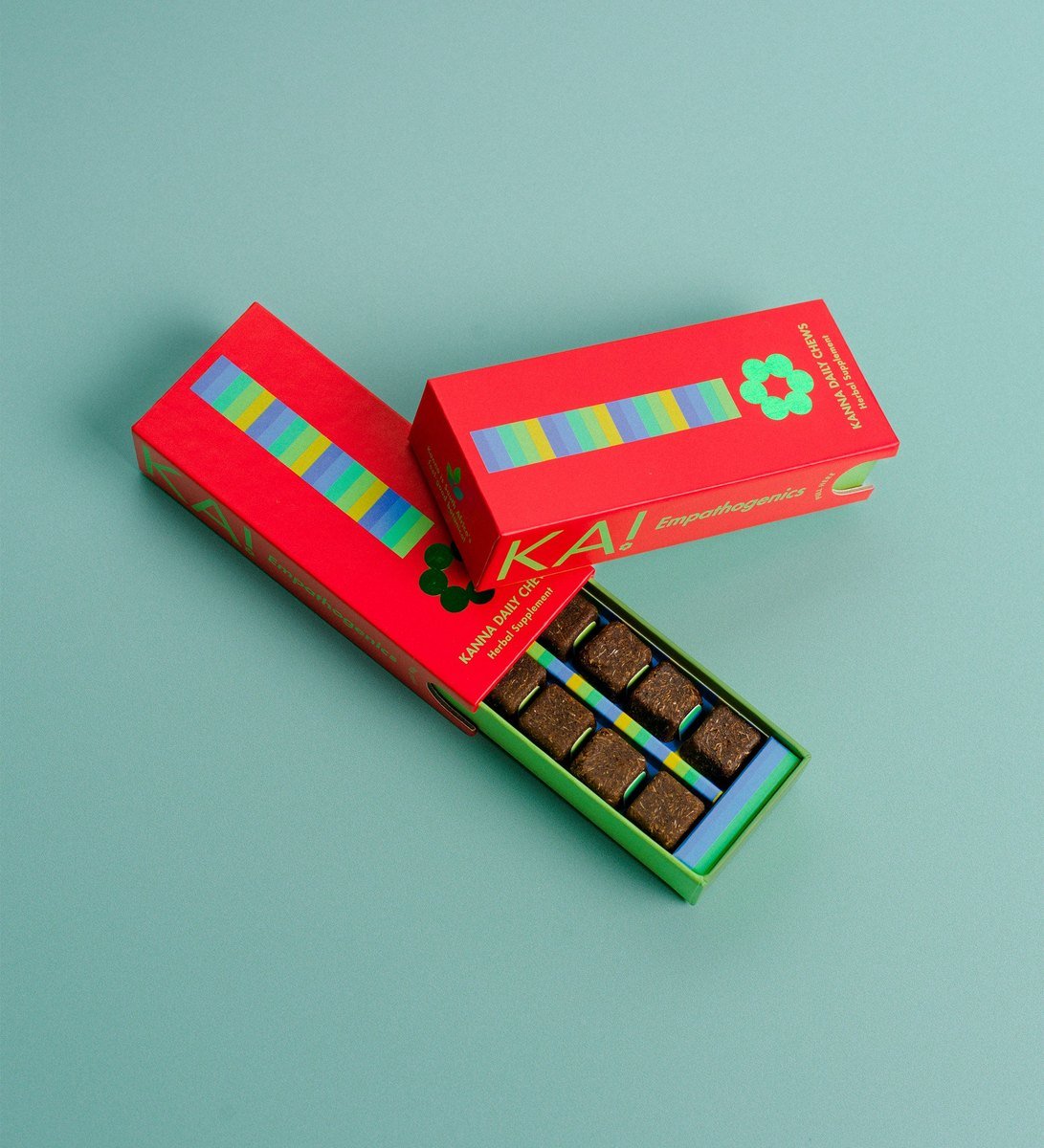
KA! makes kanna chews in two flavors, which it says are handmade in Colorado, and a glycerin tincture. Each chew holds 30 mg of kanna extract, printed on the label, and KA! says 20 drops of tincture hold the same. KA! states the extract's alkaloid content but publishes no lab report. Label
Our full KA! review decodes the label, works out the cost per serving and sets KA!'s claims against the evidence. I've used more than one KA! product myself, bought, not gifted; my notes are in the review, kept apart from the evidence.
KA! Kanna Daily Chews, 30 chews KA!
$89 one time · $75.65 with code SAMA (KA!'s Sama offer page, 9 Nov 2026)
SAMA
Get 15% off at KA! ↗
Our link applied code SAMA (15% off) by itself in our 9 Nov 2026 checkout test; if it is missing, enter SAMA before you pay. Affiliate link: if you buy through it I may earn a commission at no extra cost to you. I only link to products I have researched; when I have used a product myself, the page says so. Code details
The law
Is kanna legal?
Kanna does not appear in the federal controlled substance schedules (our search of 21 CFR 1308, 9 Nov 2026). Louisiana's law on hallucinogenic plants lists Mesembryanthemum, the genus kanna is now usually placed in, and exempts some dietary supplements that meet named federal rules. Whether any product is covered is a question for a lawyer, and we haven't checked every state.
What Louisiana's law says
La. R.S. 40:989.1 lists, among plants it calls hallucinogenic:
“(m) Mesembryanthemum spp.”
It exempts “any dosage form which is labeled as a dietary supplement” made under named federal food law rules.
What KA! says
“Kanna is a natural empathogen legal in the U.S., with the exception of Louisiana”
KA!'s help center, read 9 Nov 2026. KA! says
What we can't tell you
Whether the exemption covers a given product, or the law in every state and country. A 2025 Texas bill (SB 1868) first listed the genus, then dropped it before the Senate passed it; it is not law on the legislature's record (as of 9 Nov 2026).
Before you try kanna
Don't add kanna. No study has tested the combination. Kanna's alkaloids act on the serotonin transporter in lab tests, and a 2021 review advises against combining kanna with antidepressants. KA!'s own label lists SSRIs, SNRIs, MAOIs and NDRIs in its contraindications. Why we say this
Avoid it. Kanna has not been studied in pregnancy or breastfeeding, and KA! says to avoid its products.
KA!'s label lists benzodiazepines and other CNS depressants in its contraindications, and KA! advises against alcohol. There are no human data either way, and one rat study found a kanna fraction caused loss of coordination. We would not combine them.
Talk to your doctor or pharmacist before trying kanna. Adults only: KA! says its products are not for anyone under 18.
No study lasted longer than 3 months, and none tested KA!'s extract.
State law lists the plant's genus. See “Is kanna legal?” above.
Quick answers
Frequently asked questions
Is kanna a psychedelic?
No evidence says so. A 1996 review of 300 years of records found no evidence that kougoed or kanna's alkaloids are hallucinogenic. It is still described as psychoactive: its alkaloids act on serotonin targets in lab tests, and one brain scan study found changes after a single dose.
What does kanna feel like?
No trial has measured how it feels beyond rating scales in healthy people, where mood results were mixed. KA! describes calm and grounded energy; that is marketing, not a measurement.
Is kanna the same as Zembrin?
Zembrin is one branded kanna extract, named in seven of the eight published human trials (the eighth reports a 25 mg extract without naming it). Other products, KA!'s included, use different extracts with different alkaloid mixes, so Zembrin's results don't transfer to them.
Is kanna addictive?
Unknown in people. One rat study found no sign of reward seeking. No human study has tested abuse potential, and no study lasted longer than 3 months.
Where does kanna grow?
In South Africa's Cape provinces, from Namaqualand to Montagu and Aberdeen, often in quartz patches under shrubs. It has been cultivated in England since 1732, SANBI notes, and its 2005 page rates the wild species as Least Concern.
Can I take kanna with an antidepressant?
No. Our kanna vs antidepressants page answers this in full.
Stay Curious.
Better health isn't found in a single article. It's built through curiosity, evidence, and small discoveries over time.
Join thousands exploring longevity, gut health, recovery, nutrition, and the tools that truly make a difference.
Curiosity looks good on you.
Check your inbox and confirm your email to join the community.
Your next discovery is waiting.
Sources
What this page rests on
- SANBI PlantZAfrica, Sceletium tortuosum (P. Chesselet, Compton Herbarium, 2005). Read 9 Nov 2026.
- Gericke N, Viljoen AM. Sceletium, a review update. J Ethnopharmacol 2008. PubMed 18761074
- Smith MT et al. Psychoactive constituents of the genus Sceletium: a review. J Ethnopharmacol 1996. PubMed 8691846
- Harvey AL et al. Pharmacological actions of Sceletium tortuosum and its principal alkaloids. J Ethnopharmacol 2011. PubMed 21798331
- Murbach TS et al. A toxicological safety assessment of Zembrin in rats. Food Chem Toxicol 2014. PubMed 25301237
- The eight human trials (Nell 2013, Terburg 2013, Chiu 2014, Dimpfel 2016, Dimpfel 2017, Hoffman 2020, Reay 2020, Berry 2021) are listed with links in How Kanna Works.
- Brendler T et al. Sceletium for managing anxiety, depression and cognitive impairment: a traditional herbal medicine in modern day regulatory systems. Curr Neuropharmacol 2021, PMC8762184.
- Loria MJ et al. Effects of Sceletium tortuosum in rats. J Ethnopharmacol 2014. PubMed 24930358
- Louisiana Revised Statutes 40:989.1, legis.la.gov. Read 9 Nov 2026.
- KA! Empathogenics product pages, printed label and help center, read 9 Nov 2026.
For educational purposes only. Nothing here is medical or legal advice; ask a qualified professional before starting any new supplement. As an affiliate, samā·says may earn a commission on qualifying purchases made through links on this page.