

Guide · Product Hub
Protect at the surface. Nourish underneath.
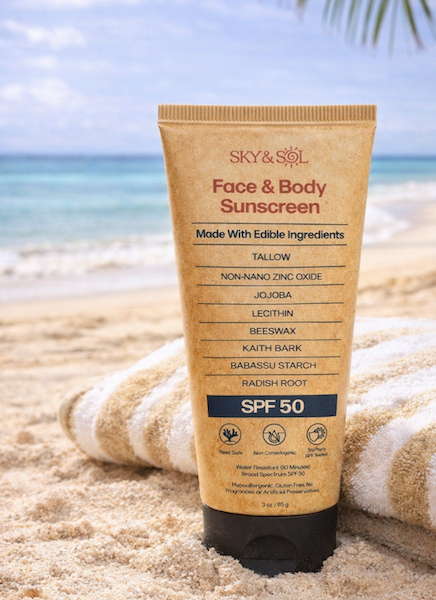
Sunscreen and moisturizer are not the same job. One sits on your skin and deflects UV. The other works with your skin's own lipids to keep the barrier intact. Sky and Sol builds one product for each, from tallow and non-nano zinc instead of synthetic fillers. Here's what's actually in them and how I use them.
The Short Version (TL;DR)
Clean skincare, biologically compatible. Nutrient-dense ingredients, no synthetic fillers or harsh chemicals.
Built around grass-fed tallow and mineral, non-nano zinc oxide sun protection.
Designed to nourish, protect, and restore the barrier, function over marketing.
Inside: 60-day testing, ingredient breakdowns, reef-safe details, SPF comparisons, and honest buyer guides.
What Makes It Different
What makes Sky and Sol different
Conventional skincare formulations often lean on synthetic emollients, preservatives, and fillers that sit on the surface rather than working with the skin's own composition. Sky and Sol takes a different approach: skin-compatible fats like grass-fed tallow, mineral UV protection with zinc oxide, and simple formulations without unnecessary additives. Tallow's fatty acid profile is often compared to that of human skin lipids, which is part of why it's generally well tolerated, even by sensitive or dry skin.
Tallow
Grass-fed lipids for the barrier
Zinc
Non-nano mineral protection
Formulation
Few ingredients, each with a job
The Distinction
What protects, and what nourishes
These are two different jobs. Mineral zinc sits on the surface and scatters UV light before it reaches your skin. Tallow works underneath, supporting the lipid barrier that already exists there. Switch modes to see each one on its own.
Conceptual mechanism diagram. Sunscreen and moisturizer act at different depths and do not perform the same biological function: one scatters UV at the surface, the other supports the skin's own lipid barrier underneath it. Positions are schematic, not to scale, and no quantity is plotted. Visualized by · samā·says
The reviews
The four Sky and Sol guides
 60-Day · Sunscreen Review
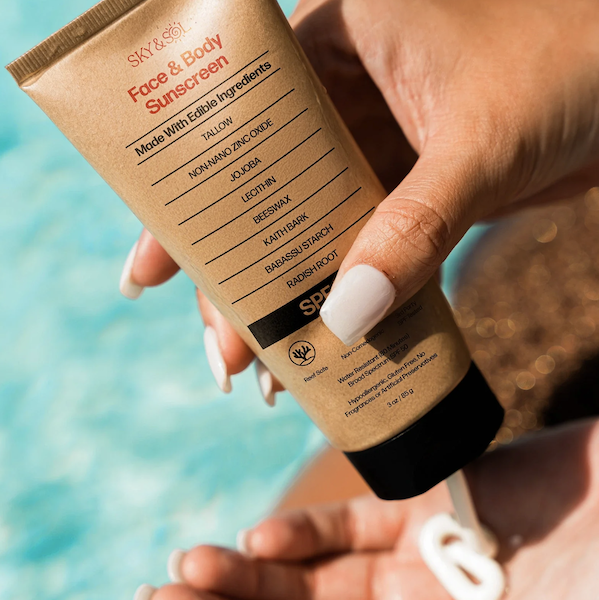
Sky and Sol Sunscreen Review
60 days of real-world testing. Does this clean, non-toxic, non-nano zinc formula actually protect? Wear, feel, and performance.
Read the review →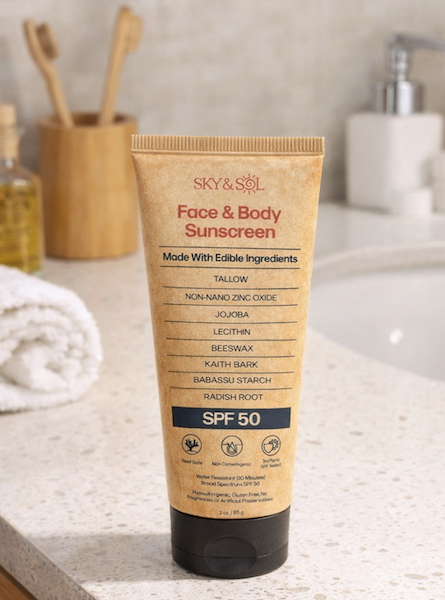 Buyer Guide · Sunscreen
Before You Buy
SPF 30 vs SPF 50, honest downsides, and a clear buy-it-or-skip-it verdict before you order.
Read the guide →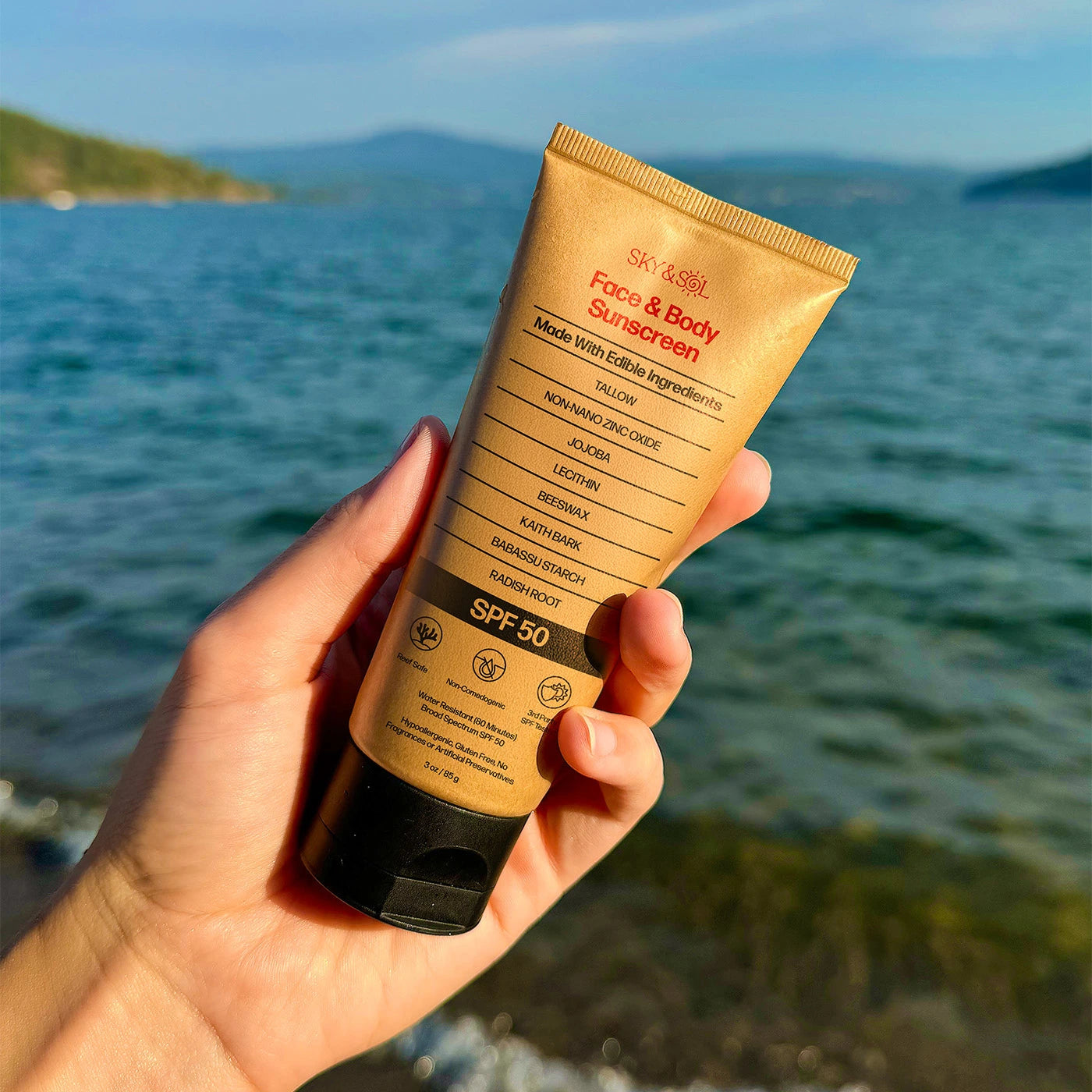 Reef Safe · Sunscreen
Is It Reef Safe?
The mineral formulation, and the chemical filters it avoids. Eco-friendly, ocean-conscious sun protection.
Read the guide → 60-Day · Moisturizer Review
The Everything Cream Review
A 60-day review of the reformulated tallow and colostrum complex moisturizer: texture, hydration, and barrier repair.
Read the review →Find your path
Where should you start?
Daily sun protection
Your priority is clean, everyday SPF.
Sunscreen review → 02Deciding before you buy
You want SPF comparisons, honest pros and cons, and a clear verdict first.
Buyer guide → 03Ocean & eco impact
Environmental impact matters most to you.
Reef-safe guide → 04Hydration & barrier
Your focus is moisture and skin barrier support.
Everything Cream review →My Take
Why I actually started wearing sunscreen
I don't really use a lot of sunscreen normally, but my dermatologist suggested I start, because of prolonged sun exposure. I spend a lot of time outside, whether that's by the pool, on a run, paddleboarding, or playing tennis, so I try to at least get my face and my shoulders covered as often as I can.
I'm not going to pretend I've been religious about it. I haven't. This is something I'm actively getting better at, and having a mineral formula that doesn't feel like a chemical sunscreen makes it a lot easier to actually reach for.

The Offer
10% off Sky and Sol
Clean skincare that prioritizes ingredient quality, skin compatibility, and real-world performance. One of the most unique lines I've tried.
10% off · applies at checkout
Readers who want mineral sun protection and a barrier-support moisturizer without synthetic fillers, and who don't mind paying more for simpler ingredients.
The sunscreen leaves a light cast typical of mineral formulas; the Everything Cream is richer and sits closer to a balm than a lotion.
I keep the sunscreen by the door for exactly the days I listed above: pool, runs, paddleboard, tennis. The Everything Cream is what I actually reach for nightly. Neither replaces the other.
Covered here
What this guide covers
Keep Exploring
Explore the other guides
Each guide is its own small world. This is where the reader chooses the next one.
Mitochondria Hacks
The cellular energy behind healthy, resilient skin.
Read the guide →Gut Optimization
Skin health starts lower than you'd think.
Read the guide →Sleep Architecture
Repair happens overnight, skin included.
Read the guide →Training & Hormones
Sweat, sun, and the skin that has to handle both.
Read the guide →Light & Grounding
The same sunlight this guide is about, from a different angle.
Read the guide →Quick answers
Frequently asked questions
Is Sky and Sol skincare non toxic?
Sky and Sol focuses on simple formulations using naturally derived ingredients and avoids many synthetic additives commonly found in conventional skincare.
Is tallow good for skin?
Tallow closely resembles the natural oils produced by human skin and may help support hydration and skin barrier function.
Is Sky and Sol sunscreen mineral based?
Yes. Sky and Sol sunscreen uses non-nano zinc oxide for broad spectrum mineral sun protection.
Should I buy SPF 30 or SPF 50?
SPF 30 works well for daily face and body wear. SPF 50 is the better pick for extended outdoor exposure. See the full comparison in the buyer guide.
Is Sky and Sol sunscreen reef safe?
Sky and Sol avoids several common chemical sunscreen filters associated with reef concerns and uses a mineral based formulation instead.
Can I use Sky and Sol products daily?
Yes. Both the sunscreen and moisturizer are designed for daily use and can fit into a simple, clean skincare routine.
Is Sky and Sol good for sensitive skin?
Many users with sensitive skin prefer formulas like these because they avoid many of the harsh additives and chemical filters found in conventional products.
Some links on this page are affiliate links, including the Sky and Sol link above. If you buy through them I may earn a commission at no extra cost to you. It does not change what I recommend: these are the products I've actually tested and written full reviews of.
Stay Curious.
Better health isn't found in a single article. It's built through curiosity, evidence, and small discoveries over time.
Join thousands exploring longevity, gut health, recovery, nutrition, and the tools that truly make a difference.
No spam. Unsubscribe anytime.
Curiosity looks good on you.
Check your inbox and confirm your email to join the community.
Your next discovery is waiting.
For educational purposes only. Nothing here is medical advice. Consult a qualified professional with any skin concerns. As an affiliate, samā·says may earn a commission on qualifying purchases made through links in this guide.