
ZBiotics · The science
How ZBiotics works: the science, and what the evidence shows
ZBiotics took a common gut bacterium and gave it one new job. Here is the change they made, the alcohol pathway it's meant to touch, and how much of that has actually been tested.
By Sama Alabed · Updated 25 Nov 2026
Affiliate link: we may earn a commission at no extra cost to you. The ZBiotics code page has the current terms.
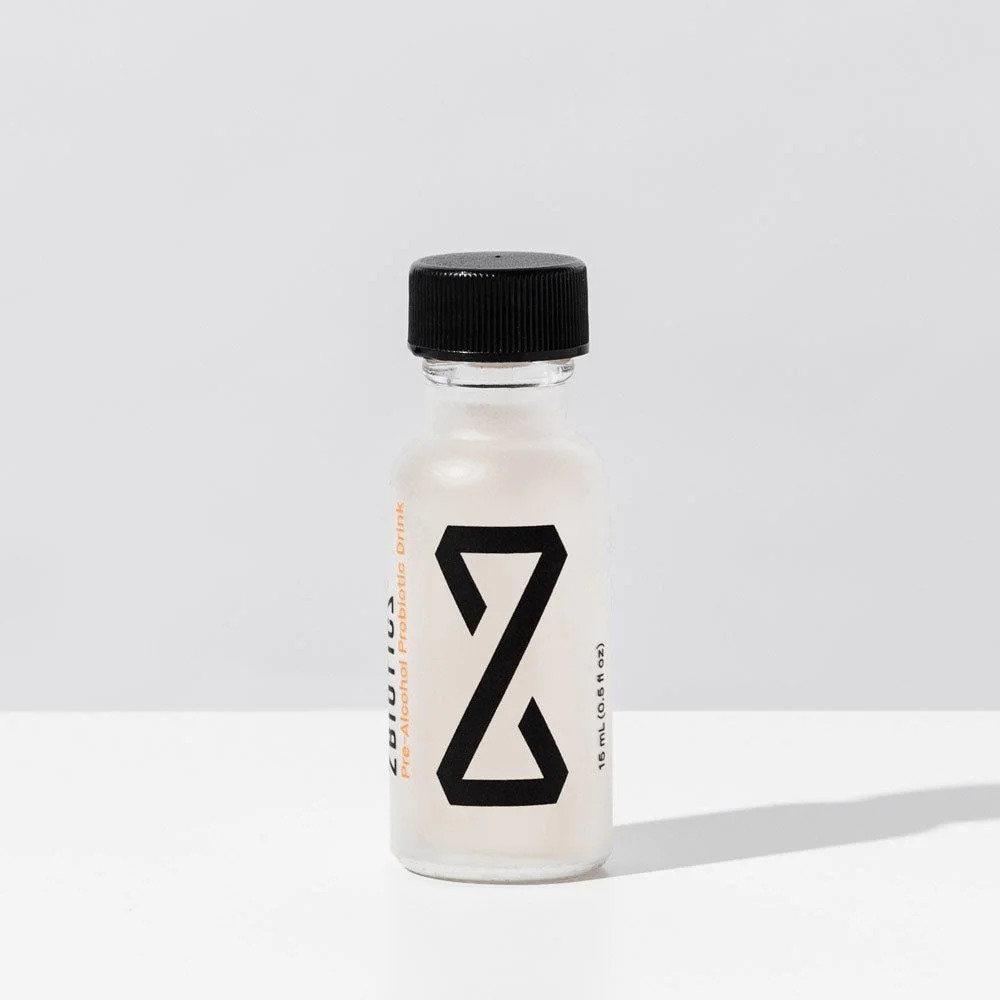
- Organism
- Bacillus subtilis
- Strain
- ZB183 (Pre‑Alcohol)
- New gene
- An aldehyde dehydrogenase
- Job
- Acetaldehyde to acetate, in the gut
- Label
- “Proudly GMO”
The short version
How does ZBiotics work? One added gene, a lab result, no human trial
ZBiotics Pre‑Alcohol is Bacillus subtilis engineered to make an enzyme that turns acetaldehyde into acetate. It lowered acetaldehyde in a lab model of the gut. Your liver handles most alcohol and most acetaldehyde, no human trial has tested the product, and hangovers track blood alcohol and inflammation more than acetaldehyde.
- Your liver turns alcohol into acetaldehyde, then into acetate.
- Gut bacteria also make some acetaldehyde from alcohol in the colon.
- ZB183 is built to break down acetaldehyde in the gut, not in your blood or liver.
- One company lab study supports step 3. Nothing in people yet.
The pathway
Where alcohol goes, and where ZB183 works
Pick a view. The diagram fades what doesn't apply.
Swipe the diagram sideways; the notes below explain each view.
Textbook biochemistry
Most alcohol is broken down in the liver: alcohol dehydrogenase makes acetaldehyde, and aldehyde dehydrogenase turns it into acetate. A bacterium in your gut can't reach this.
Lab only
Gut bacteria also make acetaldehyde from alcohol in the colon. ZB183 carries an extra enzyme to turn that gut acetaldehyde into acetate. In one company study it did this in a lab gut model. In animals, colon acetaldehyde changed without blood acetaldehyde changing.
Human studies
In people, how bad a hangover feels tracked blood alcohol and inflammation markers, not blood acetaldehyde. No trial has measured what ZB183 does in people.
Conceptual mechanism diagram. Boxes are not to scale and no quantity is plotted. Sources: Hurley 2012, PMID 23134050 · Hassan‑Casarez 2024, PMID 39509360 · Visapää 2002, PMID 12107032 · Mackus 2020, PMID 33113870 · van de Loo 2020, PMID 32630717. Visualized by samā·says.
How it's built
One gene, placed with care
A familiar bacterium
Bacillus subtilis is common in soil and fermented foods such as natto. It forms tough spores, which helps it survive the stomach.
An added enzyme gene
The company inserted a gene for an aldehyde dehydrogenase into the bacterium's own DNA, at a spot chosen so it is made reliably. It is patented (US 10,849,938).
Not a permanent resident
The maker says the strain doesn't settle in your gut and passes through within a day or two. That's the company's statement; we found no independent study of it.
Hassan‑Casarez 2024, PMID 39509360 (company authors)ZBiotics FAQ and quality page
ZB423 makes fiber instead
The second product uses another engineered B. subtilis, ZB423, that makes levansucrase, an enzyme that turns table sugar into a fiber called levan. It also has no human trial. My Sugar‑to‑Fiber review.
The evidence, rung by rung
How much of this has been tested?
None published on PubMed and none registered on ClinicalTrials.gov, searched 25 Nov 2026.
ZB183 lowered acetaldehyde in a lab gut model. All five authors work for ZBiotics and hold stock. Hassan‑Casarez 2024, PMID 39509360.
90 day studies of ZB183 and ZB423 found no harm at high doses. Company funded. PMID 31781202, PMID 39168852.
Other research groups gave ZB183 to rats with fatty liver or diabetes and reported improvements. Not about hangovers; rats aren't people. PMID 39290381, PMID 39905472.
The bigger question
Is acetaldehyde what makes a hangover?
What human studies found
Probably not the main driver
In studies of people after a night of drinking, hangover severity was linked to blood alcohol and to inflammation markers such as IL‑6 and CRP. Blood acetaldehyde was not clearly linked.
Mackus 2020, PMID 33113870 · van de Loo 2020, PMID 32630717
What reviews of remedies found
Nothing is proven
Reviews of hangover remedies found no convincing evidence for any of them; one 2022 review rated all the evidence very low quality. Drinking less is the only reliable approach. Water is sensible, but it doesn't prevent a hangover.
Pittler 2005, BMJ, PMID 16373736 · Roberts 2022, Addiction, PMID 34972259 · Mackus 2024, PMID 39069212
Safety and the rules
Safe enough to sell, by the company's own assessment
ZBiotics is sold as a food, not a medicine, and nobody at the FDA has reviewed whether it works.
- GRAS statusThe company says its strains are generally recognised as safe on its own expert assessment. There is no FDA GRAS notice for either strain.
- Safety testingTwo 90 day rat studies, funded by the company, found no harm. No human safety study has been published.
- Label“Proudly GMO”, on both products.
- ManufacturingMade in FDA registered food facilities under food rules, the maker says; every batch is tested.
- Effect claimsThe maker says it does not lower blood alcohol or intoxication.
Before you try it
Who should skip it or ask first
- A weakened immune system, a central line, or serious illnessBacillus subtilis rarely causes bloodstream infections, but cases are on record in vulnerable people.
- Pregnant, breastfeeding, or childrenNot tested in these groups.
- Alcohol use disorder, or trying to cut downNothing here makes drinking safer; talk to a doctor or someone you trust.
- On medicinesNo drug interaction studies have been done.
Sada 2025, PMID 41018695Chen 2026, PMID 42350857
Want to try it? Code REFRESHED: 10% off a first order
REFRESHED is the samā·says code for 10% off a first order of eligible ZBiotics products. Offer terms can change, so confirm the REFRESHED line in your order summary before you pay.
Affiliate link: we may earn a commission at no extra cost to you. Nothing here is sponsored. All current ZBiotics code details.
Quick answers
How ZBiotics works: questions
How does ZBiotics work?
It's Bacillus subtilis engineered to make an aldehyde dehydrogenase, which turns acetaldehyde into acetate. It's meant to act on acetaldehyde in the gut. Most alcohol is processed in the liver, which the bacterium can't reach.
Does ZBiotics work?
It lowered acetaldehyde in a lab gut model in one company study. No human trial has tested it, so whether it changes how you feel the next day is unknown.
What is ZB183?
ZB183 is the strain in ZBiotics Pre‑Alcohol: Bacillus subtilis with an added gene for an aldehyde dehydrogenase, the enzyme that turns acetaldehyde into acetate. The company patented it.
Is ZBiotics genetically modified?
Yes. The label says “Proudly GMO”.
Does it stay in my gut?
The maker says no: it passes through within a day or two. We found no independent study of that.
Is ZBiotics FDA approved?
No. It's sold as a food. The company calls its strains GRAS on its own assessment; there is no FDA GRAS notice for them.
What causes a hangover, if not acetaldehyde?
It isn't fully understood. In human studies, hangover severity tracked blood alcohol and inflammation. Acetaldehyde may play a part, but the evidence doesn't show it as the main cause.
Keep reading
The rest of the ZBiotics guide
- Hassan‑Casarez C et al. Engineering a probiotic Bacillus subtilis for acetaldehyde removal. PLoS One 2024. PMID 39509360 (company authors)
- Appala Naidu B et al. Lyophilized B. subtilis ZB183 spores: 90 day oral toxicity study in rats. J Toxicol 2019. PMID 31781202
- K N V et al. Bacillus subtilis ZB423: 90 day oral toxicity study in rats. J Appl Toxicol 2024. PMID 39168852
- Saad M et al. ZB183 in a rat NASH model. RSC Med Chem 2024. PMID 39290381
- Esawie M et al. ZBiotics in diabetic rats. Diabetol Metab Syndr 2025. PMID 39905472
- Hurley TD, Edenberg HJ. Genes encoding enzymes involved in ethanol metabolism. Alcohol Res 2012. PMID 23134050
- Visapää JP et al. Intracolonic acetaldehyde during ethanol challenge. Alcohol Alcohol 2002. PMID 12107032
- Mackus M et al. The role of alcohol metabolism in the pathology of alcohol hangover. J Clin Med 2020. PMID 33113870
- van de Loo AJAE et al. The inflammatory response to alcohol and hangover. J Clin Med 2020. PMID 32630717
- Pittler MH et al. Interventions for preventing or treating alcohol hangover. BMJ 2005. PMID 16373736
- Roberts E et al. Pharmacological interventions for hangover. Addiction 2022. PMID 34972259
- Mackus M et al. Alcohol hangover versus dehydration revisited. Alcohol 2024. PMID 39069212
- Sada RM et al. B. subtilis from blood cultures. Open Forum Infect Dis 2025. PMID 41018695
- Chen J et al. Probiotic associated B. subtilis bloodstream infection in a preterm infant. 2026. PMID 42350857
- ZBiotics product pages, FAQ, quality and mission pages; FDA GRAS Notice Inventory; read 25 Nov 2026
For education only, not medical advice. Drink responsibly and never drink and drive. As an affiliate, samā·says may earn a commission on purchases made through links on this page.