

Prima Protein Bars vs Other Protein Bars (2026): Are They Worth It Compared to Clean Alternatives?
Nutrition · Comparison
Prima Protein Bars vs Other Protein Bars (2026): Are They Worth It Compared to Clean Alternatives?
An honest breakdown of how Prima's whole food formulation actually compares to conventional protein bars on ingredients, digestion, and taste.
- Prima swaps out isolates, seed oils, and artificial sweeteners for grass fed whey and collagen, raw honey, and beef tallow.
- The biggest practical differences show up in energy stability, digestion, and satiety, not just what is printed on the nutrition label.
- Prima is not the right pick if you want an ultra low sugar or plant based only bar, conventional options may fit better there.
- Discount is 15% off, applied automatically through the link below, no code required.
This article is part of our Complete Guide to Prima Protein Bars, where we break down clean protein bars, ancestral ingredients, nutrition, and how Prima compares to conventional options. With so many protein bars on the market, choosing the right one often comes down to more than just the protein number on the label. Ingredient quality, digestion, energy levels, and overall satiety all play a role in whether a bar actually supports your health goals.
Prima Protein Bars have gained attention for taking a cleaner, more ancestral approach. But how do they actually compare to conventional protein bars and other "healthy" options? If you want a complete buying breakdown before comparing options, start with Prima Protein Bars: Everything You Need to Know Before You Buy.
Where most bars fall short
The Problem With Most Protein Bars
Most protein bars are designed for shelf stability and mass appeal rather than ingredient quality. They may hit certain macro targets, but that does not mean they make you feel good.
Artificial sweeteners
Sucralose or sugar alcohols like erythritol, common causes of bloating.
Seed oils
Prone to oxidation, used as a cheap fat source in most mass market bars.
Processed protein blends
Formulated for cost and shelf life over digestibility.
Long ingredient lists
Additives and stabilizers that signal a highly processed product.
For a full ingredient breakdown of Prima specifically, see What's Inside Prima Protein Bars?
Step one
How Prima Protein Bars Are Different
Prima takes a more minimal, whole food approach instead of formulating around shelf stability.
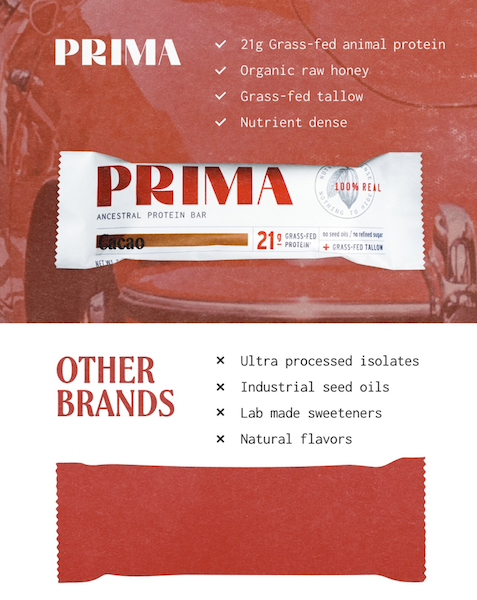
A Minimal, Whole Food Ingredient List
What's inside
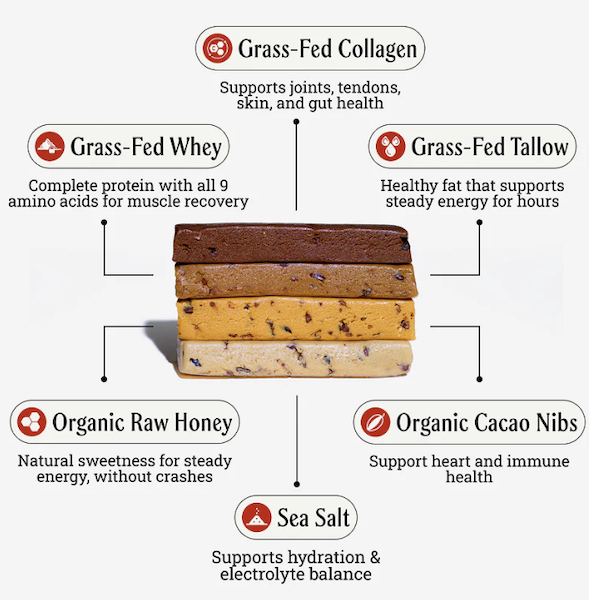
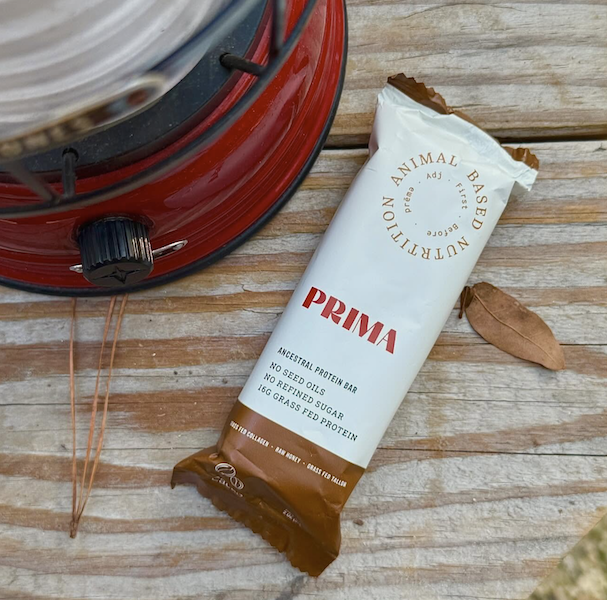
- Grass fed whey protein combined with collagen
- Raw honey instead of artificial sweeteners
- Beef tallow instead of seed oils
- A simple ingredient list of recognizable foods
Why it matters: this shift in formulation can impact digestion, energy stability, and satiety, not just the numbers on the label.
Step two
Ingredient Comparison: Prima vs Conventional Protein Bars
This comparison highlights one of the biggest differences: Prima prioritizes ingredient quality over formulation shortcuts.
Utilizes artificial sweeteners for sweetness
Often found in processed food products.
Contains fats derived from seed oils
Commonly used in many processed food items.
Protein derived from processed blends
Formulated for convenience and cost effectiveness.
Features long and complex ingredient lists
Indicates a highly processed product.
Sweetened with raw honey
A natural and less processed sweetener.
Features fats from beef tallow
A rendered animal fat source.
Protein from grass fed whey and collagen
Emphasizes high quality, natural protein sources.
Composed of minimal whole food ingredients
Suggests a focus on natural components.
Energy and Blood Sugar Response
One of the most noticeable differences between protein bars is how they affect energy levels. Conventional bars often rely on artificial sweeteners or refined carbohydrates, which can lead to inconsistent energy. Prima's use of honey, combined with protein and fat, may provide a more balanced energy release.
Research shows that macronutrient composition and food form, not just sugar content, meaningfully affect glucose and insulin response: NCBI, PMC5852764
Digestion and Ingredient Tolerance
Many people experience digestive issues with conventional protein bars, especially ones containing sugar alcohols or artificial ingredients. Prima avoids these entirely, instead using ingredients that are generally easier to tolerate, including collagen, which has been studied for its role in supporting the intestinal barrier and connective tissue.
Collagen peptides have been shown to strengthen intestinal tight junctions and reduce epithelial barrier dysfunction: PubMed, 28174772
Want a cleaner alternative to conventional protein bars?
Try Prima Protein Bars
If you're tired of protein bars that leave you feeling bloated or unsatisfied, Prima offers a simpler, whole food approach. No code needed, discount auto applies through the link.
Step three
Taste and Texture Comparison
Taste is where many "clean" protein bars fall short. Conventional bars often taste overly sweet, chalky, or artificial.
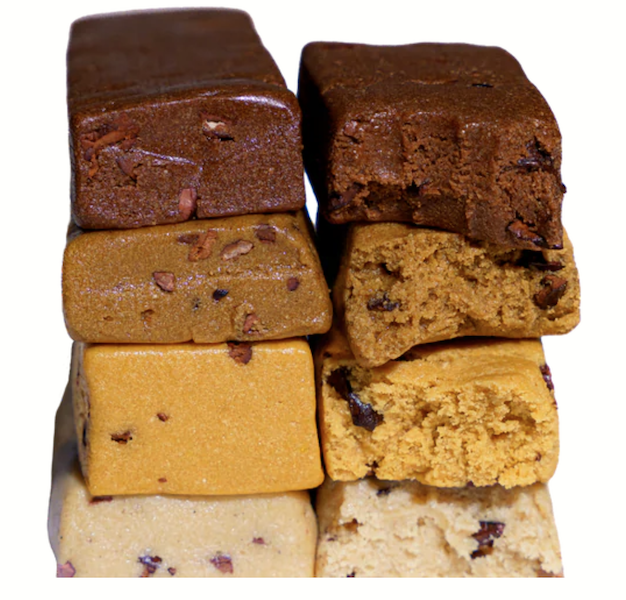
A Soft, Fudgy, Whole Food Texture
What to expect
- A soft, fudgy texture rather than dry or chalky
- Balanced sweetness from raw honey
- A more natural, less artificial flavor profile
Worth noting: the cacao based flavors taste closer to a dessert than a typical protein bar, without being overly sweet.
Satiety and Meal Replacement Potential
Satiety is another area where Prima performs differently. The combination of protein, natural fats, and whole food carbohydrates can help you feel fuller for longer compared to many low fat, high sugar alternatives. This makes Prima a better option for on the go meals, long workdays, and sustained energy needs.
Who Should Choose Prima vs Other Protein Bars
Choose Prima if you want
Choose conventional bars if
Quick answers
Frequently Asked Questions About Prima vs Other Protein Bars
Are Prima protein bars healthier than regular protein bars?
Do Prima protein bars have less sugar than other bars?
Are Prima protein bars better for digestion?
Do conventional protein bars contain seed oils?
Are Prima protein bars worth the price?
Ready to upgrade your protein bar?
Get 15% Off Prima Protein Bars
Real ingredients, sustained energy, and better digestion. No code needed, the discount applies automatically through the link.
Go deeper
Explore the Full Prima Guide
The Complete Guide to Prima Protein Bars
Read the guide →Prima Protein Bars: Everything You Need to Know Before You Buy
Read the guide →What's Inside Prima Protein Bars?
Read the breakdown →Prima Protein Bars Review (2026)
Read the review →Final Thoughts
Not all protein bars are created equal. While conventional protein bars often focus on convenience and macros, Prima Protein Bars take a more balanced approach by prioritizing ingredient quality, digestion, and sustained energy. If your goal is to move toward cleaner, more whole food based nutrition without sacrificing convenience, Prima stands out as one of the more thoughtful options available.
Keep reading
You May Also Like
For educational purposes only. Nothing here is medical advice, consult a qualified professional before making changes to your diet. As an affiliate, samā·says may earn a commission on qualifying purchases made through links in this post.