

Is Sky and Sol Sunscreen Reef Safe?
Sky and Sol Skincare · Ingredient Safety
Is Sky and Sol Sunscreen Reef Safe?
What "reef safe" actually means, which sunscreen chemicals harm coral, and why Sky and Sol's Face & Body Sunscreen is built to avoid them.
- Yes. Sky and Sol Face & Body Sunscreen is reef safe, it uses non-nano zinc oxide instead of chemical UV filters linked to coral damage.
- "Reef safe" specifically means avoiding oxybenzone, octinoxate, and octocrylene, the three chemicals most consistently tied to coral bleaching.
- Non-nano zinc oxide sits on top of skin and reflects UV rays rather than absorbing into the bloodstream or washing off into the water.
- Hawaii, Key West, and Palau have all restricted reef harming sunscreen chemicals, mineral formulas like this one meet those standards.
Sky and Sol Face & Body Sunscreen is reef safe because it's formulated entirely with non-nano zinc oxide as its UV filter, with no oxybenzone, octinoxate, or octocrylene, the chemicals most commonly restricted for their impact on coral reefs.
As someone who has used tallow based skincare for years, finding a sunscreen that aligns with both my health standards and my environmental values hasn't always been easy. This article is part of our Complete Sky and Sol Skincare Guide. Below, exactly what "reef safe" means, which ingredients to avoid, and how this formula holds up against that standard.
The definition
What Makes a Sunscreen Reef Safe?
A sunscreen is generally considered reef safe when it avoids UV filters known to contribute to coral bleaching, disrupt marine ecosystems, or accumulate in ocean environments.
Some chemical UV filters are absorbed into the body and can persist after repeated use: NCBI, PMC7648445
Zinc oxide has been shown to be a safe, effective UV blocking ingredient with minimal systemic absorption: NCBI, PMC8550398
The formula
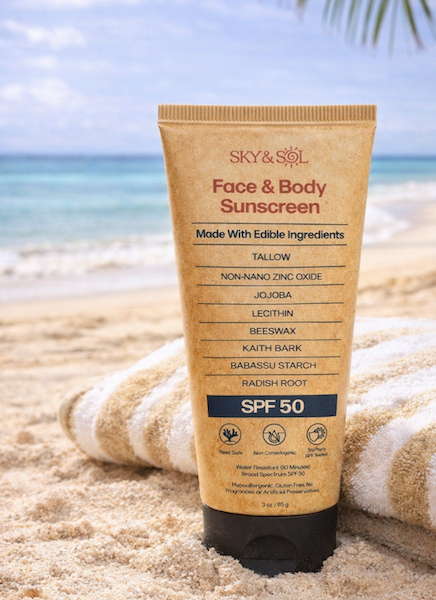
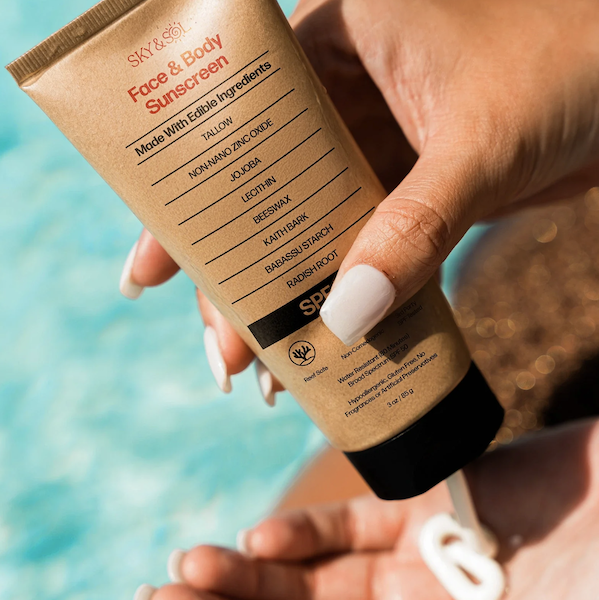
Sky and Sol Face & Body Sunscreen
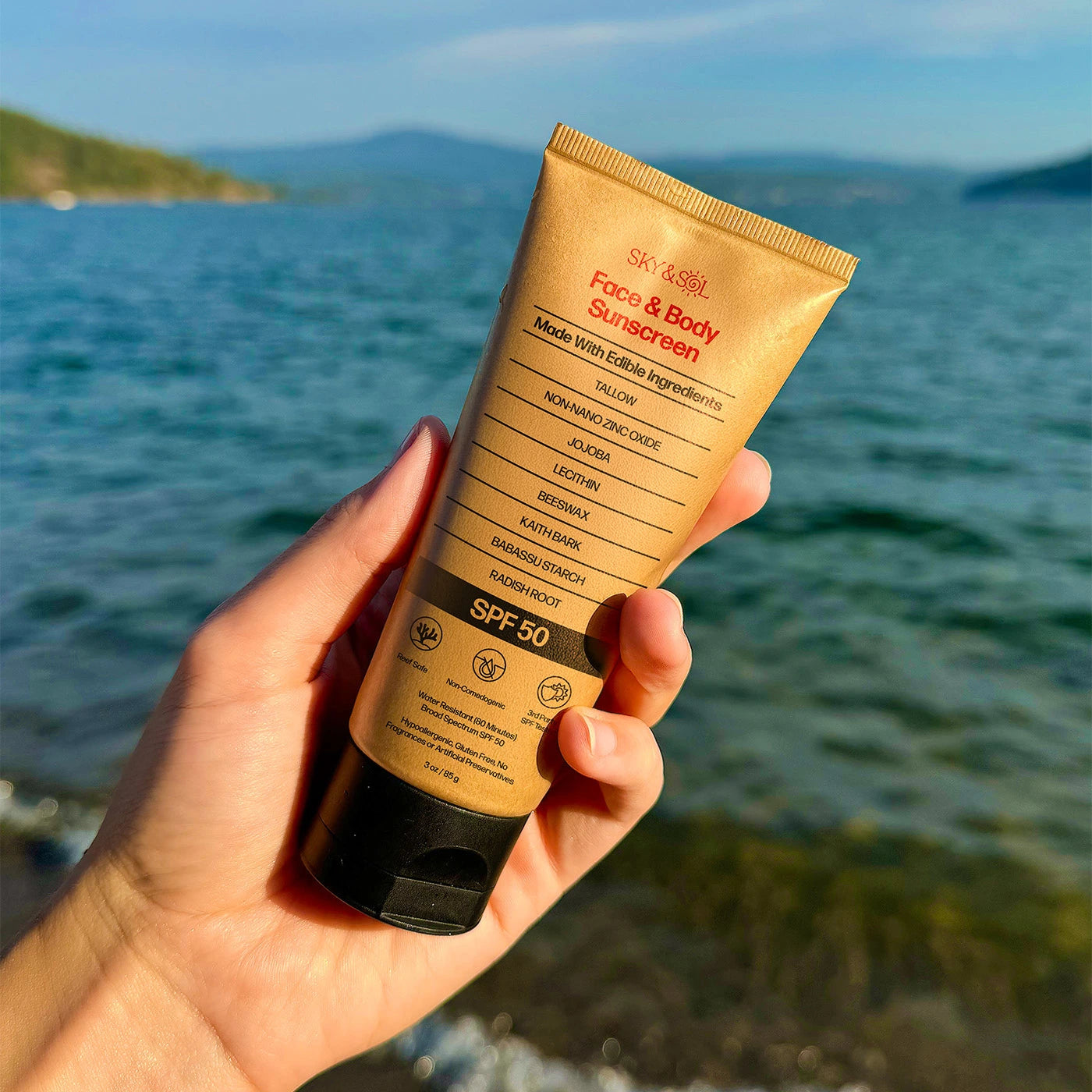
Made With Edible Ingredients
What's inside
- Tallow, non-nano zinc oxide, jojoba
- Lecithin, beeswax, vitamin E, radish root
- Reef safe, non-comedogenic, water resistant 80 minutes
- Broad spectrum SPF 30
Worth knowing: Sky and Sol also makes an SPF 50 version of this formula for extended sun exposure, this review focuses on the SPF 30 Face & Body Sunscreen.
Why Tallow Based Sunscreen Is More Environmentally Compatible
Grass fed tallow is biodegradable, stable under sun exposure, and highly compatible with human skin. Unlike heavily processed seed oils, which oxidize and degrade over time, tallow stays stable, making it a more reliable, environmentally aligned base than most conventional sunscreen carriers.
Jojoba Oil
Balances and hydrates skin without clogging pores.
Beeswax
Forms a protective, water resistant barrier on the skin.
Propolis
Antioxidant support that also helps repair skin.
Why this matters beyond ingredients
Where Reef Safe Sunscreen Is Required
Several regions have already restricted reef harming sunscreen chemicals by law.
Hawaii
Statewide ban on oxybenzone and octinoxate since January 2021. Maui County also restricts octocrylene.
Key West, Florida
Banned the sale of sunscreens containing oxybenzone and octinoxate to protect the largest reef in the continental US.
Palau
First country to ban reef harming sunscreen chemicals, restricting 10 ingredients including oxybenzone and octinoxate since 2020.
Bonaire & Aruba
Both islands restrict oxybenzone and octinoxate sunscreens to protect surrounding coral reefs.
Want sun protection that's actually reef safe?
Save 10% on Sky and Sol
Mineral protection, clean ingredients, and a formula that won't wash off onto the reef.
Gentle Enough for the Whole Family

No Irritation, No Harsh Chemical Smell
In practice, this delivers on both fronts, effective sun protection with no irritation, no greasy feel, and no harsh chemical smell. It feels more like a skincare product with sun protection built in, rather than a typical sunscreen.
Good to know: the formula is non-comedogenic and hypoallergenic, gentle enough for daily use on sensitive or young skin.
Why Reef Safe Sunscreen Actually Matters
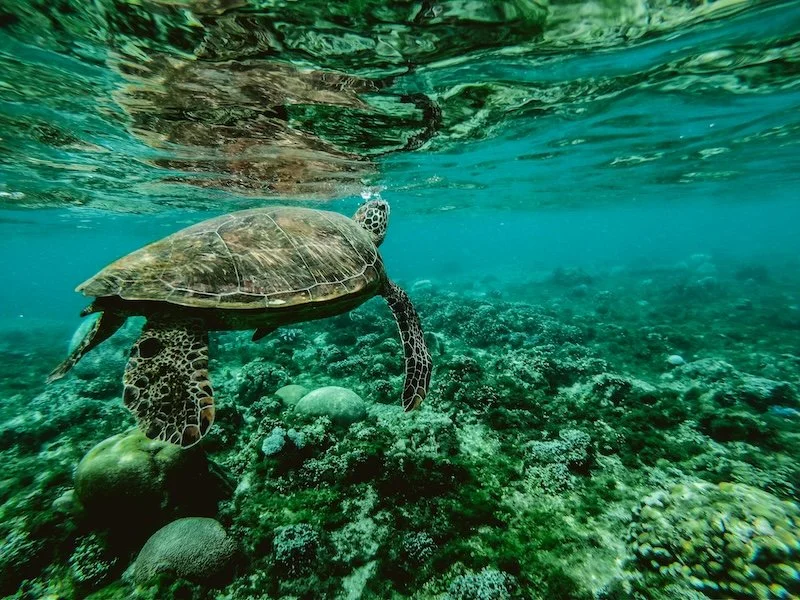
Coral Reefs Are Already Under Pressure
Coral reefs face pressure from climate change, pollution, and rising ocean temperatures. Choosing a reef safe sunscreen is a small, meaningful way to reduce personal environmental impact without giving up effective sun protection.
The takeaway: you don't have to choose between effective protection, clean ingredients, and environmental responsibility. Products like this show you can have all three.
Quick answers
Frequently Asked Questions
What makes a sunscreen reef safe?
Is zinc oxide safe for coral reefs?
Is Sky and Sol sunscreen truly reef safe?
Why are chemical sunscreens harmful to reefs?
Is tallow environmentally friendly in skincare?
Can reef safe sunscreen still be effective?
Protect your skin without compromising the ocean
Switch to Reef Safe Sunscreen
Clean ingredients, effective protection, environmentally aligned. Use code SAMASAYS for 10% off.
Final Thoughts
Sky and Sol Face & Body Sunscreen represents a real shift toward more responsible sun care, non-nano zinc oxide, biodegradable ingredients, and skin compatible fats like tallow, delivering protection without introducing unnecessary risk to your body or the ocean. If reef safety, ingredient quality, and long term skin health matter to you, this is one of the most aligned options available.
Keep reading
You May Also Like


For educational purposes only. Nothing here is medical advice, consult a dermatologist before making changes to your skincare routine. As an affiliate, samā·says may earn a commission on qualifying purchases made through links in this post.