JASPR Air Purifier Review (2026): Performance, Filters, Noise, and Value

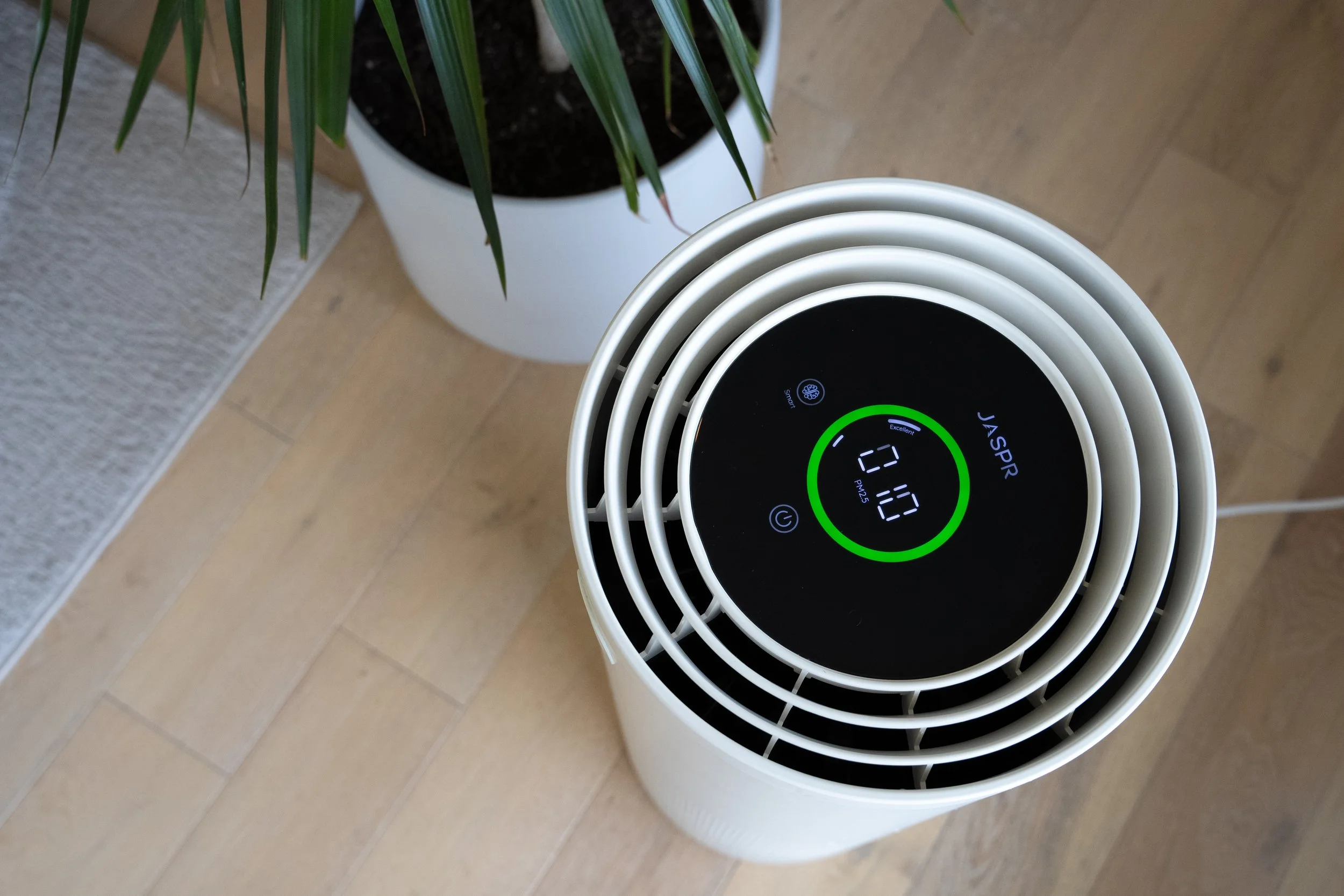
Top view of the JASPR Air Purifier showing the digital air quality display and circular vent design in a home setting.

Indoor air quality has always been personal for me. After years of navigating autoimmune challenges and long-term exposure to mold and environmental allergens, I’ve become far more intentional about the air inside my home.

That search for a reliable air purification solution led me to the JASPR Air Purifier — a unit that has gained attention for its filtration technology, performance claims, and long-term durability.

In this review, I’ll break down:

• Design and build quality
• Filtration system and technology
• Real-world performance in daily use
• Noise levels and maintenance
• How it compares to other air purifiers
• Whether it justifies the investment

If you’re considering JASPR for mold, allergies, or overall indoor air quality, this analysis will help you decide if it fits your needs.

👉 See the independent lab results on JASPR’s mold spore reduction performance.


Key Takeaways

• The JASPR Air Purifier features a compact, modern design suitable for bedrooms, offices, and mid-sized living spaces.

• Its multi-stage filtration system is designed to capture airborne particles such as dust, pollen, and mold spores.

• While priced higher than some competitors, its filtration performance, build quality, and lifetime warranty may justify the investment for those prioritizing indoor air quality.


JASPR Air Purifier Overview

After extended use, the JASPR Air Purifier stands out for its build quality, filtration system, and consistent performance in daily environments.
Below, I’ll outline its design, construction, and core technology so you can understand how it functions and whether it aligns with your air quality goals.

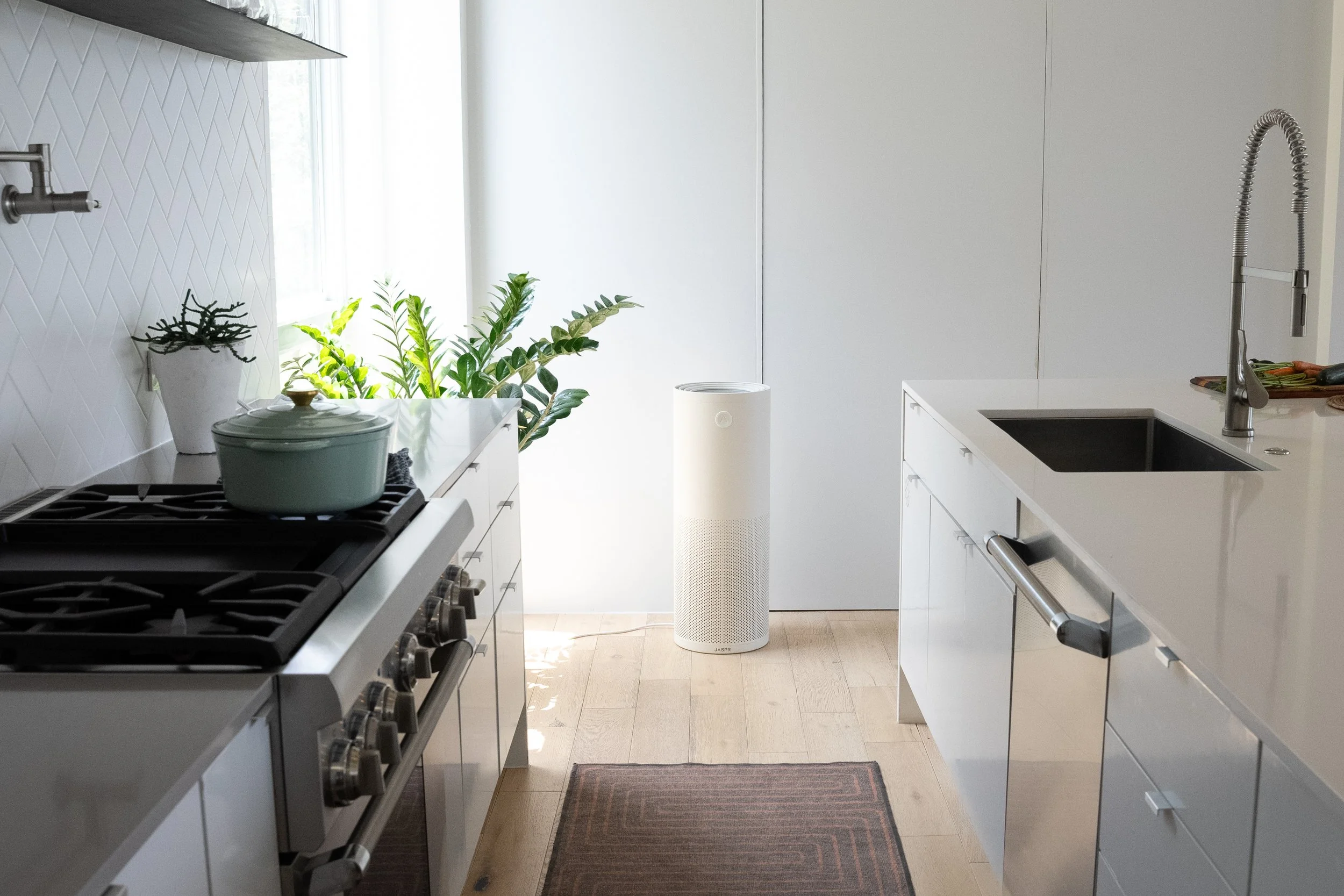
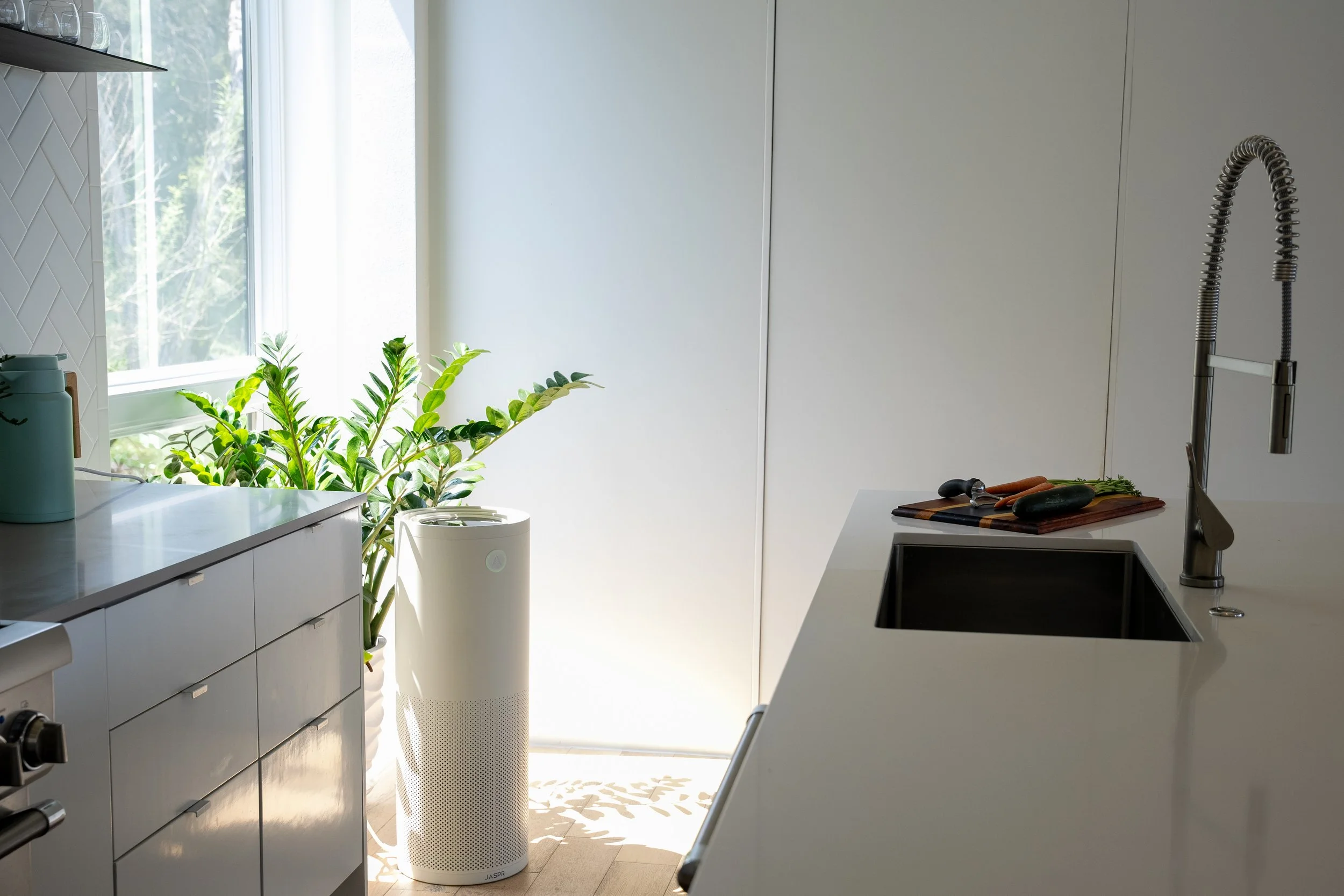
JASPR Air Purifier placed in a modern kitchen near a window, showing its full size and minimalist design in a home setting.

Design and Build Quality

The JASPR Air Purifier features a clean, modern design that integrates well into bedrooms, offices, and living spaces without drawing unnecessary attention. Its steel housing sets it apart from many air purifiers that rely primarily on plastic construction, giving it a more durable, premium feel.

The metal exterior not only enhances sturdiness but may also contribute to long-term structural integrity, especially in environments where the unit runs continuously.

In terms of size and portability, the JASPR remains compact enough for residential use while maintaining the airflow capacity expected from a performance-focused purifier. Its footprint allows placement against walls or in corners without dominating the room.

The unit includes a responsive touchscreen interface that makes adjusting fan speeds, monitoring filter status, and controlling settings straightforward. The layout is intuitive and does not require a learning curve, which is helpful for everyday usability.

Key Features and Technology

The JASPR Air Purifier integrates several core features designed to support indoor air quality in residential and office environments.

Real-Time Air Quality Monitoring

One of its standout functions is real-time air quality monitoring. The built-in sensor continuously evaluates airborne particle levels and adjusts fan speed automatically based on detected conditions.

This allows the purifier to increase airflow when pollutants rise and reduce intensity once air quality stabilizes — helping balance performance and energy efficiency.


Three-Stage Filtration System

The JASPR utilizes a multi-stage filtration system designed to target different categories of airborne contaminants:

Pre-filter – captures larger particles such as dust and hair
HEPA filter – designed to trap fine particles like pollen and airborne particulates
Activated carbon filter – helps reduce odors and volatile compounds

This layered approach allows the purifier to address both particulate matter and odor-related air concerns.


Low-Noise Operation

On its lowest setting, the JASPR operates at approximately 30 decibels — a level comparable to a quiet library environment. This makes it suitable for bedrooms, offices, or other areas where background noise is a concern.

Higher fan speeds naturally produce more airflow and sound, but the lower settings remain unobtrusive for overnight use.


Summary

Rather than relying on a single filtration element, the JASPR combines sensor-based automation, multi-stage filtration, and low-noise operation into a cohesive system.

For users prioritizing mold, allergens, or general indoor air quality management, these features form the foundation of its performance.

Performance Evaluation

Air Filtration Efficiency

The JASPR Air Purifier uses a three-stage filtration system designed to capture a wide range of airborne particles. According to manufacturer specifications, the HEPA filter captures 99.97% of particles down to 0.3 microns, which meets the standard for True HEPA filtration.

In addition to the HEPA layer, the pre-filter helps trap larger debris such as dust and hair, while the activated carbon component targets odors and certain airborne compounds.

JASPR also incorporates air scrubbing technology intended to further reduce airborne contaminants within the treated space. As with all air purification systems, real-world performance depends on room size, airflow, and environmental conditions.


Real-World Use in My Home

During extended use, I observed noticeable improvements in overall air clarity — particularly in rooms where dust and pet hair tend to accumulate.

As someone living in Austin, where pollen and cedar levels can fluctuate seasonally, I found the purifier helpful in maintaining more stable indoor air conditions during high-allergen periods.

While air purifiers are not medical devices and do not treat underlying conditions, improving indoor air quality can support a more comfortable home environment — especially in areas prone to seasonal allergens.


Regional Consideration: Austin Air Quality

Central Texas is known for heavy pollen seasons, including cedar and ragweed spikes. For households navigating those seasonal shifts, a properly sized HEPA air purifier can play a supportive role in managing indoor particle levels.

👉 Read our full breakdown on using JASPR for mold allergies and sensitivity.

Infographic showing the rule of threes: humans can survive three weeks without food, three days without water, and three minutes without air.

Energy Efficiency

The JASPR Air Purifier is Energy Star certified, meaning it meets energy efficiency standards established by the U.S. Environmental Protection Agency. This certification indicates that the unit is designed to operate with reduced energy consumption compared to less efficient models.

In practical use, I did not observe noticeable increases in electricity usage during normal operation. As with any continuously running appliance, total consumption will vary depending on fan speed and daily runtime.


Practical Takeaway

For households running an air purifier consistently, balancing filtration strength with noise output and energy efficiency is important. The JASPR Air Purifier offers adjustable performance levels that allow users to tailor airflow intensity while maintaining reasonable sound and power usage.

User Experience and Maintenance

Setup and Operation

Setting up the JASPR Air Purifier is straightforward and does not require tools or technical configuration. After unboxing, the unit simply needs to be positioned in an appropriate space, plugged in, and powered on.

The touchscreen interface is minimal and intuitive. Users can:

• Adjust fan speed settings
• Activate sleep mode
• Set timers
• Monitor filter status (if applicable)

Controls are responsive and clearly labeled, making daily operation simple even for first-time air purifier users.


Everyday Use

In regular use, switching between fan speeds and sleep mode is seamless. The sleep setting reduces fan intensity and light output, which can be helpful in bedrooms or nighttime use.

Because air purifiers often run continuously, ease of adjustment and visibility of settings become important. The JASPR’s interface supports that without requiring app connectivity or complex programming.


Maintenance Requirements

Like most HEPA-based systems, the JASPR requires periodic filter replacement to maintain performance. The exact replacement interval will depend on usage frequency and indoor air conditions.

Routine maintenance typically includes:

• Replacing filters according to manufacturer guidance
• Checking for dust buildup on exterior vents
• Ensuring unobstructed airflow around the unit

Maintenance is relatively simple and does not require disassembly beyond standard filter access.


Filter Replacement and Ongoing Care

Filter Lifecycle

The JASPR Air Purifier includes a filter replacement indicator that alerts users when performance may begin to decline due to filter saturation. This helps maintain consistent airflow and filtration efficiency over time.
The system includes:

Washable pre-filter – designed to capture larger particles such as dust and hair. This can be cleaned and reused, extending the life of the primary filters.
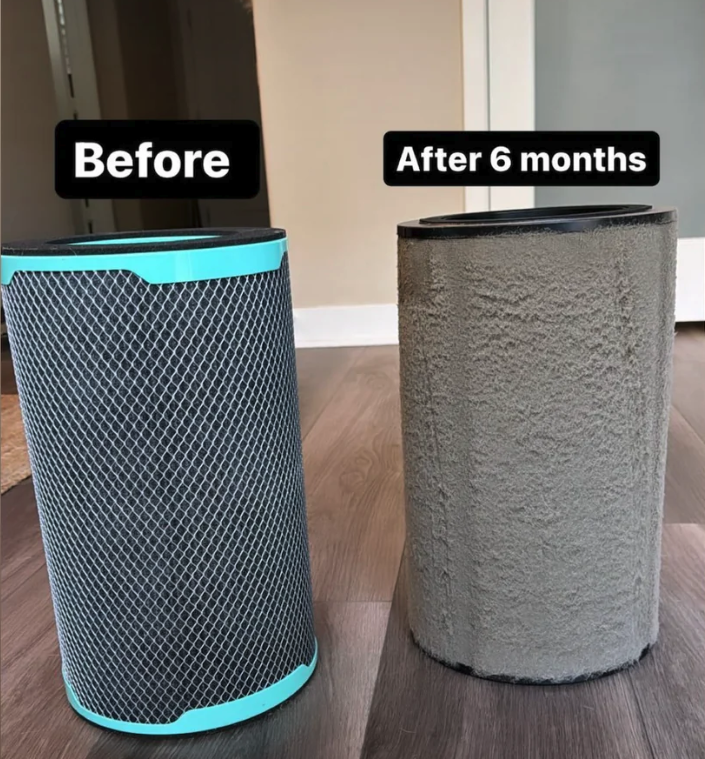
HEPA filter – designed to capture fine airborne particles and typically replaced approximately every six months, depending on usage and environmental conditions.
Activated carbon component – helps manage odors and may require replacement alongside the HEPA filter.

Actual replacement frequency will vary based on room size, pollutant load, pets, seasonal allergens, and runtime.

Long-Term Maintenance Considerations

Beyond filter replacement, routine care is minimal:

• Wipe exterior surfaces with a soft cloth
• Keep air intake and exhaust areas unobstructed
• Avoid moisture exposure near electrical components

As with most HEPA-based purifiers, long-term ownership costs primarily relate to filter replacement rather than electricity usage.

Side-by-side comparison of a clean JASPR air purifier filter and a used filter after six months of operation.

Comparative Analysis


Comparison with Competing Models

When evaluating air purifiers, it’s important to compare filtration design, airflow capacity, sensor automation, noise levels, and long-term maintenance costs rather than focusing on a single feature.

Below is a high-level comparison between the JASPR Air Purifier and two commonly considered alternatives.


JASPR vs Dyson Pure Cool

The Dyson Pure Cool combines air purification with bladeless fan technology and a modern aesthetic. It emphasizes airflow circulation and design integration within living spaces.

JASPR, by contrast, focuses primarily on filtration strength and structural durability, with its steel housing and multi-stage filter system. While Dyson models often prioritize integrated fan performance and design, JASPR positions itself as a filtration-focused unit for dedicated air purification.

Buyers deciding between the two should consider whether design-forward airflow circulation or filtration-centric performance better suits their environment.


JASPR vs Coway Airmega 200M

The Coway Airmega 200M is a popular mid-range purifier known for its compact size and automated fan adjustment.

Both Coway and JASPR utilize HEPA-based filtration systems and air quality monitoring. Differences typically come down to build materials, airflow output, long-term filter costs, and warranty structure.

JASPR’s steel construction and lifetime warranty may appeal to buyers prioritizing durability, while the Coway offers a strong performance-to-price balance in smaller spaces.

👉 Explore our 2026 air purifier comparison to see how JASPR stacks up against other leading models.


Practical Comparison Takeaway

Rather than focusing solely on brand comparisons, the more important considerations include:

• Room size and airflow capacity
• Filter replacement frequency and cost
• Noise tolerance
• Automation features
• Warranty coverage

The JASPR Air Purifier competes in the category of performance-oriented home purifiers designed for consistent daily use. Whether it’s the right fit depends on room size, budget, and specific indoor air concerns.


Price-to-Performance Ratio

Air purifiers vary widely in price depending on filtration strength, airflow capacity, materials, and warranty coverage.

The JASPR Air Purifier sits above entry-level budget models in terms of price. However, it also incorporates features typically associated with higher-tier units, including:

• Steel housing rather than plastic construction
• Multi-stage HEPA-based filtration
• Real-time air quality monitoring
• Energy Star certification
• Lifetime warranty coverage

When evaluating overall cost, it’s also important to consider long-term ownership factors such as filter replacement frequency and energy usage. In many cases, the upfront price represents only part of the total investment.

For buyers prioritizing durability, structural build quality, and consistent daily filtration performance, the JASPR may justify its higher price point. Those focused strictly on budget may find lower-cost alternatives sufficient for smaller or less demanding environments.


Considering the JASPR Air Purifier?

If you're evaluating air purifiers for mold, allergens, or overall indoor air quality, the JASPR Air Purifier offers a filtration-focused approach with durable construction and Energy Star efficiency.

You can check current pricing and available filter options below.

Use code FRESH at checkout for 25% off your order.


Final Thoughts

After extended evaluation, the JASPR Air Purifier delivers consistent performance in the areas that matter most for home air purification: filtration strength, structural build quality, noise control, and long-term durability.

Rather than relying on marketing-heavy features, its value comes from steady daily operation, solid materials, and a filtration system designed for continuous use.

For households navigating seasonal allergens, dust accumulation, or general indoor air concerns — particularly in regions like Central Texas where pollen levels fluctuate — the JASPR provides a stable, performance-oriented option.

JASPR air purifier placed in a modern kitchen near a window, demonstrating clean air performance and sleek home design integration.

JASPR Air Purifier FAQ: Filtration, Noise, Maintenance, and Performance


What room size is the JASPR Air Purifier designed for?

The JASPR Air Purifier is generally suited for small to medium-sized rooms, though performance depends on airflow capacity and fan speed settings. Always compare the manufacturer’s recommended square footage with your room size to ensure optimal filtration efficiency.


Does the JASPR Air Purifier remove mold spores?

The JASPR uses HEPA-based filtration designed to capture airborne particles, including mold spores. However, air purifiers do not eliminate mold growth at its source. They can help reduce airborne particulates within treated indoor spaces.


Is the JASPR Air Purifier good for allergies?

Because it uses HEPA filtration to capture fine airborne particles like pollen and dust, the JASPR may help reduce common indoor allergens. Individual responses vary, and it is not a medical treatment, but improved air filtration can support a more comfortable environment.


How often do JASPR filters need to be replaced?

Filter replacement typically depends on usage and air quality conditions. Many users replace HEPA filters approximately every six months, though high-pollution environments may require more frequent changes. The built-in indicator helps signal when replacement is needed.


How loud is the JASPR Air Purifier?

The JASPR operates within an approximate range of 28–52 decibels depending on fan speed. Lower settings are comparable to a quiet room, while higher speeds produce more noticeable airflow sound.


Is the JASPR Air Purifier Energy Star certified?

Yes, the JASPR Air Purifier is Energy Star certified, meaning it meets efficiency standards established by the U.S. Environmental Protection Agency for reduced energy consumption.


How does JASPR compare to other air purifiers like Dyson or Coway?

JASPR emphasizes durable steel construction, HEPA-based filtration, and real-time air monitoring. Other brands may prioritize design integration, additional airflow features, or compact form factors. The right choice depends on room size, budget, and filtration priorities.


Is the JASPR Air Purifier worth the price?

The value depends on your priorities. Buyers focused on durability, multi-stage filtration, and warranty coverage may find the price justified. Those seeking a basic purifier for small spaces may find lower-cost alternatives sufficient.


Ready to Improve Your Indoor Air Quality?

After reviewing its build quality, filtration system, and real-world performance, the JASPR Air Purifier stands as a durable, performance-oriented option for homes navigating allergens, dust, and seasonal air concerns.

If it aligns with your needs, you can explore current availability below.

Use code FRESH at checkout to receive 25% off your order.


You May Also Like:

Previous
Previous

Sky & Sol Tallow Sunscreen: Everything You Need to Know Before You Buy

Next
Next

Unlock Better Sleep and Wellness with Acupressure Mats: A Modern Health Hack