

JASPR vs Mold: What Third-Party Lab Testing Reveals About Airborne Mold Reduction
Lab Tested · JASPR
JASPR vs Mold: What Third-Party Lab Testing Reveals
An independent microbiology report examined JASPR's ability to reduce airborne mold spores under controlled laboratory conditions. Here's what it found.
- 87 percent reduction in airborne mold spores within 60 minutes, under third-party lab validation.
- HEPA filtration aligns with the 2 to 10 micron capture range of mold spores.
- This testing supports airborne reduction, not structural remediation.
- Best used as part of a comprehensive indoor air strategy, not a standalone fix.
This article serves as an update to my full JASPR Air Purifier review. For a complete breakdown of design, daily use, noise levels, and long term performance, read the full JASPR Air Purifier review. This post focuses specifically on third-party laboratory testing that examined JASPR's ability to reduce airborne mold spores. This article is part of our Complete JASPR Air Purifier Guide.
Why Mold Spores Matter Indoors
Mold spores are present in virtually all indoor and outdoor environments. While complete elimination is unrealistic, elevated airborne concentrations may contribute to real issues.
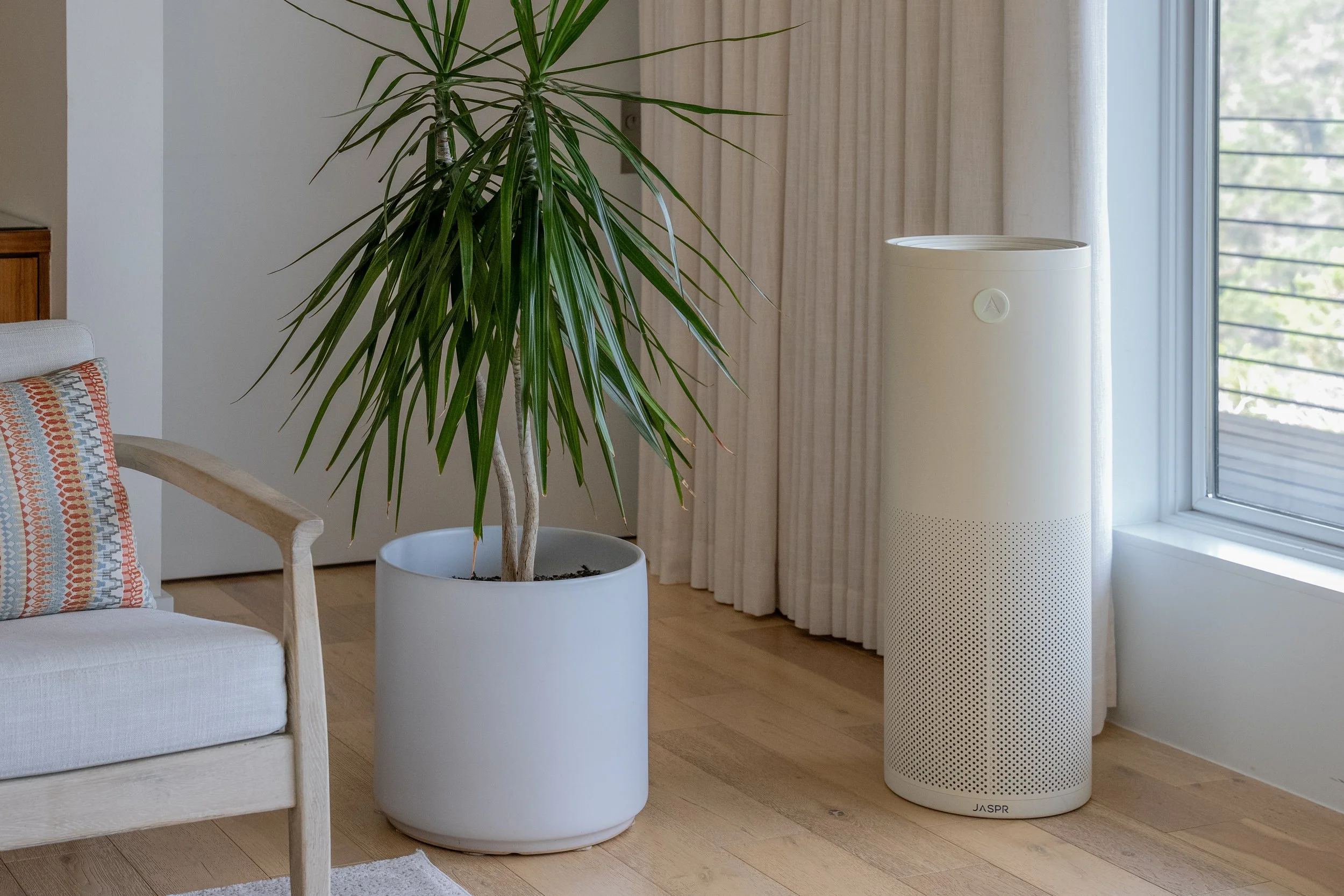
What Accumulates in Sealed Homes
- Respiratory irritation
- Allergic responses
- Odor issues
- Indoor air quality degradation
In tightly sealed modern buildings, spores can accumulate without adequate ventilation or filtration. This makes air purification an important part of environmental management, though it does not replace remediation of active mold growth.
Overview of the Third-Party Laboratory Study
A microbiology report conducted by LMS Technologies evaluated JASPR's performance under controlled laboratory conditions.
Study protocol
Researchers saturated a sealed chamber with millions of mold spores, activated the JASPR air purifier, and measured airborne mold concentrations over 60 minutes.
Standardized conditions
Environmental conditions were controlled and air samples were collected at regular intervals using calibrated equipment to ensure accuracy and repeatability.
3rd party lab results
LMS Technologies Microbiology Report
The full report, recreated here for readability. Original testing conducted by LMS Technologies, Inc.
JASPR Pro Air Purifier vs. Aspergillus Niger
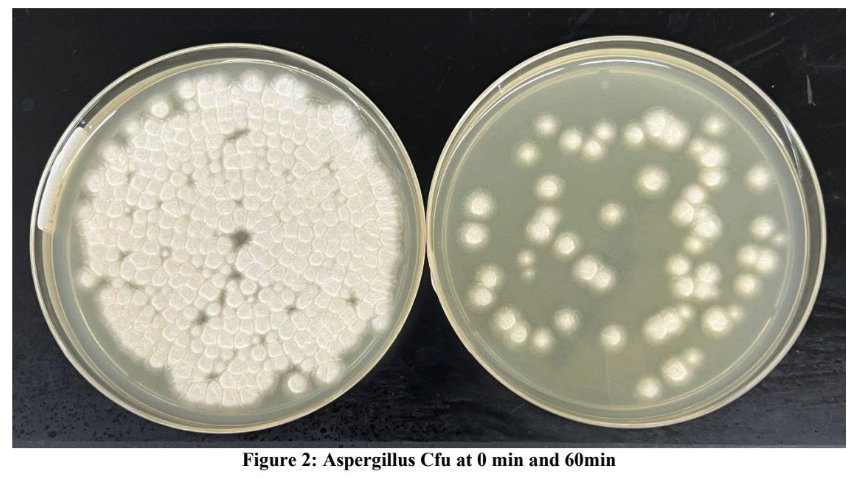
Source: LMS Technologies, Inc., Bloomington, MN. Microbiology Report LMS #9346, August 26, 2024. Testing methodology: SKC BioStage cascade impactor, samples enumerated after 24 to 48 hours of incubation.
Laboratory Findings
After 60 minutes of operation, JASPR reduced airborne mold spores by 87 percent. Projected reductions based on sustained operation suggest approximately 98 percent reduction after 3 hours, and approximately 99.9 percent reduction after 24 hours. Repeated trials demonstrated consistent results under identical conditions.
It is important to clarify: this testing evaluated airborne spores only, not mold embedded in walls, ceilings, or HVAC systems.
Considering JASPR for mold-related air concerns?
Save 25% at JASPR
While no air purifier replaces proper mold remediation, consistent HEPA filtration may help lower airborne spore concentration when used in appropriately sized spaces. Use discount code FRESH at checkout for 25% off.
How JASPR's Filtration System Works
Mold spores typically range from 2 to 10 microns, meaning they fall within the capture range of HEPA filtration.
Pre-filter
Captures larger particles before they reach the main filtration stages.
True HEPA filter
Captures 99.97 percent of particles down to 0.3 microns.
Activated carbon
Reduces odor and VOCs. The laboratory results align with what would be expected from properly functioning HEPA-based air purification in a sealed environment.
What This Means for Real Homes
Laboratory environments differ from lived-in spaces. In a real home, doors open, HVAC systems cycle, outdoor air infiltrates, and mold sources may remain active. An air purifier can reduce airborne spores, but it does not kill mold inside walls, replace professional remediation, or address moisture sources. It functions as a continuous airborne particle reduction tool.
Practical Implications
For households concerned about mold exposure history, musty odors, high humidity environments, or allergy-related sensitivity, a purifier that demonstrates measurable airborne spore reduction may serve as a supportive layer in a broader air quality strategy.
Dehumidification
Controlling moisture levels that mold needs to grow.
Mold remediation when necessary
Addressing active sources directly, not just filtering around them.
HVAC maintenance
Keeping the system that circulates your air in good condition.
Proper ventilation
Supporting fresh air exchange alongside filtration.
See how JASPR performs in real-world mold and allergy-sensitive environments.
How JASPR Compares to General HEPA Filtration
The 87 percent reduction in 60 minutes is consistent with performance expected from high-efficiency HEPA-based systems operating in contained environments. What differentiates JASPR in this context is commercial-grade airflow, multi-stage filtration, steel housing durability, and continuous operation design. However, it remains one tool among several for managing indoor environmental quality. Explore our 2026 air purifier comparison to see how JASPR compares to other leading models.
Improve indoor air quality in a mold-conscious home
25% Off with Code FRESH
JASPR is designed for sustained operation and multi-stage filtration in everyday living spaces.
Final Assessment
The third-party laboratory testing provides measurable evidence that JASPR can significantly reduce airborne mold spores under controlled conditions. It does not eliminate mold. It does not replace remediation. It does not guarantee health outcomes. But it does demonstrate strong filtration performance when evaluated using standardized methods. For those seeking an air purifier specifically to reduce airborne mold particles, these findings offer data-backed support for JASPR's filtration capabilities.
Quick answers
Frequently Asked Questions
Does JASPR eliminate mold in a home?
How effective is JASPR at removing airborne mold spores?
Can an air purifier prevent mold growth?
Is HEPA filtration effective against mold spores?
Is JASPR suitable for people sensitive to mold?
Go deeper
Explore More JASPR & Air Quality Guides
The Complete Guide to JASPR Air Purifiers
Read the guide →JASPR Air Purifier Review: Performance, Filters, Noise & Value
Read the article →Is JASPR Worth It for Mold, Allergies & Autoimmune Sensitivity?
Read the article →Top 5 Air Purifiers of 2026: A Data-Driven Comparison
Read the article →This article is educational in nature and does not replace medical advice or professional mold remediation. It summarizes third-party laboratory testing conducted by LMS Technologies, Inc. and publicly available research on air filtration. JASPR is a consumer air purification device, not a medical or remediation product, and individual results can vary. Anyone with mold exposure concerns, autoimmune conditions, or respiratory sensitivities should consult a qualified professional. As an affiliate, samā·says may earn a commission on qualifying purchases made through links in this post.