

What is Urolithin A? Exploring the Powerful Benefits of Timeline Nutrition's Key Molecule
Science guideUrolithin AUpdated September 2026
What Is Urolithin A? How It Works and What Human Studies Show
Your gut bacteria can turn compounds from pomegranates, berries and walnuts into a small molecule called urolithin A. Scientists study it because of its link to mitophagy, the way cells recycle worn out mitochondria. This guide follows the molecule from your plate to your cells, then shows exactly what the human trials measured, what they found, and what nobody has shown yet.
The short answer
Urolithin A is a compound made by gut bacteria from ellagitannins, plant compounds found in pomegranates, some berries and walnuts. In cells and animals it switches on mitophagy. In people, a handful of small trials, most funded by the company that sells it, found changes in muscle and blood markers and some secondary gains in strength or endurance, while the main goals of the two largest trials were not met.

- Human and animal evidence kept apartEvery finding is labeled by where it came from
- Main goals shown, not just highlightsEach trial's primary endpoint and whether it was met
- Funding named for every trialMost were paid for by the maker of Mitopure
- No product pitchThis page has no affiliate links
Urolithin A in one minute
Three things are worth knowing before anything else, and each one comes from a different kind of evidence.
What it is
A gut made molecule, not a food ingredient
No food contains urolithin A itself. Pomegranates, some berries and walnuts contain ellagitannins, and specific gut bacteria convert those in several steps into urolithin A.1,2
Chemistry and microbiology
What human trials show
Marker changes and some secondary gains
Small, short trials found shifts in muscle gene activity, blood markers and, in some groups, strength or muscle endurance. The two largest trials did not meet their main goals, and a 2026 meta analysis called the pooled result inconclusive.3,4,5
Human randomized trials
How to read the color tags on this page
Each tag says where a finding comes from. The four types are not a ranking or a score.
- Human Measured in people, in a trial or studyIn the text Human
- Animal Measured in worms, mice or ratsIn the text Animal
- Cell Measured in cells or tissue in a labIn the text Cell
- Claim Said in marketing or online, not shownIn the text Claim
How your body makes urolithin A
Urolithin A is a postbiotic: a compound your gut microbes make from something you ate. The raw material is a family of plant polyphenols called ellagitannins.
Very little of that raw material is absorbed on its own. Instead it travels to the large intestine, where bacteria break it down one step at a time. Each step removes a small chemical group, and the last step produces urolithin A.1 Lab work with gut samples and a gut simulator points to the lower part of the colon as the main site.1
Once absorbed, most urolithin A is quickly joined to other molecules by the body, mainly as a glucuronide or a sulfate. So when a study reports "urolithin A in blood", it is mostly measuring these joined forms, not the free molecule.2,1
The fact most pages get wrong
No food contains urolithin A.
Foods supply the starting material. The pomegranate juice used in one clinical study contained no detectable urolithin A at all, even though it raised urolithin A in many people's blood hours later.2
In your food
Ellagitannins
Large polyphenols such as punicalagin in pomegranate.
Early gut
Ellagic acid
The core unit freed from ellagitannins. Poorly absorbed.
Colon, first relay
Urolithins M5, M6 and C
Bacteria open a ring and strip groups off in turn.1,8
Gordonibacter, Ellagibacter
Pathway simplified from García Villalba 2022 and Iglesias Aguirre 2023. Some people's bacteria also make isourolithin A and urolithin B, a side branch shown in the next chapter.
New since 2025: researchers at McGill identified the bacterial enzyme that performs the final step, a dehydroxylase encoded by a gene cluster called ucd in Enterocloster species. Only stool samples actively using those genes made urolithin A in the lab.9 It explains why having the right microbes is not quite enough: they also have to switch the enzyme on.
Where the raw material comes from
Documented sources of ellagitannins or ellagic acid
- Pomegranate and its juice
- Raspberries
- Blackberries
- Strawberries
- Cloudberries
- Walnuts
- Pecans
- Chestnuts
- Muscadine grapes
- Oak aged wine
- Oak aged spirits such as cognac and whisky
- Tea
Sources: reviews and food composition data.1,10,11,12,13 Amounts vary widely, and a typical diet can be low: one study estimated about 12 mg of ellagitannins a day in a group of American men.14
Often listed online, not supported
- Dark chocolate. Rich in other polyphenols, but the Phenol Explorer database lists no ellagitannins or ellagic acid for it.11
- Cherries. Same result: anthocyanins and catechins, no ellagitannins listed.11
- Yogurt and fermented foods. No ellagitannins, and no study shows they deliver urolithin A. One bacterial strain made it from ellagic acid in a lab dish only.15
Why some people make more urolithin A than others
Eat the same bowl of walnuts and two people can end up with very different urolithins. Researchers group people into three "metabotypes" by what their gut produces.
How the three types split in three published groups
Bar length is the share of each group, as published. The Spanish figure combines the published cluster percentages. The largest study, 839 Spanish volunteers aged 5 to 90, is not drawn because it reports shares by age: type A fell from about 85% to about 55% with age while type 0 stayed near 10%.16
Three numbers you will see online, and what each one actually measured
12%
Had urolithin A detectable in one blood sample while eating their usual diet. 100 American adults, company funded.2 It measures what was in the blood that day, not whether the gut can make it.
40%
Were labeled "high producers" 24 hours after one glass of pomegranate juice, using a cutoff the researchers chose. Same study.2 Often repeated as "only 40% of people can make it".
What shapes your type
- Age. The strongest factor in the largest study. Type B becomes more common until about 35 to 40, then the pattern settles.16
- Body weight. Inconsistent. A Spanish study found more type B in people with overweight; a Brazilian study found the opposite.20,18
- Gut diversity. People who make none tend to have less diverse gut bacteria.1,17
Can you change it?
- It can shift on its own. In the one study that tested people four times, 66% kept the same type throughout.18
- Diet may nudge it. 3 of 6 non producers started making urolithins after three weeks of pomegranate extract. Tiny numbers.21
- Probiotics: unproven. The only human synbiotic trial also gave pomegranate extract to the active group only, so the probiotic's own effect cannot be separated.22
This variation is the main reason urolithin A is sold as a supplement: taking the finished molecule skips the gut conversion. In a company funded comparison, 500 mg of urolithin A produced more than six times the 24 hour blood exposure of one glass of pomegranate juice, and far more uniform levels between people.2 Independent reviewers have questioned parts of that study's design.1 Higher blood levels are a measurement, not a health benefit on their own.
Mitochondria, and how cells keep them healthy
Mitochondria are the compartments inside your cells that turn food and oxygen into ATP, the energy currency every cell spends.
Each one has two membranes. The inner one is folded into ridges called cristae, where most ATP is made, and the space inside holds the mitochondrion's own small circle of DNA.23 Muscle, heart and brain cells carry especially large numbers of them.
Mitochondria wear out. Damaged ones leak more reactive molecules and make energy less efficiently, and in aging muscle, markers of worse mitochondrial quality are common.24,25 So cells run a maintenance program.
- Outer membraneThe smooth outer wall of the mitochondrion
- Inner membraneA second wall just inside the outer one
- CristaeFolds of the inner membrane where most ATP is made
- MatrixThe compartment enclosed by the inner membrane
- mtDNAThe mitochondrion's own small genome, kept in the matrix
Quality control works on three levels
Repair
Enzymes inside the mitochondrion fix or remove faulty proteins before the whole organelle is affected.24
Reshape and recycle
Mitochondria constantly split and merge. A badly damaged piece can be split off and sent for recycling. That recycling step is mitophagy, and it is where urolithin A research is focused.24
One way to picture it
Think of a cell as a small city and its mitochondria as power plants. Repair crews fix small faults. When a plant is beyond saving, the city takes it offline, dismantles it and recycles the parts, then builds new capacity. Mitophagy is the dismantling crew.
Mitophagy, step by step
Mitophagy is a selective form of autophagy, the cell's general recycling system, aimed only at mitochondria. The best studied route runs in five steps.24,26
Step 1 · Recognition
A damaged mitochondrion is flagged
A healthy mitochondrion keeps an electrical charge across its inner membrane and constantly imports and destroys a protein called PINK1. When the charge drops, import stalls and PINK1 builds up on the outer surface, like a warning light.24
AnimalCellUrolithin A link: in worms and cells, it triggered calcium release that promoted the splitting off of mitochondrial pieces, and removing calcium blocked its effect.27
Step 2 · Tagging
Parkin coats it in ubiquitin tags
PINK1 activates Parkin, an enzyme that attaches chains of a small protein called ubiquitin across the outer membrane. The tags mark the organelle for removal.24 Some cells use a second route, where receptors such as BNIP3, NIX and FUNDC1 on the mitochondrion do the flagging directly.26
AnimalHumanUrolithin A link: Parkin and tagged ubiquitin rose in mouse muscle.25,28 In people, a muscle protein analysis of a few biopsies found related pathway changes, an indirect signal.3
Step 3 · Engulfing
A membrane wraps around it
Receptor proteins, mainly NDP52 and optineurin, bind the tags and link them to LC3 on a growing membrane. The membrane closes into a double walled sac called an autophagosome.24
AnimalUrolithin A link: in worms, its effects depended on the worm versions of PINK1, Parkin and the autophagy machinery.6,29
Step 5 · Recycling
Parts are broken down and reused
Enzymes break the mitochondrion into building blocks that the cell reuses, while biogenesis builds new mitochondrial material to replace it.24,26
HumanUrolithin A link: in older adults, four weeks of 500 or 1,000 mg changed the activity of mitochondrial genes in muscle. That shows the molecule reaches the right system, not that recycling sped up.31
Steps follow the PINK1 and Parkin route described in Pickles, Vigié and Youle 2018 and Onishi 2021. The illustrations are original schematics. The "urolithin A link" lines name the model each finding came from.
Still unresolved
Nobody knows exactly what urolithin A binds to first. Researchers have proposed different partners in different cell types, including the aryl hydrocarbon receptor, ERK1/2 in immune cells and an enzyme called glutaminase, but none has been shown to be the switch that starts mitophagy.32,33,34,35
How mitophagy is measured, and why that matters
CellAnimalIn a dish or a worm
HumanIn a person
- Muscle biopsies that measure mitophagy related proteins or gene activity at one moment.3,31
- Blood markers such as acylcarnitines and ceramides, which reflect how fuel is being used, not recycling itself.31,37
- The reporter and flux tools above cannot be used in people, so recycling speed has never been measured directly in a urolithin A trial.36,38
A single biopsy is like a photo of a recycling bin. A fuller bin could mean more recycling, or a missed collection. That is why "urolithin A activates mitophagy in humans" is an inference from indirect markers, not a direct measurement.
How far the evidence has climbed
Each rung is a harder test. Results often shrink or vanish as research moves from cells to animals to people, and the top rungs are the ones that matter for your health.
-
1
Shown
CellCells in a dish
Mitophagy switched on, many pathways affected
Consistent in many cell types, usually at concentrations higher than blood levels reached in people.1,39
-
2
Shown
AnimalWorms
Longer lifespan in C. elegans
The 2016 paper that put urolithin A on the map, plus an independent lab in 2025 that found a 35% longer median lifespan, which disappeared when the worms were fed killed bacteria.6,7
-
3
Shown
AnimalMice and rats
Better muscle function, no lifespan data
Improved exercise capacity in older and diseased rodents, and benefits in models of muscular dystrophy, Alzheimer's disease, arthritis and gut inflammation. No study of lifespan in normally aging mice was found.6,28,30,40,41
-
4
Some signals
HumanPeople, biomarkers
Changes in muscle genes, blood and immune markers
Mitochondrial gene activity, blood acylcarnitines, CRP and immune cell markers moved in several small trials, most of them company funded.31,3,4,42
-
5
Mixed
HumanPeople, how the body performs
Strength and endurance: mixed
Gains in some secondary measures, no change in several main goals, and no improvement in trained athletes. The only pooled analysis was inconclusive.3,4,43,5
-
6
Not tested
People, health outcomes
Fewer falls, less disease, longer life
Not studied. No trial has measured a health outcome that a person would notice in daily life over years.
Every published human trial, and what it set out to prove
Ten published trials have given people urolithin A directly. Here is each one, the main goal it was designed to test, and whether it got there.
Counts from our study register, built from ClinicalTrials.gov and PubMed searches on 25 September 2026.44 Two further trials had other industry funders and two were academic.
Doses and durations tested
Each chip is one trial, placed by daily dose and length. Its color shows whether the trial met its primary endpoint, the main result it was designed to test.
Built from the ten trial reports cited below. Three trials met their primary endpoint in full: a safety study, a blood level study and a 20 person pilot. Every efficacy trial funded by Amazentis missed its primary endpoint.
What each trial found, outcome by outcome
"Better" means better than placebo. A change that happened only inside the urolithin A group, without beating placebo, is shown separately because the placebo group often improved too.
| Outcome | Andreux 201960 · 4 weeks | Liu 202266 · 4 months | Singh 2022b88 · 4 months | Nishimoto 202236 · 12 weeks | Jamialahmadi 202410 · 4 weeks | Zhao 202420 · 8 weeks | Whitfield 202542 · 4 weeks | Denk 202550 · 4 weeks | Monsalve Acevedo 202520 · 6 weeks |
|---|---|---|---|---|---|---|---|---|---|
| Leg strength | · | · | MixedHamstring better, thigh no difference | · | · | MixedHeld strength better, one rep max no difference | · | · | BetterJump height |
| Muscle endurance | · | MixedBetter at 2 months, not at 4 | · | · | · | BetterReps to failure | · | · | · |
| Aerobic fitness | · | · | Within group only1,000 mg group | · | · | · | Within group only | · | BetterYo Yo test, primary |
| Walking distance | · | No differencePrimary goal | Within group only1,000 mg group | · | · | · | · | · | · |
| Peak power or race time | · | · | No differencePrimary goal | · | · | · | No differencePrimary goal | · | No differenceSprint speed |
| Muscle energy production | · | No differencePrimary goal, muscle ATP | · | · | · | · | No differenceMitochondrial respiration | · | · |
| Mitophagy protein markers | · | · | Within group only6 biopsies per group | · | · | · | MixedOne ratio differed from placebo | · | · |
| Mitochondrial genes in muscle | BetterAt 500 and 1,000 mg | · | Within group only500 mg only | · | · | · | · | · | · |
| CRP (inflammation) | · | Within group only | MixedLower at 1,000 mg only | · | No difference | BetterLower than placebo | No difference | · | · |
| Immune cell markers | · | · | · | · | · | · | · | MixedSome primary markers moved, others did not | · |
| Heart or blood vessel function | · | · | · | No differencePrimary goal | No differencePrimary goal | · | · | · | · |
| Muscle size or lean mass | · | No difference | No difference | · | · | · | No difference | · | · |
| Energy or fatigue you feel | · | · | · | · | · | · | · | · | · |
Each cell summarizes the trial report: Andreux 2019, Liu 2022, Singh 2022b, Nishimoto 2022, Jamialahmadi 2024, Zhao 2024, Whitfield 2025, Denk 2025 and Monsalve Acevedo 2025. "Mixed" means results split within that outcome, explained in the small note. No trial corrected every outcome for multiple testing.31,4,3,45,46,47,43,42,48
The ten trials in detail
Open any trial for who took part, the dose, the main goal, the funding and the result.
Andreux 2019Nature Metabolism
- Who
- Sedentary older adults, 61 to 85
- Dose
- Single doses of 250 to 2,000 mg, then 250, 500 or 1,000 mg a day, 4 weeks
- Main goal
- Safety
- Funding
- Amazentis
What it found. No serious adverse events. Urolithin A reached the blood at every dose and was found in muscle after a single 2,000 mg dose in 6 people. At 500 and 1,000 mg, blood acylcarnitines and the activity of mitochondrial genes in muscle changed compared with placebo.31
Keep in mind. Small and short. The main paper is paywalled, so this summary rests on its supplement and abstract.
Singh 2022aEuropean Journal of Clinical Nutrition
- Who
- Healthy adults, 18 to 80
- Dose
- One 500 mg dose, compared with one glass of pomegranate juice, single dose
- Main goal
- Blood levels of urolithin A over 24 hours
- Funding
- Amazentis
What it found. Only 12% had urolithin A detectable in their blood at the start. The 500 mg dose gave about six times the 24 hour blood exposure of the juice, with far more even levels between people.2
Keep in mind. One dose, open label, and blood sampled for only 24 hours, which favors the supplement because gut production from food is slow.
Liu 2022JAMA Network Open
- Who
- Older adults, 65 to 90, mostly women
- Dose
- 1,000 mg a day, 4 months
- Main goal
- 6 minute walk distance and muscle ATP production
- Funding
- Amazentis
What it found. Walking distance rose in both groups, 60.8 m with urolithin A and 42.5 m with placebo, not a significant difference. Muscle ATP production did not change. Hand and leg muscles lasted longer before fatigue at 2 months, a secondary result that was no longer significant at 4 months.4
Keep in mind. The primary endpoints were changed after the trial started, and several planned outcomes, including muscle biopsies, were never reported. The sponsor had a role in design and in the decision to publish.
Singh 2022bCell Reports Medicine
- Who
- Overweight, sedentary adults, 40 to 65
- Dose
- 500 or 1,000 mg a day, 4 months
- Main goal
- Peak power output on a bike
- Funding
- Amazentis
What it found. Peak power did not improve. Hamstring strength rose 12% at 500 mg and 9.8% at 1,000 mg while the placebo group got 9.8% weaker, so about half the gap came from the placebo group declining. Thigh (knee extension) and grip strength did not differ. Aerobic fitness and walking distance improved within the 1,000 mg group but not significantly compared with placebo.3
Keep in mind. The paper declared every endpoint exploratory and made no correction for testing many outcomes. Mitophagy proteins were measured in biopsies from 6 people per group, compared only within each group.
Nishimoto 2022Frontiers in Nutrition
- Who
- Japanese adults, 40 to 65, low or non producers with reduced blood vessel function
- Dose
- 10 or 50 mg a day (not Mitopure), 12 weeks
- Main goal
- Blood vessel function (flow mediated dilation)
- Funding
- DAICEL, a Japanese company
What it found. Blood vessel function did not improve. Gut bacterial diversity rose at 50 mg.45
Keep in mind. Much lower doses than other trials, and a different manufacturer's urolithin A.
Jamialahmadi 2024Reviews on Recent Clinical Trials
- Who
- People with heart failure and reduced ejection fraction
- Dose
- 500 mg twice a day, 4 weeks
- Main goal
- Heart function on ultrasound
- Funding
- Academic (Iran)
What it found. Heart function, a heart strain marker and CRP did not change. HDL cholesterol rose.46
Keep in mind. Only 10 people. Read as an abstract; the full text is paywalled.
Zhao 2024Journal of the International Society of Sports Nutrition
- Who
- Resistance trained men, about 24
- Dose
- 1,000 mg a day (Mitopure), 8 weeks
- Main goal
- None declared
- Funding
- Academic (China)
What it found. One rep max on bench press and squat did not differ from placebo. Leg strength held against resistance and bench press reps to failure improved, and CRP was lower than in the placebo group.47
Keep in mind. Not registered, no declared main goal, and numbers that suggest reporting errors. Its conclusion says strength improved while its own discussion says it did not.
Whitfield 2025Sports Medicine
- Who
- Highly trained male distance runners, about 27
- Dose
- 1,000 mg a day during an altitude camp, 4 weeks
- Main goal
- 3,000 m time trial and a muscle damage marker
- Funding
- Amazentis
What it found. Race time did not improve compared with placebo. The muscle damage result was mixed. Maximal aerobic capacity rose within the urolithin A group but not compared with placebo, and mitochondrial respiration in muscle did not change.43
Keep in mind. A small, highly trained group in a special setting.
Denk 2025Nature Aging
- Who
- Healthy adults, 45 to 70
- Dose
- 1,000 mg a day, 4 weeks
- Main goal
- Immune T cell types and their mitochondrial activity
- Funding
- Amazentis, plus public grants
What it found. Naive CD8 T cells rose by 0.5 percentage points and their capacity to burn fat for energy rose. Stem like memory T cells, one of the main targets, did not change. Of ten blood cytokines only IL 2 changed. CRP was not measured.42
Keep in mind. Immune markers only, over four weeks. The authors state they did not measure mitophagy in participants.
Monsalve Acevedo 2025Frontiers in Nutrition
- Who
- Academy soccer players, about 17
- Dose
- 1,000 mg after each training session, 6 weeks
- Main goal
- Yo Yo intermittent running test
- Funding
- Memphasys grant; Timeline paid one author's travel
What it found. Running distance on the test rose by 239 m more than placebo (p = 0.048), and jump height improved. Sprint speed and power did not.48
Keep in mind. A single blind pilot of 20 players, some under 18, with a result right at the significance threshold.
When researchers pooled the trials
Inconclusive, low certainty
A 2026 meta analysis of five randomized trials could combine only one outcome, the 6 minute walk. The pooled gain was 17 m, with a range from about 5 m worse to 39 m better, which is not a clear effect. The authors rated the evidence low certainty and called the other findings exploratory signals.5
A 2024 systematic review of five studies reported anti inflammatory effects, some mitochondrial gene changes and gains in muscle strength and endurance, but no effect on overall physical function, muscle energy production or mitochondrial growth.49
Coming next
Trials that could change the picture
- A confirmatory Amazentis trial of knee strength in 120 people, designed to retest the Singh 2022b hamstring finding.
- A 650 person trial on cognition, and an NIH trial on glucose metabolism.
- Finished or nearly finished but unpublished: frail older adults, adults with obesity, and leg immobilization in young adults. None had posted results as of 25 September 2026.
Source: ClinicalTrials.gov, searched 25 September 2026.44
What the evidence does and does not mean
Most confusion about urolithin A comes from three mix ups: treating a mechanism as a benefit, a secondary result as the main result, and a change inside one group as an effect of the supplement.
Each step is a separate question. A yes at one step does not carry over to the next.
Lesson 1
Compare with placebo, not with the starting point
In the Liu 2022 trial of older adults, walking distance rose in both groups over four months. The urolithin A group gained more, but not by enough to rule out chance.4
Change in 6 minute walk distance, 1,000 mg a day for 4 months. Liu 2022, JAMA Network Open.4
Lesson 2
Check what the placebo group did
The widely quoted "12% stronger" comes from hamstring strength in overweight, sedentary 40 to 65 year olds. Part of the gap exists because the placebo group got weaker over the same four months.3
Change in average peak hamstring torque over 4 months, Singh 2022b, Cell Reports Medicine. Bars share one scale centered on zero.3
Lesson 3
Know which result was the main one
A trial is designed and sized around its primary endpoint. Secondary and exploratory results are useful clues, but testing many outcomes makes some "significant" results likely by chance. That is why a secondary win cannot rescue a primary miss.
- Primary
- The main question, fixed in advance. Singh 2022b: peak power. Not met.
- Secondary
- Extra questions, also planned. Liu 2022: muscle endurance. Better at 2 months only.
- Exploratory
- Hypothesis generating. Singh 2022b labeled every result exploratory, including the hamstring gain.
Common claims, checked
"Gives you more energy"
Not shownNo trial measured how energetic people feel. Muscle ATP production did not change in the one trial that measured it.4
"Boosts endurance"
MixedSingle muscle endurance improved at 2 months but not at 4. Race time in elite runners did not improve. One 20 person pilot in young soccer players was positive.4,43,48
"Builds muscle strength"
LimitedHamstring strength in one company trial, as an exploratory result. Thigh and grip strength did not change, and an independent trial found no change in one rep max. A confirmatory trial is under way.3,47,44
"Activates mitophagy in your body"
Indirect onlyProtein markers in a handful of biopsies moved, compared only within the group. Recycling itself has never been measured in people.3,42
"Reduces inflammation"
InconsistentCRP was lower than placebo in two trials, one of them at 1,000 mg only, and unchanged in three others. Most cytokines did not change in the immune trial.3,47,43,46,42
"Strengthens immunity"
Markers onlySome immune cell measures shifted over four weeks. Nobody measured infections, vaccine response or illness.42
"Slows aging or extends life"
Animals onlyLonger life in worms, better muscle function in old rodents. No human trial measured biological age, disease or lifespan.6,7
"Sharpens the brain"
Animals onlyMemory improved in Alzheimer's disease mouse and worm models. A large human trial on cognition has started.29,30,44
"Heals the gut"
Animals and labStronger gut barrier in mice and in lab tests on human gut tissue. No clinical trial in people with gut disease.41
"Makes skin younger"
UnreviewedCompany trials of a urolithin A cream appear only in a 2023 preprint that has not been peer reviewed. No oral skin trial is published.50
+39%
"mitochondrial renewal" or "mitophagy"
Where the most repeated number comes from
Timeline's science page says 500 mg a day for four months increased mitophagy by 39% compared with control, and attributes it to Singh 2022b. The figure appears nowhere in that paper or its supplement.51,3
Timeline's own chart shows 39 for urolithin A against 17 for placebo, a gap of about 22 points rather than 39. The paper's closest data are protein markers from biopsies of 6 people per group, compared only within each group, in a trial whose main goal was not met. Until the underlying data are published, treat the number as a marketing figure.
What doses have been studied
There is no established dose of urolithin A for any health outcome. What exists is a record of the doses that trials have used, and how long they used them.
On wider screens the positions are drawn to scale. Doses from the trial reports in chapter 07.31,45,3,4,42
More is not clearly better
In the only trial that tested two doses for months, several markers moved at 500 mg but not at 1,000 mg, while CRP moved only at 1,000 mg. There is no clean dose response to build a recommendation on.3
Timing
Trials gave one daily dose. Blood levels peak about 6 to 8 hours after a dose and fall by half in roughly 17 to 22 hours, and food did not change absorption in the first safety trial. No time of day has been shown to work better.25,31
Food versus a supplement
A glass of pomegranate juice gave about six times less 24 hour blood exposure than 500 mg of urolithin A, with big differences between people. You cannot convert a food into a milligram dose, because your gut decides how much gets made.2
Is urolithin A safe?
In trials lasting up to four months, at up to 1,000 mg a day, no serious side effect was attributed to urolithin A. That is reassuring for the short term and says nothing about the long term.
| Trial | Dose and length | What was reported |
|---|---|---|
| Andreux 2019 | Up to 1,000 mg, 4 weeks; single doses to 2,000 mg | No serious events. One case of muscle aches judged possibly related.31 |
| Singh 2022b | 500 or 1,000 mg, 4 months | Similar totals across groups (42 events on placebo, 24 at 500 mg, 36 at 1,000 mg). Headaches 2, 4 and 8, bloating 1, 1 and 4. One kidney stone in the 1,000 mg group.3 |
| Liu 2022 | 1,000 mg, 4 months | 18 events vs 15 on placebo, none serious. Raised liver enzymes in 2 vs 0 people and heart rhythm or chest pain events in 2 vs 0.4 |
| Denk 2025 | 1,000 mg, 4 weeks | 4 events vs 5 on placebo. Liver and kidney blood tests did not change.42 |
| Singh 2022a | 500 mg, single dose | 15 events after urolithin A vs 26 after pomegranate juice.2 |
None of the small imbalances above was tested statistically, and trials of this size cannot detect rare side effects.
What has not been studied
- Use beyond four months. The longest trial lasted four months.
- Pregnancy, breastfeeding and children. No trial included them. The only people under 18 were a few players in the soccer pilot.48
- Drug interactions. No human study. In lab cells urolithin A uses the BCRP drug transporter, a theoretical reason to ask a pharmacist.52
- People prone to kidney stones. A 2026 report described urolithin A inside kidney stones from eight people who ate walnuts often. None took supplements, and cause was not established.53
Lab findings kept in proportion
In cell studies urolithin A weakly acted on estrogen receptors at concentrations far above blood levels, and the forms that circulate in the body did not show that activity.54,55,39 In rats, 90 days at very high doses caused no organ damage, and a battery of genetic toxicity tests was negative.56
Check with a clinician before starting if you are pregnant or nursing, take regular medication, have kidney or liver disease, or have had kidney stones.
Where regulators and watchdogs stand
United States · FDA
A "no questions" letter for foods
In 2018 the FDA said it had no questions about the manufacturer's conclusion that urolithin A is generally recognized as safe in certain foods, such as shakes, bars and yogurt drinks at up to 500 to 1,000 mg per serving. It is not an approval and does not cover supplements, which the FDA does not approve.57
European Union · EFSA
Not authorized
An application to authorize urolithin A as a novel food has been under assessment since 2018 and has been paused since October 2022. No safety opinion has been issued, so any claim of EU approval is wrong.58
Advertising · NAD
Claims narrowed in 2025
The US National Advertising Division found "clinically proven to revitalize mitochondria" supported, but asked the maker to limit the 12% strength claim to hamstrings in obese, sedentary middle aged adults and to stop an endurance claim based on twice the recommended dose.59 It is industry self regulation, not a government ruling.
Urolithin A questions, answered
Short answers to the questions people search most, each tied to the evidence above.
What does urolithin A do in the body?
In cells and animals it promotes mitophagy, the recycling of damaged mitochondria, and it affects inflammation and immune cell pathways.6,1 In people it is best described as changing markers: muscle mitochondrial gene activity, some blood markers and some immune cell measures, with mixed effects on strength and endurance.31,3,4,42
Does urolithin A actually work?
It depends on what "work" means. It reliably changes some biological markers in short trials. It has not reliably improved the main physical outcomes that the two largest trials were designed to test, and a 2026 meta analysis rated the only poolable result inconclusive with low certainty.3,4,5 No trial has tested energy, disease or lifespan.
Can I get urolithin A from pomegranates or walnuts?
Who should avoid urolithin A supplements?
The trials did not include pregnant or breastfeeding women or children, so there is no safety data for them. People with a history of kidney stones, those taking regular medication and anyone under medical care should speak with a clinician first. See the safety chapter for the details behind each point.
Is urolithin A hard on the liver or kidneys?
In a 28 day trial at 1,000 mg a day, liver enzyme and kidney function markers did not change, and a 90 day rat study found no organ toxicity at very high doses.42,56 Longer human data do not exist. A 2026 report described kidney stones containing urolithin A in eight people, all linked to food rather than supplements; it does not show that supplements cause stones.53
Is urolithin A FDA approved?
No. The FDA does not approve dietary supplements. In 2018 it sent a "no questions" letter about the manufacturer's own conclusion that urolithin A is generally recognized as safe as an ingredient in certain foods, such as protein shakes, bars and yogurt drinks. That letter is not an approval and does not cover supplements.57
Does urolithin A increase energy?
No trial has shown it. The studies measured muscle strength, endurance, walking distance and biomarkers, not how energetic people feel day to day. A change in a mitochondrial marker is not the same as feeling less tired.
Is urolithin A the same as CoQ10?
No. Coenzyme Q10 is a molecule your own cells make that carries electrons inside the energy production chain. Urolithin A comes from gut bacteria and is studied for its effect on mitochondrial recycling. They are different molecules with different roles, and no trial has compared them.
Is urolithin A the same as Mitopure?
Mitopure is a trademarked, purified urolithin A made by Amazentis and sold by Timeline. It is the form used in most human trials, so trial results describe that product at the doses tested. Other brands sell urolithin A too, and an independent 2024 lab test of urolithin A and NMN supplements found actual contents ranging from about 29% above the label to none at all.60
How long do the studies last?
Does urolithin A reverse or slow aging?
Can I take urolithin A with NMN or other supplements?
No published trial has tested urolithin A in combination with NMN, NR, CoQ10 or creatine, so any claim that they work better together is untested. Lab work suggests urolithin A uses a drug transporter called BCRP, which is a theoretical reason to check with a pharmacist if you take regular medication.52
Words you will meet on this topic
- Ellagitannins
- Large plant polyphenols in pomegranates, some berries and nuts. The raw material for urolithins.
- Postbiotic
- A compound made by gut microbes that has effects on the body.
- Metabotype
- A group of people who process a food compound the same way. For urolithins: A, B or 0.
- Mitochondria
- The parts of a cell that make most of its usable energy, ATP.
- Mitophagy
- The selective recycling of damaged mitochondria.
- Autophagy
- The cell's general system for breaking down and reusing its own parts.
- Biogenesis
- Building new mitochondrial material.
- Biomarker
- Something measurable, like a blood level, used as a sign of what is happening in the body. Not a health outcome by itself.
- Primary endpoint
- The main result a trial is designed and sized to test, chosen before it starts.
- Secondary endpoint
- An extra result measured alongside. Useful, but more likely to be a chance finding.
- Placebo
- A look alike dummy product, so both groups have the same experience except for the ingredient.
- GRAS
- Generally recognized as safe, a US category for food ingredients. Not a drug or supplement approval.
Keep reading
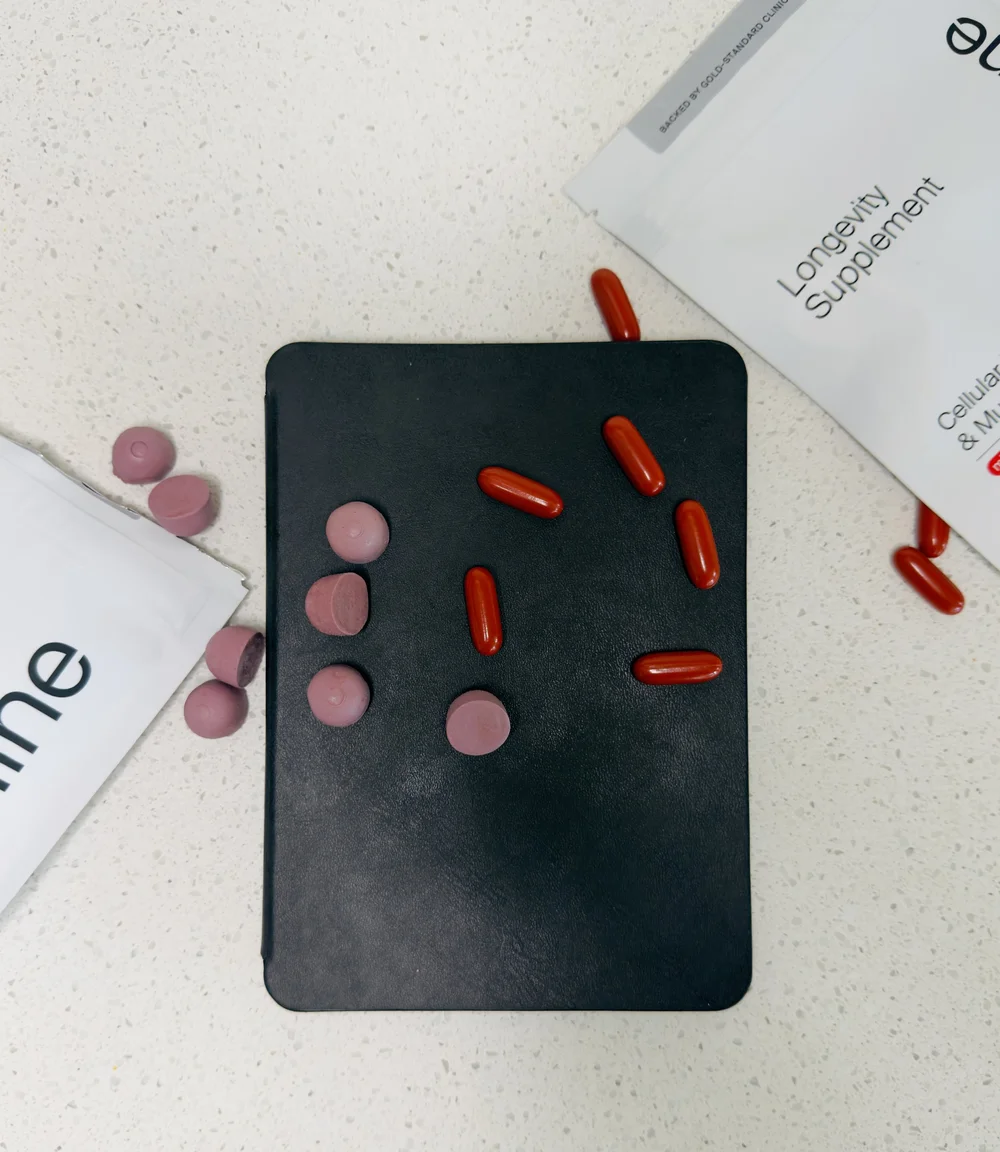 The reviewTimeline Mitopure review after a year of daily useGummies, softgels and powder, what changed and what did not.
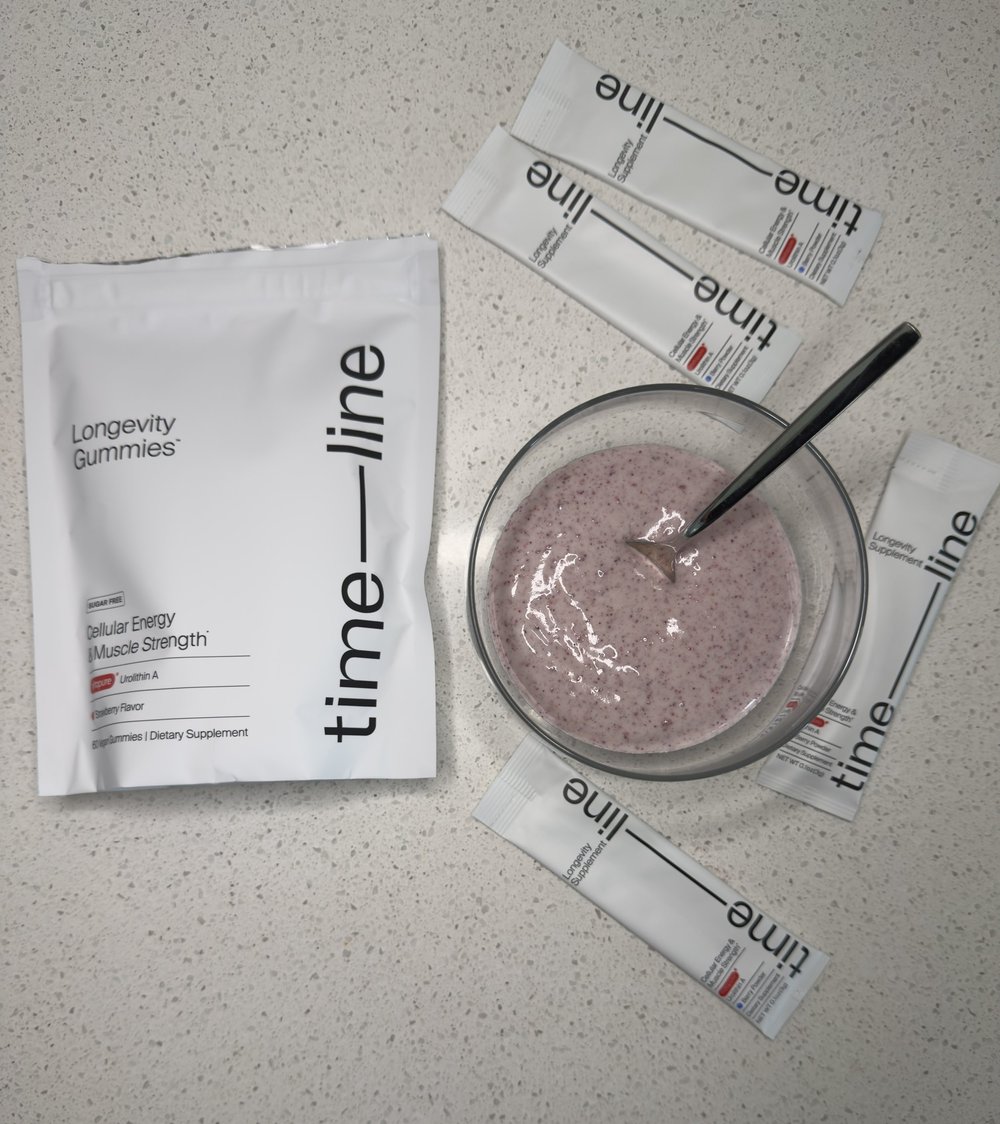 Buying guideTimeline Nutrition discount code and Mitopure pricesEvery plan compared, and how the offer works.
 GuideMitochondria hacks: boost cellular energy naturallyLight, movement, cold, sleep and food for your mitochondria.
 GuideGut optimization guideThe microbiome habits behind conversions like this one.
About this guide. Written by Sama Alabed. Every human trial cited was read in full where the full text was openly available; where only an abstract was available, claims are limited to what the abstract reports. Last reviewed 25 September 2026.
Our relationship with Timeline. SamaSays earns a commission when readers buy through our link on the review and buying guide pages above. This guide contains no affiliate links, and that relationship did not change how the evidence is described here.
Medical note. This is educational information, not medical advice. Talk with a qualified clinician before starting a supplement, especially if you are pregnant, take medication or have a medical condition.
Sources
61 sources, numbered in the order they first appear. The tag shows what kind of evidence each one is. Retrieved 25 September 2026.
Show all 61 sources
- 1ReviewGarcía Villalba R, et al. Urolithins: a comprehensive update on their metabolism, bioactivity and associated gut microbiota. Mol Nutr Food Res 2022. PMID 35118817
- 2HumanSingh A, et al. Direct supplementation with urolithin A overcomes limitations of dietary exposure and gut microbiome variability in healthy adults. Eur J Clin Nutr 2022. PMID 34117375
- 3HumanSingh A, et al. Urolithin A improves muscle strength, exercise performance and biomarkers of mitochondrial health in a randomized trial in middle aged adults. Cell Rep Med 2022. PMID 35584623
- 4HumanLiu S, et al. Effect of urolithin A supplementation on muscle endurance and mitochondrial health in older adults: a randomized clinical trial. JAMA Netw Open 2022. PMID 35050355
- 5ReviewDao T, et al. Effects of urolithin A supplementation on muscle health outcomes in humans from randomized controlled trials. Front Nutr 2026. PMID 42559151
- 6AnimalRyu D, et al. Urolithin A induces mitophagy and prolongs lifespan in C. elegans and increases muscle function in rodents. Nat Med 2016. PMID 27400265
- 7AnimalPhelps GB, et al. Comprehensive evaluation of lifespan extending molecules in C. elegans. Aging Cell 2025. PMID 39853804
- 8CellIglesias Aguirre CE, et al. Gut bacteria involved in ellagic acid metabolism to yield human urolithin metabotypes. J Agric Food Chem 2023. PMID 36840624
- 9CellPidgeon R, et al. Diet derived urolithin A is produced by a dehydroxylase encoded by human gut Enterocloster species. Nat Commun 2025. PMID 39856097
- 10ReviewSharifi Rad J, et al. Ellagic acid: a review on its natural sources. Oxid Med Cell Longev 2022. PMID 35237379
- 11Food dataPhenol Explorer 3.6 food composition database: ellagic acid, dark chocolate and cherry entries. Phenol Explorer website
- 12Food dataGonzález Centeno MR, et al. Ellagitannin content of wines matured in oak barrels. Food Chem 2016. PMID 27211676
- 13HumanYang X, Tomás Barberán FA. Tea is a significant dietary source of ellagitannins and ellagic acid. J Agric Food Chem 2019. PMID 30339026
- 14HumanRoberts KM, et al. A low polyphenol or low ellagitannin dietary intervention in men. Mol Nutr Food Res 2017. PMID 27813248
- 15CellLiu Q, et al. A Streptococcus thermophilus strain producing urolithin A from ellagic acid. Foods 2022. PMID 37431038
- 16HumanCortés Martín A, et al. The gut microbiota urolithin metabotypes revisited: the human metabolism of ellagic acid is mainly determined by aging. Food Funct 2018. PMID 30004553
- 17HumanXian W, et al. Distribution of urolithins metabotypes in healthy Chinese youth. J Agric Food Chem 2021. PMID 34694785
- 18HumanLeite IB, et al. Jaboticaba peel and seed powder intake and urolithin metabotype. Food Res Int 2026. PMID 41794475
- 19HumanIglesias Aguirre CE, et al. Unveiling metabotype clustering in resveratrol, daidzein and ellagic acid metabolism. Food Res Int 2023. PMID 37803793
- 20HumanSelma MV, et al. The human gut microbial ecology associated with overweight and obesity determines ellagic acid metabolism. Food Funct 2016. PMID 26597167
- 21HumanGonzález Sarrías A, et al. Clustering according to urolithin metabotype explains the interindividual variability in response to pomegranate. Mol Nutr Food Res 2017. PMID 27879044
- 22HumanNapier BA, et al. Multi species synbiotic supplementation increases urolithin A production: a randomized, placebo controlled trial. 2025. PMID 40944126
- 23ReviewNunnari J, Suomalainen A. Mitochondria: in sickness and in health. Cell 2012. PMID 22424226
- 24ReviewPickles S, Vigié P, Youle RJ. Mitophagy and quality control mechanisms in mitochondrial maintenance. Curr Biol 2018. PMID 29462587
- 25ReviewFaitg J, et al. Mitophagy activation by urolithin A to target muscle aging. Calcif Tissue Int 2024. PMID 37925671
- 26ReviewOnishi M, et al. Molecular mechanisms and physiological functions of mitophagy. EMBO J 2021. PMID 33438778
- 27AnimalRoussos A, et al. Urolithin A modulates inter organellar communication via calcium dependent mitophagy to promote healthy ageing. Autophagy 2025. PMID 40944367
- 28AnimalLuan P, et al. Urolithin A improves muscle function by inducing mitophagy in muscular dystrophy. Sci Transl Med 2021. PMID 33827972
- 29AnimalFang EF, et al. Mitophagy inhibits amyloid beta and tau pathology and reverses cognitive deficits in models of Alzheimer's disease. Nat Neurosci 2019. PMID 30742114
- 30AnimalHou Y, et al. Urolithin A improves Alzheimer's disease cognition and restores mitophagy and lysosomal functions. Alzheimers Dement 2024. PMID 38753870
- 31HumanAndreux PA, et al. The mitophagy activator urolithin A is safe and induces a molecular signature of improved mitochondrial and cellular health in humans. Nat Metab 2019. PMID 32694802
- 32CellMuku GE, et al. Urolithin A is a dietary microbiota derived human aryl hydrocarbon receptor antagonist. Metabolites 2018. PMID 30501068
- 33CellMa S, et al. Urolithin A hijacks the ERK1/2 and ULK1 cascade to improve CD8 T cell fitness. Adv Sci 2024. PMID 38447147
- 34AnimalLi R, et al. Microbial derived urolithin A targets GLS1 in cirrhotic portal hypertension. Cell Mol Gastroenterol Hepatol 2024. PMID 39038605
- 35ReviewYang Z, et al. Health benefits and molecular mechanisms of urolithin A. Food Sci Nutr 2026. PMID 42502809
- 36ReviewWilliams JA, Ding WX. Mechanisms, pathophysiological roles and methods for analyzing mitophagy. Biol Chem 2018. PMID 28976892
- 37HumanLiu S, et al. Urolithin A provides cardioprotection and improves human cardiovascular health biomarkers. iScience 2025. PMID 40034121
- 38ReviewWang C, et al. Organelle specific autophagy in skeletal muscle: a scoping review. 2026. PMID 42180833
- 39ModelAichinger G, et al. PBPK modeling of the postbiotic supplement urolithin A. Mol Nutr Food Res 2023. PMID 37195009
- 40AnimalD'Amico D, et al. Urolithin A improves mitochondrial health, reduces cartilage degeneration and alleviates pain in osteoarthritis. Aging Cell 2022. PMID 35778837
- 41AnimalGhosh S, et al. Urolithin A activates aryl hydrocarbon receptor and NLRP6 pathways in intestinal epithelial cells. Nat Commun 2026. PMID 42336837
- 42HumanDenk D, et al. Effect of the mitophagy inducer urolithin A on age related immune decline: a randomized, placebo controlled trial. Nat Aging 2025. PMID 41174221
- 43HumanWhitfield J, et al. Evaluating the impact of urolithin A supplementation on running performance in highly trained athletes. Sports Med 2025. PMID 40839339
- 44RegistryClinicalTrials.gov registrations for urolithin A, searched 25 September 2026. ClinicalTrials.gov
- 45HumanNishimoto Y, et al. Effect of urolithin A on the improvement of vascular endothelial function depends on the gut microbiota. Front Nutr 2022. PMID 36687672
- 46HumanJamialahmadi T, et al. Evaluation of urolithin A efficacy in heart failure patients with reduced ejection fraction. Rev Cardiovasc Med 2024. PMID 38415449
- 47HumanZhao H, et al. Assessment of urolithin A effects on muscle endurance, strength, inflammation, oxidative stress and protein metabolism in male athletes with resistance training: an 8 week randomized trial. J Int Soc Sports Nutr 2024. PMID 39487653
- 48HumanMonsalve Acevedo A, et al. Effects of urolithin A supplementation on performance and antioxidant status in academy soccer players during preseason: a pilot randomised controlled trial. Front Nutr 2025. PMID 41245402
- 49ReviewKuerec AH, et al. Targeting aging with urolithin A in humans: a systematic review. Ageing Res Rev 2024. PMID 39002645
- 50PreprintD'Amico D, et al. Topical application of urolithin A slows intrinsic skin aging and protects from UVB photodamage: findings from randomized clinical trials. medRxiv preprint 2023, not peer reviewed. doi 10.1101/2023.06.16.23291378
- 51ClaimTimeline. Science page, claim of a 39% increase in mitophagy, accessed 25 September 2026. Timeline science page
- 52CellGonzález Sarrías A, et al. Urolithin A and its sulfate conjugate are substrates for the breast cancer resistance protein (BCRP). J Agric Food Chem 2013. PMID 23586460
- 53HumanBest SL, et al. First reported human cases of urolithin A renal calculi. Kidney Int Rep 2026. PMID 42058113
- 54CellLarrosa M, et al. Urolithins, ellagic acid derived metabolites produced by human colonic microflora, exhibit estrogenic and antiestrogenic activities. J Agric Food Chem 2006. PMID 16506809
- 55CellÁvila Gálvez MÁ, et al. Physiological relevance of the antiproliferative and estrogenic effects of dietary polyphenol aglycones versus their phase II metabolites. J Agric Food Chem 2018. PMID 30025453
- 56AnimalHeilman J, et al. Safety assessment of urolithin A, a metabolite produced by the human gut microbiota upon dietary intake of plant derived ellagitannins and ellagic acid. Food Chem Toxicol 2017. PMID 28757461
- 57RegulatorUS FDA. GRAS Notice 791, urolithin A (Amazentis). Response letter, 20 December 2018. GRN 791
- 58RegulatorEuropean Food Safety Authority. Question EFSA Q 2018 00724, urolithin A novel food application, status as of 25 September 2026. EFSA
- 59RegulatorBBB National Programs, National Advertising Division. Case #7234, Amazentis SA, 8 May 2025. NAD #7234
- 60Lab testSandalova E, et al. Testing the amount of nicotinamide mononucleotide and urolithin A as compared to the label claim. GeroScience 2024. PMID 38935229
- 61RegulatorNSF Certified for Sport product listings for Timeline, checked 25 September 2026. NSF listings