
Integrative Peptides BPC-157 Review: My 4-Month Experience With Both Oral Versions
Product reviewOral BPC-157Integrative PeptidesSeptember 2026
Integrative Peptides BPC-157 Review: My 4-Month Experience With Both Oral Versions
I took it for about four months while my gut was in bad shape. It seemed to help a little, it never caused me a problem, and it wasn't what actually fixed things.
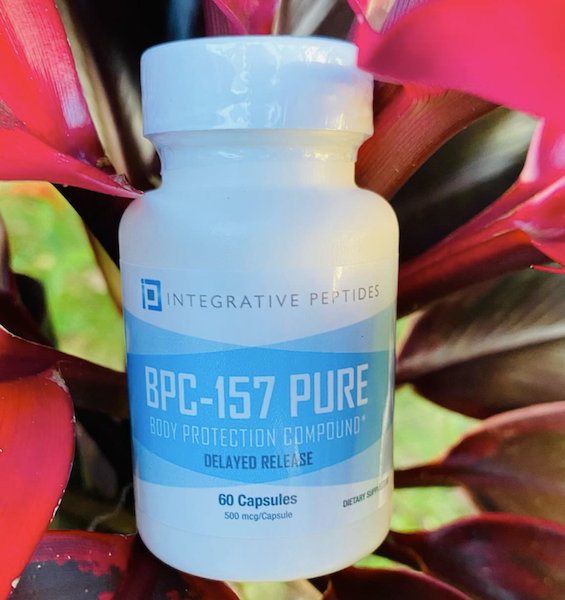
01The verdict board
Six questions, answered before you read another word.
Did I notice anything?
Yes, around 60 days
Modest improvement in gut symptoms. Real to me, not dramatic.
Did delayed release feel different?
No difference
Two months on each. I couldn't tell them apart.
Side effects?
None noticed
Across four months, which surprised me at the time.
Would I take it again?
Conditionally, yes
For gut lining irritation, alongside the real work.
Was it the biggest thing that helped?
No
Getting scoped and changing my diet mattered more.
Evidence?
Still limited
No human trial of oral BPC-157, or of this product.
Want to try the oral format yourself?
samā·says may earn a commission if you purchase through links in this post.Use code SAMA for 10% off your order at Integrative Peptides.
02How I tested it
Two months on each version, twice a day, on an empty stomach.
The protocol
4 months
on Integrative Peptides, about two on each version
2 a day
one capsule before breakfast, one before bed
- Products
- BPC-157 Pure delayed release, then BPC-157 Pure immediate release
- Dose
- One capsule before breakfast, one before bed
- Taken
- On an empty stomach, the label directed serving
- Stored
- Refrigerated, my own choice. The label asks for a cool, dry place
- Why
- Loose bowels, frequent diarrhea and persistent stomach pain
- Also used
- Limitless Life Nootropics oral BPC-157, about two months, afterwards
- Never used
- Injectable BPC-157
The capsules were easy. Small enough to swallow without thinking about it, no strange taste, and nothing about the routine that made me want to skip a dose.
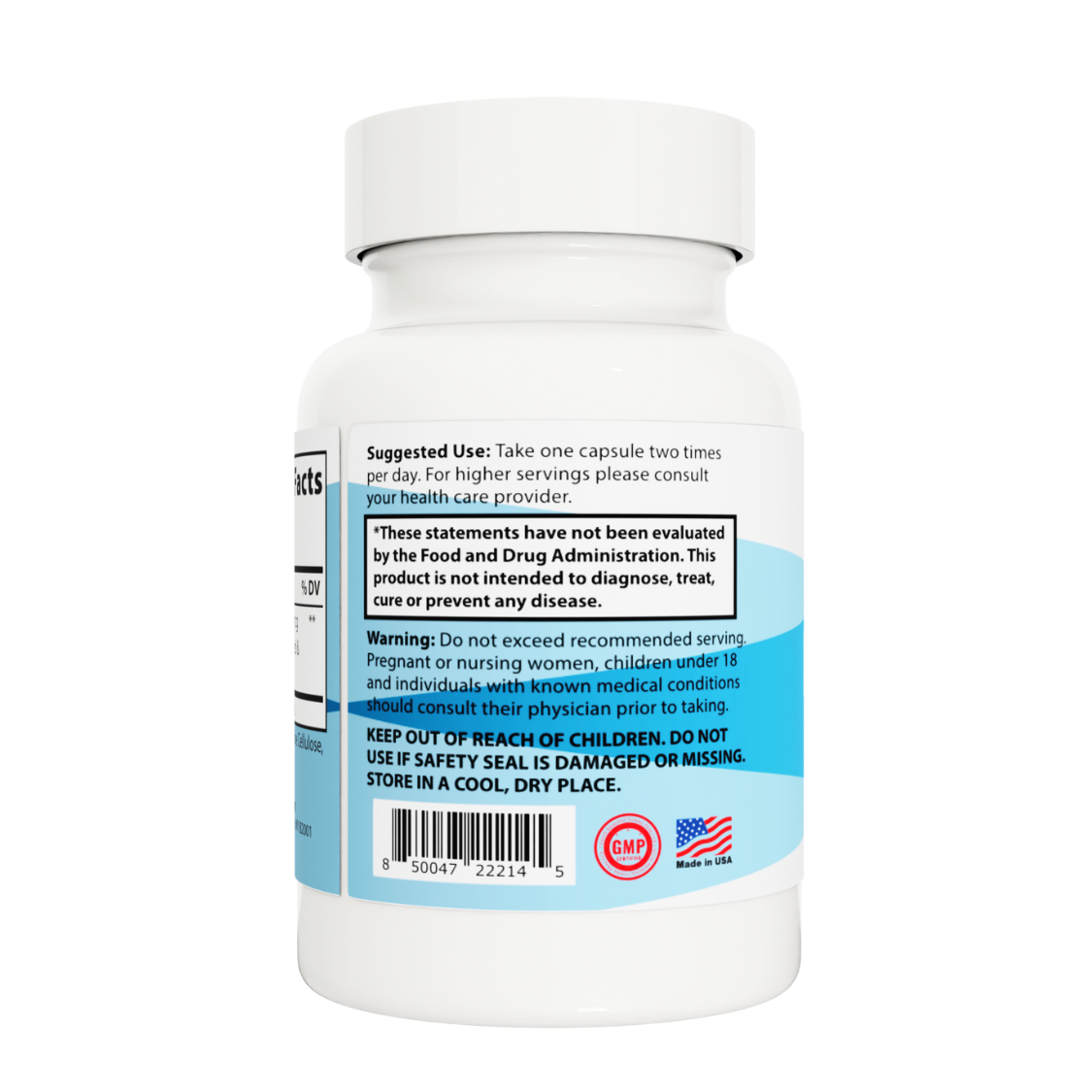
One correction I owe you. An earlier version of this review said no storage direction was published. That was wrong, and it was my mistake rather than the company's. It's printed on the bottle: store in a cool, dry place.
I'd been reading retail listings instead of the label in my hand. I kept mine refrigerated anyway, which went beyond what the label asks for, so follow your own bottle rather than following me.
Suggested use
One capsule two times per day, and the storage direction I had wrong.
What I didn't do
I didn't measure anything. No bloodwork, no symptom scoring, no control period, nothing blinded, and several other things in my life were changing across the same months. I've also never used injectable BPC-157, so I can't compare the two routes from experience. If that's your question, the guide covers oral versus injectable BPC-157 properly.
03What changed for me, and what did not
It took about 60 days before I noticed anything, and I still can't prove the capsules caused it.
Four months, day by day
My experience
The timing overlaps the formulation switch, so I can't attribute the change to either version.
Before I started, I was dealing with loose bowels most days, frequent diarrhea, and stomach pain that wasn't going away on its own. That's why I tried oral BPC-157 in the first place.
Around the two month mark I noticed fewer bad days and less of the constant ache. Nothing switched off, and there was no morning where I woke up and thought it was fixed.
Here's the part I want to be careful about. I can't tell you BPC-157 caused any of that. I was paying more attention to what I ate, I was under less stress, and gut symptoms move around on their own.
How things felt, in my own words
Subjective experience, not clinical measurementWorse
Before starting
Similar
First 30 days
Starting to improve
Around 60 days
Somewhat better
Months 3 to 4
Meaningfully better
After the workup and diet changes
Then I got scoped. The endoscopy and colonoscopy identified Stage B esophagitis, duodenitis, pangastritis, and a large polyp that was removed. Treating those things, along with changing how I eat, is what actually moved the needle for me.
Worth noting: that doesn't make the four months worthless. My symptoms were worse before I started than they were later, and it cost me nothing in side effects. But if your gut is genuinely unwell, the more useful lesson from my experience is that the capsule was the easy thing to try and the investigation was the thing that mattered.
04Delayed release versus immediate release
Four months. Two versions. I couldn't tell them apart.
Version one
Delayed release
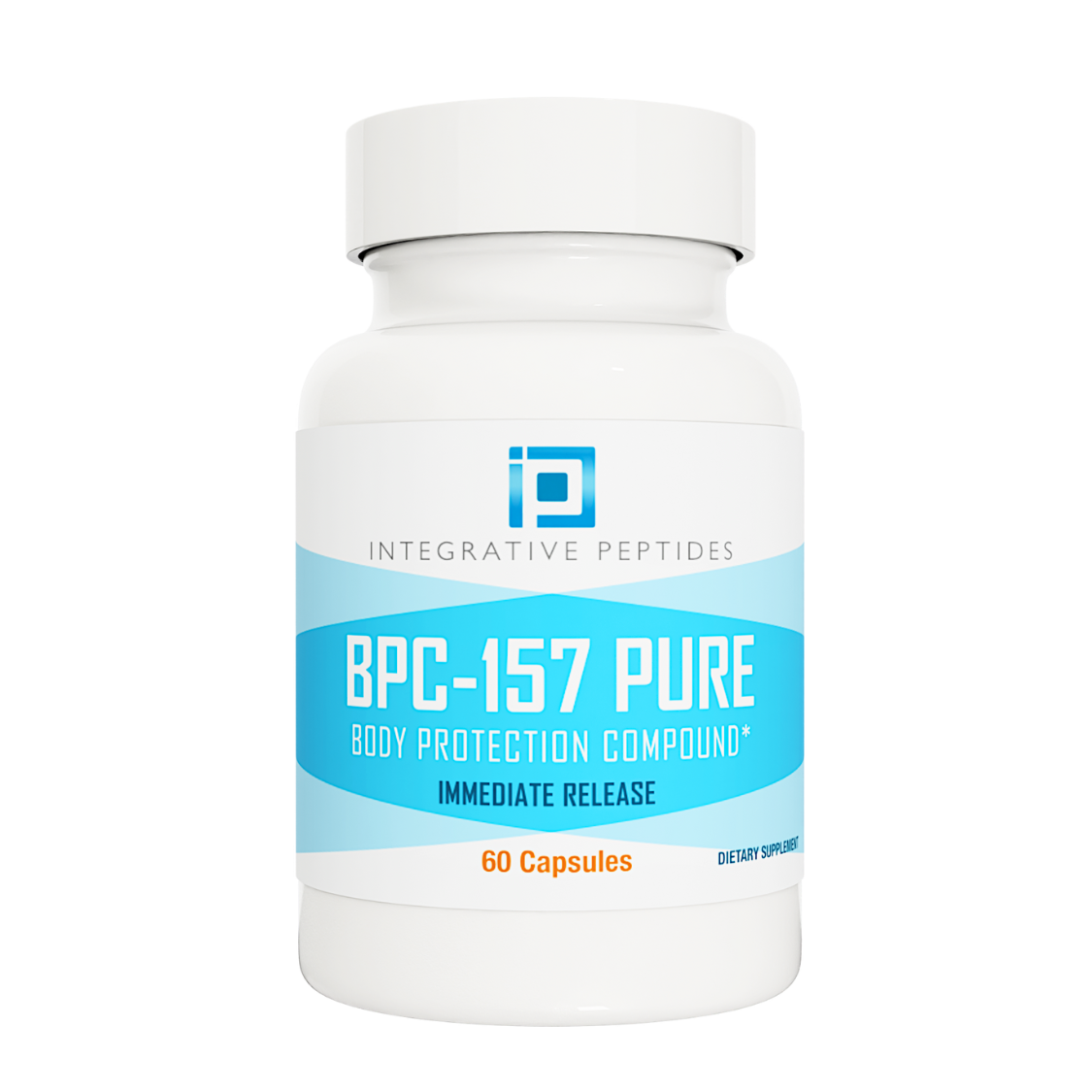
Version two
Immediate release
Version one
Delayed release
Version two
Immediate release
What I found
No noticeable difference
Same easy capsule, same absence of taste, same absence of side effects. If you're choosing between them, you're choosing on reasoning rather than on evidence, and my experience doesn't break the tie.
There's one detail worth sitting with. Both versions list the same price, so the pricing isn't telling you which one the company thinks is better. And both list an acid resistant or delayed release shell, so the immediate release version isn't simply an unprotected capsule.
Worth noting: no published data compares the two formulations in people, and no absorption measurement exists for either one.
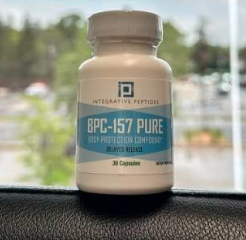
Two bottle sizes
Two sizes, very different runways
Everything in this review is the 60 capsule bottle. Integrative Peptides also lists a 30 count of the delayed release version. At the directed two capsules a day, here is what each one actually buys you.
30 capsules
15 days
Try size
Half the runway of the bottle reviewed here. Enough to see whether you get on with it.
60 capsules
30 days
Full month
$150 list. The size reviewed here, and one month at the label serving.
05What you actually get in the bottle
A $150 bottle lasts 30 days at the directed serving, not 60.
The label line worth reading twice
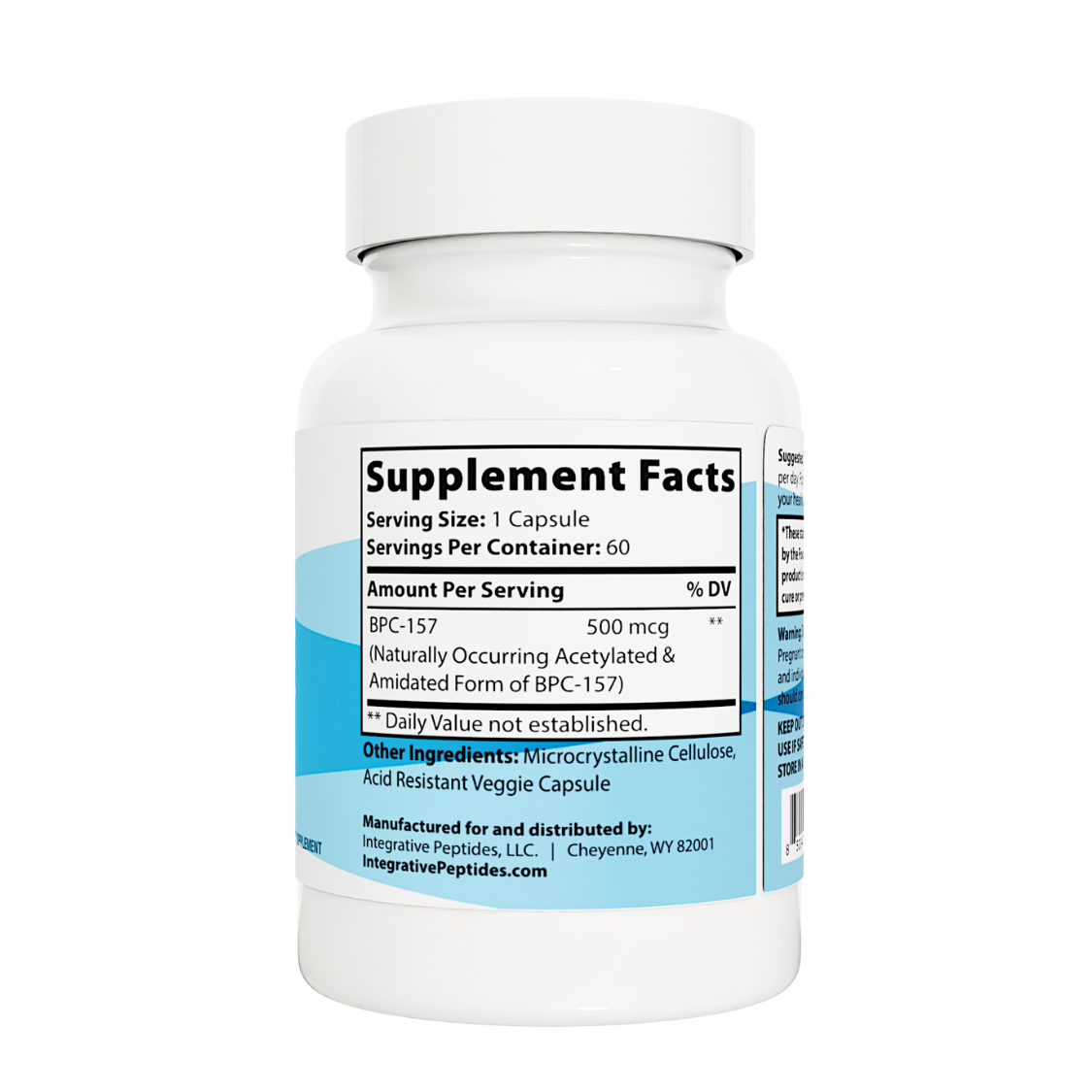
"Naturally Occurring Acetylated and Amidated Form of BPC-157"
That's what the label declares, and it is a different description from how BPC-157 is usually written up in the research literature, where it is described as a pentadecapeptide. I have no basis for claiming the product contains the wrong thing. What I can tell you is that I didn't find published human evidence establishing that this exact retail formulation behaves the same way as the material used in the underlying studies.
Integrative Peptides doesn't sell to the public without an account, so I first checked these details against several authorized retailers that reproduce the manufacturer's label. I've since read the panel straight off the bottle, which is the version below.
Other ingredients are microcrystalline cellulose and an acid resistant veggie capsule. Serving size is one capsule, servings per container is 60, and the daily value for BPC-157 is not established. The label also carries the storage direction I'd earlier said was missing.
06What it really costs
The daily gap is bigger than the per capsule gap, and that is the serving direction talking.
Cost per directed day
Worth noting: per capsule these are much closer than the daily figures suggest. Integrative Peptides is $2.50 a capsule and ProHealth is $2.00. Most of the daily gap comes from the serving direction, because Integrative Peptides directs two capsules a day and ProHealth directs one. Price says nothing about product quality either way.
Ready to try it?
Use code SAMA for 10% off your order, which brings a 60 capsule bottle to $135, or $4.50 a day at the directed serving.
07What the evidence supports, and what it does not
The closer you get to this exact capsule, the thinner the evidence becomes.
BPC-157 in general
Extensive animal research. A 2025 systematic review found 36 studies, 35 of them preclinical and one clinical.1 Three small uncontrolled human pilot studies exist, covering knee pain, interstitial cystitis and intravenous safety.2
Oral BPC-157 in humans
No published study has measured how much of an oral dose reaches the bloodstream in a person. A 2026 pharmaceutical review describes the human pharmacokinetic profile as critically undercharacterized and notes that no pharmaceutical grade formulation has been developed or validated.3
This exact product
No trial has tested Integrative Peptides BPC-157 Pure, in either version. Evidence for BPC-157 as a compound is not evidence that this retail capsule does anything.
I'm keeping this short on purpose, because the definitive BPC-157 guide covers the research properly.
One number gets quoted a lot and it's worth correcting. The most cited pharmacokinetic study measured bioavailability after intramuscular injection in rats and dogs, not after an oral dose.4 Any page presenting a percentage from that paper as an oral figure has misread it.
Worth noting: oral peptide delivery is genuinely hard as a technical problem. Even an approved oral peptide drug can require a specialised absorption technology and still land at low absolute oral bioavailability. That's a fact about the difficulty of the category, and it establishes nothing about BPC-157 specifically, because nobody has measured BPC-157.
08Testing and transparency
A lot certificate now exists. It is not the same thing as third-party testing.
COA at a glance
Reported within listed specification
 View full COA
The document
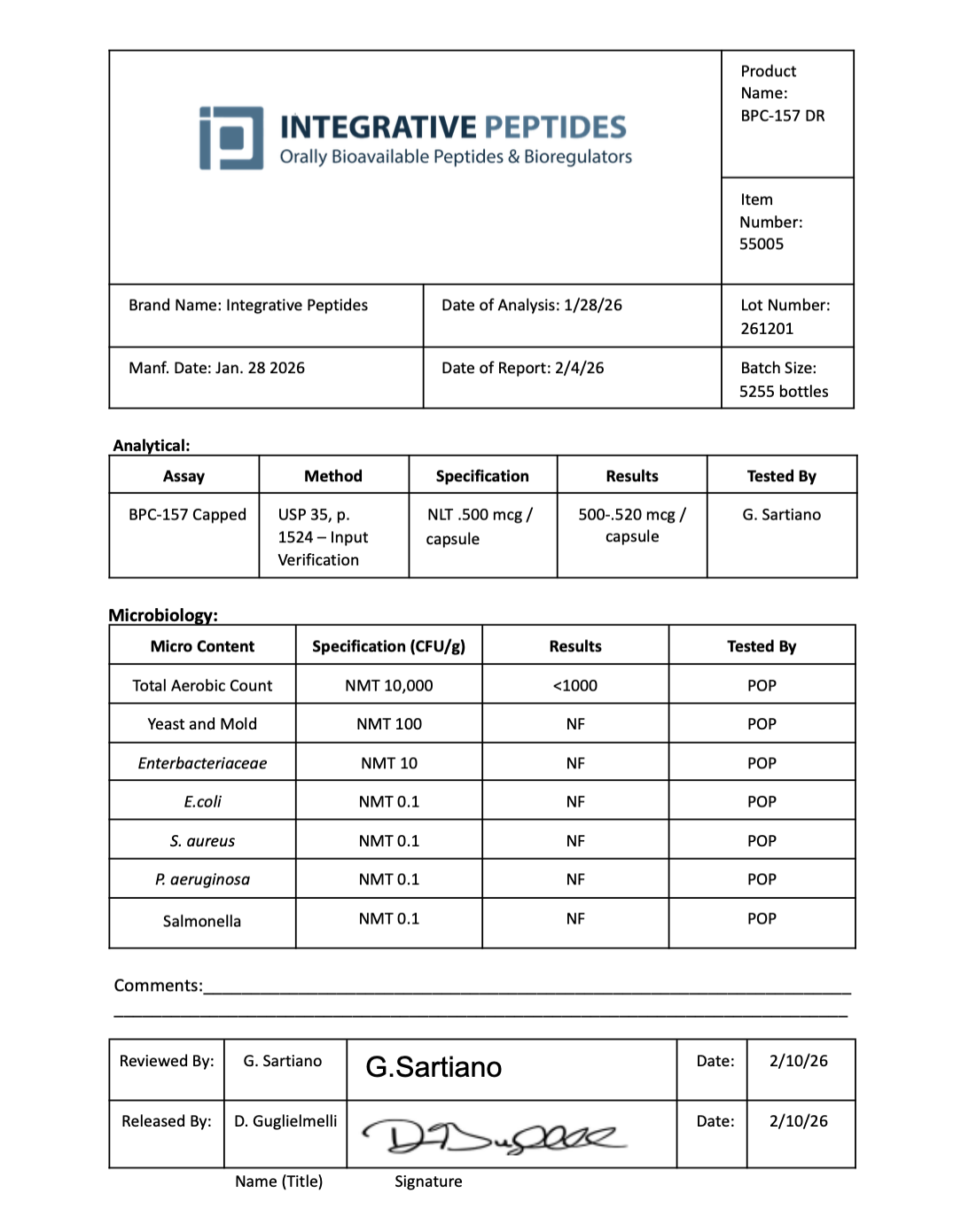
Certificate of analysis, lot 261201
This is the certificate for the delayed release version, BPC-157 DR. Click it to read the whole thing at full size. I would rather you checked my reading than took my word for it.
It was reviewed by G. Sartiano and released by D. Guglielmelli, both signed and dated 10 February 2026. The assay was tested by G. Sartiano and the microbiology by a set of initials.
Lot number
261201
BPC-157 DR, item number 55005. The delayed release version.
Date of analysis
28 Jan 2026
Manufactured the same day. Report dated 4 Feb 2026.
Reported assay
.500 to .520
Mcg per capsule, against a specification of not less than .500 mcg.
Batch size
5255
Bottles. One lot. A certificate covers that lot and nothing else.
Microbiology check
Reported within listed specificationTotal aerobic count
<1000 CFU/g
Limit not more than 10,000
Yeast and mold
Not found
Limit not more than 100
Enterobacteriaceae
Not found
Limit not more than 10
E. coli
Not found
Limit not more than 0.1
S. aureus
Not found
Limit not more than 0.1
P. aeruginosa
Not found
Limit not more than 0.1
Salmonella
Not found
Limit not more than 0.1
I said in an earlier version of this review that I'd update this section if a certificate arrived. It has, and I've read it in full. Here is what I take from it, and what I don't.
Documented
What this COA does confirm
- A real, traceable lot number: 261201, for BPC-157 DR, item number 55005
- A dated analysis, 28 January 2026, with the same manufacture date
- A stated batch size of 5255 bottles, so the document covers a defined run
- A reported capsule assay of .500 to .520 mcg against the company's own specification
- A seven organism microbiology panel, each result reported within its listed limit
- Named people who reviewed and released the lot, both signed and dated
Not established
What this COA does not confirm
- No independent accredited laboratory is identified anywhere on the document
- No identity confirmation by mass spectrometry is shown
- No purity percentage is shown
- No heavy metals panel is shown
- No endotoxin or sterility testing is shown
- No bioavailability data, and none exists for oral BPC-157 in any formulation
- No clinical efficacy data for this product, or for any oral BPC-157 product
That second list isn't an accusation. A certificate of analysis is a manufacturing record, and most of what's missing from it is missing from almost every supplement certificate you'll ever see. It just means the document can't carry more weight than it actually carries.
One thing I noticed
The method is listed as input verification
Under Method the document prints USP 35, p. 1524, Input Verification. That phrasing appears to refer to checking the incoming material rather than assaying a finished capsule off the line, though the document doesn't spell out its own procedure.
If that reading is right, it's still a legitimate manufacturing control. It's a weaker claim than an independent finished-product assay, and it's worth knowing which one you're looking at.
Document notes
Specification prints as NLT .500 mcg while the result prints as 500 to .520 mcg, so the lower figure is missing its decimal point.
Date of report reads 2/4/26 and both signatures read 2/10/26, so the sign-off is dated after the report.
The organism is printed as Enterbacteriaceae on the certificate. The standard spelling is Enterobacteriaceae.
Worth noting: none of those three change what the document reports. I'm listing them because I said I'd tell you what it actually looks like rather than tidy it up.
Integrative Peptides
What I can inspect
ProHealth
What anyone can inspect
My take on the documentation
Integrative Peptides has moved a real step forward by producing a lot specific document at all. ProHealth still gives a buyer more, because its certificate is public and names an outside lab with a stated accreditation. That's the gap, and it's a gap in access and independence rather than in effort.
And none of this speaks to whether the capsules work. A certificate is a manufacturing document. It says nothing about absorption, nothing about effect in a person, and nothing about long term safety.
09Integrative Peptides versus Limitless Life
Two brands, six months, and no difference I could honestly call a difference.
Brand one
Integrative Peptides
Brand two
Limitless Life Nootropics
My take
I couldn't tell you that one worked better than the other. My experience with both was similar, and the two runs blur together in my memory.
Where Integrative Peptides stood out for me was the buying experience. Its consumer facing product information was easier to verify, the directions and the amount per capsule were clear, and when my first shipment disappeared, customer service replaced it right away.
When I checked the Limitless Life Nootropics product page while writing this, it sat behind a notice restricting access to research professionals, and a general visitor sees no price, no directions and no ingredient list. For something I'm taking twice a day for months, I'd rather buy from the company that tells me what's in it and how to take it.
10How it compares on paper
Three products at the same strength, described three completely different ways.
Same 500 mcg. Three different label descriptions.
Integrative Peptides
Declared active
Naturally occurring acetylated and amidated form of BPC-157
ProHealth
Declared active
Body Protection Compound-157, as BPC-157 arginate salt
InfiniWell
Declared active
BPC, as Pentadeca Short Chain Amino Acids
This does not establish that one formulation is superior. It shows how inconsistent the retail labeling language is across products sold in the same category, and it is a reason to read the supplement facts panel rather than the marketing. No published data establishes clinical equivalence between these descriptions.
| Integrative PeptidesBPC-157 Pure, delayed | ProHealthPure BPC-157 | InfiniWellBPC Delayed Pro | |
|---|---|---|---|
| Per capsule | 500 mcg | 500 mcg | 500 mcg |
| Capsules | 60 | 60 | 60 |
| Directed use | 1 capsule twice daily | 1 capsule daily, with or without food | 1 capsule twice daily |
| Delivery approach | Delayed release vegetable capsule | Hypromellose capsule, no delayed release claim | Delayed release, with salcaprozate sodium in other ingredients |
| Price | $150.00 | $119.95 | $159.95 |
| Cost per directed day | $5.00 | $2.00 | $5.33 |
| Days per bottle | 30 | 60 | 30 |
| Lot certificate | Yes, lot specific, read in full. Not published, no outside lab named | Yes, published, outside lab named with accreditation | Yes, published, outside lab named, no accreditation stated |
| Storage direction | Cool, dry place, printed on the label | Cool, dry place | Not verified |
| Guarantee | Not verified | 100 day money back | 30 day |
| Used by me | Yes, 4 months | No | No |
- Per capsule
- 500 mcg
- Capsules
- 60
- Directed use
- 1 capsule twice daily
- Price
- $150.00
- Cost per day
- $5.00
- Days per bottle
- 30
- Lot certificate
- Yes, lot specific, not published, no outside lab named
- Storage
- Cool, dry place
- Guarantee
- Not verified
- Used by me
- Yes, 4 months
- Per capsule
- 500 mcg
- Capsules
- 60
- Directed use
- 1 capsule daily
- Price
- $119.95
- Cost per day
- $2.00
- Days per bottle
- 60
- Lot certificate
- Yes, published, outside lab with accreditation
- Storage
- Cool, dry place
- Guarantee
- 100 day money back
- Used by me
- No
- Per capsule
- 500 mcg
- Capsules
- 60
- Directed use
- 1 capsule twice daily
- Price
- $159.95
- Cost per day
- $5.33
- Days per bottle
- 30
- Lot certificate
- Yes, published, outside lab named
- Storage
- Not verified
- Guarantee
- 30 day
- Used by me
- No
ProHealth still wins on documentation, and it wins on cost per day. Its certificate is published publicly, it names an outside laboratory with a stated accreditation, and a bottle lasts twice as long at two dollars a directed day against five.
Integrative Peptides now has a real lot certificate too, and that closes most of the gap on traceability. It isn't published, though, and no outside lab is named on it. So the ranking on documentation hasn't changed, but the distance has.
11Where it stands legally
Know the category you are buying in before you spend $150.
Regulatory status
The Department of Defense's Operation Supplement Safety describes BPC-157 as an unapproved drug found in health and wellness products.5 There was regulatory movement in 2026: the FDA removed BPC-157 from the 503A Category 2 list in April, and in July an FDA advisory committee voted 8 to 6 to recommend adding it to the 503A bulks list for ulcerative colitis.6 That vote is advisory, it ran against the FDA's own review team, and formal rulemaking still has to follow.
It's also easy to misread. That process is about a prescription preparation compounded by a licensed pharmacist for an individual patient. It says nothing about a retail supplement capsule, and it isn't a signal that this product has been reviewed or approved. The guide covers the full FDA and WADA picture.
12Ordering and customer service
My first order never arrived. Here is what happened next.
Worth noting: that's one customer's experience of one problem, not a service rating. But at $150 a bottle I'd want to know what happens when something goes wrong, and in my case it went about as well as it could have.
Want the oral format from a brand that publishes its directions?
Use code SAMA for 10% off your order at Integrative Peptides.
13Pros and cons
Seven pros and six cons, and the cons are the ones that would stop me recommending it more strongly.
What I liked
- Easy to take. Small enough to swallow comfortably, no unpleasant taste, and twice daily fitted around my day without effort.
- No side effects noticed across four months.
- Sold as a consumer product with published directions, a stated amount per capsule, a full other ingredients line and a printed storage direction.
- Customer service replaced a lost order immediately.
- Both oral versions come from the same brand, so switching between them was simple.
- A lot specific certificate of analysis exists for the delayed release version, with a dated assay result and a full microbiology panel.
- My symptoms were worse before I started than they were later, and I'd use it again for the right situation.
What I didn't like
- Expensive per day at the directed serving. A bottle is 30 days, not 60.
- The delayed release version costs the same as the immediate release version, so the price gives you no signal about which to choose.
- The lot certificate isn't published anywhere, so you have to be handed it rather than matching it to your bottle yourself.
- No outside laboratory or accreditation appears on the certificate, and the assay method is listed as input verification.
- The declared form on the label is described differently from how BPC-157 is usually described in the research literature.
- No human trial has tested this product, or any other oral BPC-157 product.
14Who this might appeal to, and who should skip it
This is a buying decision, not a treatment recommendation.
Might appeal to you if
Skip it, or pause, if
15Final verdict, and what would change it
Recommended on convenience and transparency. Not on proof.
The verdict
Worth trying, with your eyes open
Would I take it again? Yes, in the right situation. My symptoms were worse before it than after, I felt it contributed something, and four months cost me nothing in side effects. That's a better record than a lot of things I've tried.
But I want to be precise about what I'm recommending. I'm recommending it as a well made, easy to take oral format from a company that publishes its directions and replaced my lost order without an argument. I'm not recommending it as something proven to work.
And if you're reading this because your gut is genuinely unwell, the most useful thing I took from those four months wasn't about the peptide. Go find out what's actually wrong. That's what helped me.
Formulation
Form and delivery approach are disclosed. No supporting data for this product, and the immediate release version carries a similar shell at the same price.
Transparency and testing
Two points moved, and they moved for different reasons. One is a correction: the storage direction was on the label all along and I'd wrongly scored it as missing. The other is real: a dated lot certificate now exists, with an assay result and a full microbiology panel. Held off five because it isn't published and no accredited outside laboratory appears on it.
Convenience
Easy capsule, no taste, no side effects across four months. Held off the top by the twice daily empty stomach requirement.
Value
Close per capsule, but the directed serving makes it two and a half times the daily cost of the cheapest comparable capsule, which also publishes a certificate.
Customer experience
Lost order replaced immediately, later orders fine. One customer's experience, not a service rating.
Evidence level, deliberately unscored
There is no overall score on this review. Averaging those five into one number would produce a figure that reads as an effectiveness score, and I have no basis for one. For the record: extensive animal research on BPC-157, no published human measurement of oral BPC-157 in any formulation, and no trial of this exact product.
What would change my rating
- The lot certificate published on the product page, from a named outside laboratory with a stated accreditation, rather than one a reader has to be handed. Moves transparency and testing to five.
- An assay run on a finished capsule rather than on the input material, plus identity confirmation, heavy metals and endotoxin. Moves transparency and testing.
- Formulation data for this product showing what the delayed release capsule actually does. Moves formulation.
- Human pharmacokinetic data for oral BPC-157 in any formulation. Would move the evidence level for the whole category.
- A controlled human trial of an oral BPC-157 capsule. Would change this review's central caveat entirely.
If that sounds like your situation
Use code SAMA for 10% off your order, which brings a 60 capsule bottle to $135.
Frequently asked questions
The questions people actually search for, answered against the same evidence as the rest of the page.
EvidenceDoes oral BPC-157 actually work?
Nobody knows. I noticed a modest improvement after about 60 days, but I can't prove the capsules caused it, and no human trial has tested any oral BPC-157 product.
My experienceDid the delayed release version feel different from the immediate release?
No. I took each for about two months and couldn't tell a meaningful difference between them.
ProductDo BPC-157 capsules need to be refrigerated?
No. The label asks for a cool, dry place, so refrigeration isn't required. I kept mine in the fridge anyway, which was my own choice and went beyond the instruction. An earlier version of this review said no storage direction was published, and that was my error rather than the company's.
ProductHow long does one bottle last?
Thirty days. The label directs one capsule twice a day, so a 60 capsule bottle is a month's supply, not two.
My experienceDid you notice any side effects?
None at all across four months, which genuinely surprised me given how sensitive my system was at the time.
ProductIs Integrative Peptides third-party tested?
Not on the document I've seen. I received a lot specific certificate of analysis for the delayed release product, and it's a real one, with lot 261201, a dated assay and a seven organism microbiology panel. But it doesn't identify an independent accredited laboratory, so I wouldn't describe the document itself as independent third-party verification.
My experienceWould you buy it again?
Yes, in the right situation, and knowing what I know now. I'd also tell you that finding out what was actually wrong with my gut mattered a great deal more than the capsules did.
References
- Vasireddi N, et al. Emerging Use of BPC-157 in Orthopaedic Sports Medicine: A Systematic Review. HSS Journal, 2025. PMC12313605
- McGuire FP, et al. Regeneration or Risk? A Narrative Review of BPC-157 for Musculoskeletal Healing. Current Reviews in Musculoskeletal Medicine, 2025. PMID 40789979
- Mateescu DM, et al. BPC-157 as an Investigational Peptide Therapeutic: Biopharmaceutical Challenges, Formulation Strategies, and Translational Development Barriers. Pharmaceutics, 2026. PMID 42198317
- He L, et al. Pharmacokinetics, distribution, metabolism, and excretion of body-protective compound 157 in rats and dogs. Frontiers in Pharmacology, 2022. PMID 36588717
- Operation Supplement Safety, U.S. Department of Defense. BPC-157: A Prohibited Peptide and an Unapproved Drug Found in Health and Wellness Products. opss.org
- U.S. Food and Drug Administration. July 23 to 24, 2026 Meeting of the Pharmacy Compounding Advisory Committee. fda.gov
- U.S. Anti-Doping Agency. BPC-157: Experimental Peptide Creates Risk for Athletes. usada.org
Research and educational disclaimer
This article is for educational purposes and describes my own experience. BPC-157 is not approved by the FDA as a treatment for any condition and is not a lawful dietary ingredient in the United States. Nothing here is medical advice, and nothing here should be used to diagnose or treat anything. Please talk to a qualified healthcare professional before making decisions about peptides, especially if you have ongoing symptoms that haven't been investigated. As an affiliate, samā·says may earn a commission on qualifying purchases made through links in this post.


